How to Transport Camping Gear: Car Packing & Hauling Guide
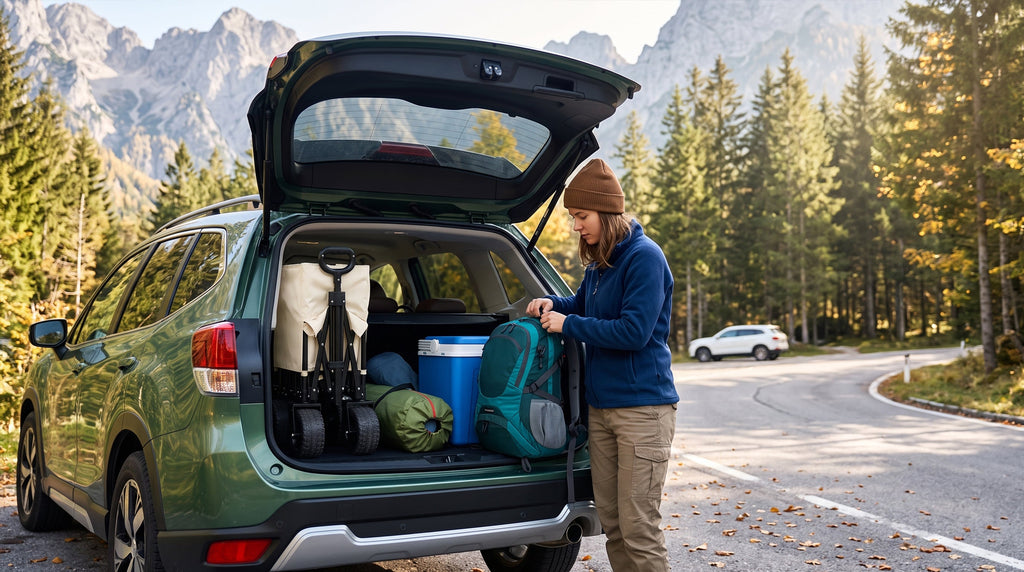
How to Transport Camping Gear: Car Packing & Hauling Guide
TL;DR: Load in reverse order of need — last-needed gear (sleeping bags, pillows) goes in first and deepest, first-needed gear (tent, rain fly, first-aid kit) goes in last. Keep heavy items like coolers low and centered over the axle, strap down anything that can shift, and keep fuel canisters out of a hot cabin. For the walk to the campsite, a folding wagon rated at 600 lbs with a 160-liter bed hauls a full setup in one or two trips.
I'm Vivian J, and after a decade of loading up for everything from state-park weekends to week-long dispersed trips, I can tell you the drive to the campground is where most gear damage happens — not on the trail. Bins slide, stoves crack, and the tent you need first ends up buried under everything you don't. This guide covers how I pack a vehicle, secure the load, protect gear from heat and weather in transit, and shuttle it all from the parking spot to a walk-in site. It picks up where our camping gear setup and takedown field guide begins — a smooth setup starts with a smart load-out.
Load Your Vehicle in Reverse Order of Need
The core principle is to load by need sequence and fragility. Items you'll need last — sleeping bags, pillows, camp clothes — go in first, deepest in the trunk or against the cab wall. The items you need on arrival — tent body, rain fly, footprint, first-aid kit, headlamps — go in last so they come out first.
My standard trunk order, bottom to top:
- Bottom layer: heavy, sturdy items — cooler, water jugs, camp kitchen bin
- Middle layer: bins and duffels with clothing, sleeping bags, pads
- Top layer / last in: tent, rain fly, stakes, first-aid kit, rain jackets
Fragile items deserve special placement. A stove with a glass windshield or a lantern with mantles should ride cushioned by soft gear like sleeping pads or a clothing duffel. Use rigid bins or duffels to contain loose items — an unsecured cast-iron pan becomes a projectile in a sudden stop. And keep rearview sightlines clear — gear stacked to the ceiling behind the driver is a safety problem, not just an inconvenience.
Weight Distribution and Load Securing
A shifting load is both a safety hazard and the fastest way to break gear. Heavier items — coolers, water containers, food bins — should sit low and centered over the rear axle, not stacked high or hanging off one side. Low weight preserves stability on curves and emergency maneuvers, and centering it keeps the suspension balanced. As a rule of thumb, I keep the heaviest third of my load on or slightly ahead of the axle line.
Ratchet straps, cargo nets, and bungee cords each have a job. Ratchet straps anchor big irregular items like rolled pads, folding chairs, and fishing poles to fixed tie-down points. Cargo nets work over a stacked pile; bungees fill gaps, but never as the primary restraint on anything heavy. Fill empty spaces with soft gear, then grab the load and shake it firmly before driving off — if you hear movement, re-secure it.
Roof cargo is its own discipline. Tighten crossbars and mounting points, spread weight evenly, and respect your vehicle's dynamic roof-load rating — many crossovers and SUVs list ratings in the 100–165 lb range, so check the owner's manual before strapping on a loaded cargo box. Measure your total loaded height before pulling into a garage.
Protecting Gear from Heat, Rain, and Dust in Transit
A parked vehicle in summer sun becomes an oven. Never store propane canisters, butane fuel, or any aerosol products in a hot cabin or trunk — heat raises internal pressure and canister failure is a real risk. Transport fuel upright, ventilated, and out of direct sun. Lithium-battery electronics (GPS units, headlamps, power banks) and perishable food also do better out of direct sunlight.
Cold has its own casualty list. Water filters are the classic one — a frozen filter element can develop invisible cracks that make it unsafe, so in shoulder season I keep the filter in the heated cabin overnight. Wet gear is the other silent killer: a rain fly packed damp into a sealed bin for a six-hour drive comes out smelling like mildew. Driving in rain calls for a waterproof roof cargo bag; on dusty forest roads, keep vents closed and bin lids latched against fine dust.
From Car to Campsite: Hauling the Last Hundred Yards
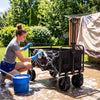
Plenty of good campgrounds have walk-in or cart-in sites where you can't park at your tent pad. This used to mean six round trips carrying coolers and bins; now I treat it as a shuttle problem, and a Finvizo collapsible wagon cart solves it in one or two loads. It's rated to 600 lbs, folds flat in seconds so it rides in the trunk without eating cargo space, and the 600D oxford fabric bed handles sharp-edged gear like stoves and lantern cases without tearing. The 3.6-inch-wide wheels rotate 360 degrees and have brakes, so it tracks over gravel and stays put on a slope while you unload.
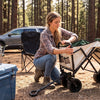
For bigger family loads I use the Finvizo folding wagon with the extended tailgate — same 600 lb rating, but the tailgate opens the bed to 160 liters and lets long items like tent poles, folding chairs, and a camp table ride flat. The removable 600D canvas is waterproof, and two mesh cup holders keep drinks upright on the roll. Load either wagon heavy-side-forward in the direction of travel so it doesn't tip on inclines. Still deciding between wagon styles? Our complete folding wagon cart guide compares capacity, wheels, and folding mechanisms.
Pre-Departure and Arrival Checklist
Before you turn the key, run this walk-around:
- All doors, tailgates, and hatches latched; no straps dangling near wheels or exhaust
- Roof load locked, within the vehicle's dynamic rating, total height noted
- Rearview sightline unobstructed; heaviest items low and centered
- Fuel canisters and aerosols out of the hot cabin, secured upright
- First-needed gear (tent, fly, first-aid kit) loaded last and reachable
On arrival, unload in reverse order of need — if you loaded correctly, that's simply top to bottom. Shelter items first, then kitchen, then comfort gear, staged on a tarp or in the wagon rather than spread across the site. Once camp is up, where each category lives matters just as much; our guide to storing camping gear during use covers that side of the system.
FAQ
How do you transport camping gear in a car?
Pack in reverse order of need: heavy, sturdy items (coolers, water jugs) low and centered over the axle, soft duffels and bins in the middle, and first-needed gear (tent, rain fly, first-aid kit) in last so it comes out first. Contain loose items in bins, strap down anything that can shift, and keep the rearview sightline clear.
What should you load first when packing a car for camping?
Load the items you'll need last — sleeping bags, pillows, camp clothing — first, deepest in the trunk. The tent, footprint, and setup tools go in last so they're immediately accessible on arrival.
Can you leave camping gear in a hot car?
Some of it, but not all. Never leave propane or butane canisters or aerosols in a hot vehicle — heat raises canister pressure dangerously. Keep lithium-battery electronics and perishable food out of direct sun, and in freezing weather keep water filters in the heated cabin so the element doesn't crack.
How do you carry gear from the car to a walk-in campsite?
A folding wagon is the most efficient answer. A wagon rated at 600 lbs with a 160-liter bed moves a complete family camp setup — cooler, tent, bins, chairs — in one or two trips. Load heavy items forward in the direction of travel to keep it stable on slopes.
How much weight can a camping wagon carry?
It varies by model, but heavy-duty folding wagons like the Finvizo camping wagon are rated to 600 lbs. Rated capacity assumes an even load on firm ground — deep sand or mud lowers what you can comfortably pull, and wide 3.6-inch wheels with brakes help on rough or sloped paths.

Written by Vivian J
Product Manager at Finvizo and an avid camper who tests gear on real trails. She writes from hands-on field experience to help you pick equipment that actually holds up outdoors.