Camping Gear Feature Comparison Guide
Focus on ventilation, weather protection, setup ease, insulation, and organization to find camping gear features that truly improve your outdoor experience.
Evaluating how different ventilation systems handle real-world airflow needs
Many camping gear pieces advertise ventilation, but the actual airflow you get varies dramatically depending on the system design. Mesh panels that cover most of a surface area move air freely but offer little protection from wind-driven rain or blowing dust. Smaller, strategically placed vents provide more controlled airflow that you can adjust based on conditions, though they move less total air volume. The most versatile systems combine multiple vent types—some that stay open constantly for background airflow, and others you can open or close to manage temperature and moisture throughout the day. When comparing options, think about whether you usually camp in still, humid conditions where maximum airflow matters most, or in windy, exposed areas where you need to balance ventilation with weather protection throughout your trip.
Understanding how various weather protection approaches perform in changing conditions
Camping gear uses different strategies to handle rain, wind, and temperature drops, and each approach has trade-offs that become apparent during extended use. Some systems rely on completely sealed constructions that block all external moisture but can trap condensation inside if not managed carefully. Others use breathable, water-resistant materials that let some vapor escape while keeping liquid water out, though they might wet through in prolonged heavy rain. The most adaptable options include adjustable elements—like removable rainflies, vented panels you can open or close, or dual-layer designs that create an insulating air gap. Compare how each system would handle the specific weather patterns you encounter most often, not just the worst-case scenarios shown in marketing materials.
Comparing setup and takedown systems for different camping scenarios
How gear goes up and comes down impacts your experience more than most campers initially consider. Some systems use color-coded components and intuitive connections that make setup straightforward even in low light or bad weather. Others require precise sequencing, multiple people, or careful attention to small details that become frustrating when you are tired, cold, or dealing with distractions at camp. The simplest systems often have fewer components and quicker setup times but might offer less stability in wind or less interior space. More complex systems typically provide greater stability and weather resistance but require more time and attention to deploy properly. Think about whether you usually arrive at camp with plenty of daylight to work through detailed instructions, or if you often find yourself setting up as the sun is setting and need something that goes up quickly and reliably every time.
Assessing how different insulation approaches handle temperature regulation
Camping gear manages temperature through various insulation methods, each with distinct performance characteristics in real conditions. Some systems trap warm air in small, static pockets that provide consistent warmth but can feel stuffy during temperature swings. Others use active moisture-wicking layers that move perspiration away from your body while maintaining warmth, though these often work best with specific layering systems. The most adaptable approaches combine insulation types—using denser materials in areas prone to heat loss and lighter, more breathable materials elsewhere. When comparing, consider not just the temperature rating but how the system would perform during the temperature fluctuations that happen throughout a typical camping night, from evening cool-down to early morning chill.
Analyzing how different organizational features impact daily campsite workflow
How gear organizes your belongings affects everything from morning efficiency to overall campsite comfort. Some designs use multiple specialized pockets and compartments that keep items separated and easy to find but add complexity and potential failure points. Others employ larger, more flexible spaces that adapt to different packing styles but might require additional organizational accessories. The most practical systems match their organization to how you actually use items at camp—keeping frequently accessed things within easy reach while storing less-used items securely. Compare how each approach would work with your specific camping habits, from how you access cooking supplies to where you store wet or dirty items between uses.
Understanding Camping Gear Features: What Really Matters?
When choosing camping gear, technical specs and marketing claims can be overwhelming. The features that truly impact your experience are practical design details influencing ventilation, weather protection, setup, insulation, and organization. Two tents with similar specs can feel very different when you’re setting up at dusk or facing rain.
This guide breaks down key feature categories based on hands-on testing and real-world use to help you distinguish useful features from fluff.
Setup and Takedown: Efficiency vs. Stability
How fast and easy you set up gear affects your experience:
- Simple Systems: Use color-coded parts for quick setup, ideal for late arrivals and bad light, though sometimes less stable.
- Complex Systems: Provide better weather resistance and stability but require more time and care.
Choose based on your usual arrival time and weather conditions.
Insulation and Temperature Regulation
Temperature control depends on insulation type and moisture handling:
- Static Insulation: Traps warm air but may feel stuffy with temperature swings.
- Moisture-Wicking Layers: Move sweat away while maintaining warmth.
- Combination: Use dense insulation where heat loss is highest and breathable fabric elsewhere.
Consider how gear performs over a full night, not just temperature ratings.

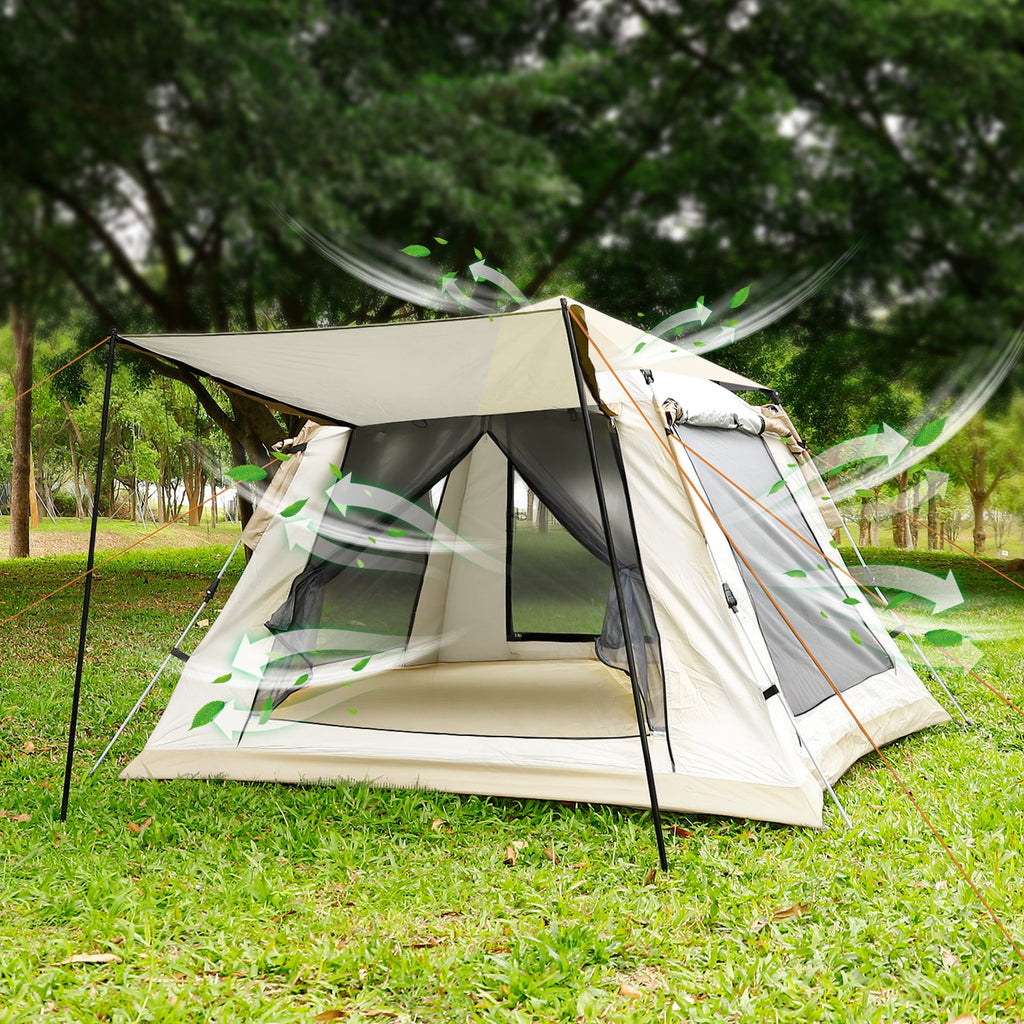
- Skip complicated assembly. — Hydraulic spring bracket sets up the tent in under 60 seconds. Spacious for 2–4 people, with two large mesh doors for cross ventilation and durable PU-coated waterproof fabric.
- High-quality materials. — 150D oxford fabric, water-resistant coating, fully taped seams, detachable rainfly, and sturdy poles.
- Double-door and windows design. — Provides breathable, comfortable space; mesh windows allow airflow and keep bugs out.
- Lightweight and portable. — 2-person tent weighs 5.5 lbs (2.5 kg), 4-person tent 6.6 lbs (3 kg), easy to carry and store.
Which Camping Gear Features Are Right for You?
- Finvizo 2/4 Person Instant Pop Up Camping Tent — Casual campers needing fast setup — Hydraulic system enables quick pitching, great for late arrivals or quick getaways.
- Finvizo 3-4/6-8 Person Instant Cabin Tent with Porch — Families and group campers — Spacious design with sun awning porch balances ventilation and weather protection.
- Finvizo 50L Camping Backpack with Rain Cover — Weekend campers and general outdoor use — 50L capacity with rain cover, suitable for carrying gear efficiently and protecting from weather.
FAQ
How do I choose the right ventilation system for my camping style?
In my testing, I look at whether I am camping in humid, still conditions or windy, exposed areas. Mesh panels provide maximum airflow but offer little protection from wind or dust. Smaller, adjustable vents give you more control over temperature and moisture. I prefer versatile systems that combine constant background airflow with adjustable vents so I can adapt to changing conditions throughout the day.
Should I prioritize simple setup or maximum weather protection?
It depends on your typical arrival time. If you often set up in fading light, simple systems with color-coded components are much more reliable. However, these simpler designs sometimes sacrifice stability. If you prioritize weather resistance, you might need a more complex system, but be prepared for a longer, more precise setup process that requires more attention when you are tired or cold.
How can I tell if a piece of gear will handle temperature swings well?
Don't just look at the temperature rating. I evaluate how the gear manages fluctuations from evening cool-down to early morning chill. Some gear uses static pockets for consistent warmth, while others use moisture-wicking layers. The most adaptable options I have used combine different insulation types, placing denser materials in areas prone to heat loss and breathable materials elsewhere to keep you comfortable.
What is the best way to compare gear organization features?
I always consider my actual campsite workflow rather than just the number of pockets. Some gear has many specialized compartments that keep things separated but add complexity. Others offer large, flexible spaces. The most practical gear for me keeps frequently used items within easy reach while providing secure storage for wet or dirty items, so I match the organization style to my specific packing habits.
Related reading
- Digital Nomad Outdoor Setup: Work from the Wilderness
- Camping Gear Setup & Takedown: A Step-by-Step Field Guide
- Camping Gear Comparison Checklist

Product Manager at Finvizo and an avid camper who tests gear on real trails. She writes from hands-on field experience to help you pick equipment that actually holds up outdoors.