
Folding Wagon Carts: The Complete Guide (2026)
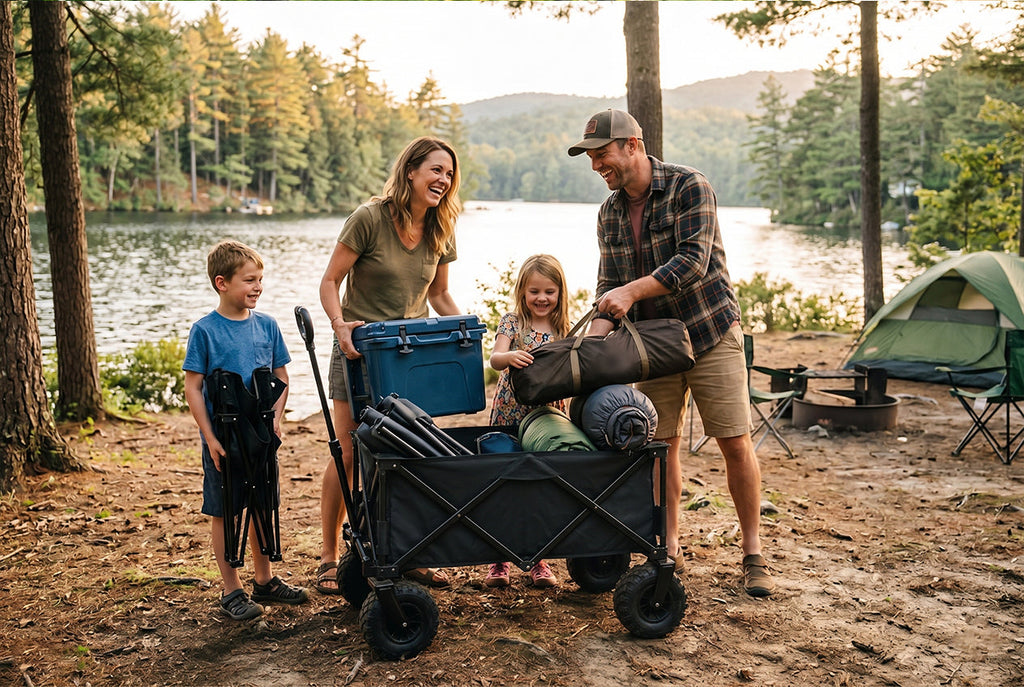
TL;DR: A good folding wagon should carry 300+ lbs, roll over gravel and sand on large all-terrain wheels, and fold flat enough for your trunk. For most campers, a 460 lbs wagon with big wheels is the sweet spot; families hauling coolers and canopies should step up to 600 lbs. This guide covers types, the five specs that matter, the right wagon for your scenario, and how to keep it rolling for years.
I've hauled camping gear across everything from packed campground gravel to ankle-deep Outer Banks sand, and I'll die on this hill: a folding wagon is the highest-value piece of camping gear per dollar you'll ever buy. It turns three sweaty trips from the car into one easy stroll. But the market is flooded with lookalikes that sink in sand, buckle at 150 lbs, or fold into something the size of a second tent. Here's everything I've learned testing and living with them.
Quick Picks by Scenario
Short on time? This is the whole guide in one table — details on every row below:
| Your main use | What to buy | Why |
|---|---|---|
| Beach & soft sand | Finvizo 460 lbs Big Wheels Wagon | Wide balloon-style wheels float over soft sand instead of digging in |
| Camping, sports & daily family duty | Finvizo 460 lbs All-Terrain Wagon | Best balance of capacity, fold size, and pull weight for most people |
| Heavy loads, tailgates & long gear lists | Finvizo 600 lbs Extended Wagon | Extended bed and reinforced frame swallow coolers, canopies, and firewood |
What Is a Folding Wagon? Types Explained
"Folding wagon" gets used for four different animals, and buying the wrong type is the #1 mistake I see:
Quad-folding wagons collapse inward from all four sides into a compact tube, usually with a wraparound cover. They're the most car-friendly and the style most people mean when they say "folding wagon." Most Finvizo camping wagons use this design.
Collapsible utility wagons fold flatter and lighter but trade away frame rigidity and capacity. Fine for groceries and picnics; frustrating under real camping loads.
Flat-folding garden carts have rigid frames with drop-down sides and pneumatic tires. They're half wagon, half wheelbarrow — great in the yard, miserable in a trunk.
Push carts vs pull wagons: a cart pushes with a low handle and big rear wheels; a wagon pulls with a long handle and a pivoting front axle. Wagons steer better on rough ground and let you watch your load. For outdoor use, pull-style wins almost every time — the exception is pure pavement duty.
Deep-bed wagons deserve a special mention. Standard beds run about 12 inches deep; deep-bed models push 18+ inches. That extra wall height is the difference between "cooler fits" and "cooler plus two beach bags stacked on top." If your loads are tall and tippy — fishing tackle, stacked firewood, a canopy in its bag — the deep bed beats a bigger floor. The trade-off: deep beds fold slightly larger and kids can't climb in as easily (which, depending on your Saturday plans, is either a flaw or a feature).
One mechanism note that saves frustration later: quad-fold wagons collapse by pulling a strap or handle in the center of the bed floor. If a listing doesn't show the fold strap in its photos, that's usually because the fold is fiddly. A good quad-fold goes from rolling to packed in under 15 seconds with one hand — that's the standard to hold any wagon to.
How to Choose: The 5 Specs That Actually Matter
1. Capacity — buy for your heaviest day, not your average day
Weight ratings run from 150 lbs (budget store wagons) to 600 lbs (heavy-duty builds). A realistic family camp load — cooler, tent, two chairs, canopy, bag of firewood — easily tops 200 lbs. My floor recommendation is 300 lbs; 460 lbs covers almost everyone; 600 lbs is for tailgaters, beach families, and people who haul water jugs. I wrote a full breakdown of 600 lb vs 460 lb capacity and who needs which if you're on the fence.
Two things the spec sheet won't tell you. First, ratings are measured on flat, hard ground — on sand or rutted grass, treat about 80% of the printed number as your real ceiling, because frame flex multiplies under side load. Second, capacity is about the frame, not the fabric: a wagon rated 460 lbs with 600D Oxford fabric will outlive a 460-lb wagon with thin 210D fabric, because the fabric is what actually touches your cooler corners. Check both numbers.
2. Wheels — the difference between fun and regret
Wheels decide where your wagon can go. Small hard-plastic wheels (under 6 inches) are pavement-only. Mid-size treaded wheels handle grass and gravel. Wide all-terrain or balloon wheels (7+ inches) are mandatory for sand — they spread the load and float instead of plowing. Sealed bearings matter more than tread pattern; a gritty bearing turns a 50-lb pull into a 90-lb pull. If the beach is your main destination, read my soft-sand beach wagon guide — wheel width is a whole science of its own there.
Field test I use on any new wagon: load it with 40 lbs (a case of water works), pull it across a lawn, and listen. Grinding or clicking means cheap bushings instead of bearings, and it only gets worse with sand in the mix. Also check that the front axle pivots freely through its full arc — a stiff pivot is what makes loaded wagons "crab" sideways on slopes.
3. Folded size — measure your trunk first
Every wagon looks small in the product photo. Get the folded dimensions in writing and tape-measure your trunk opening before ordering — it's the opening, not the trunk volume, that rejects wagons. Quad-fold designs typically pack to roughly 30×20×10 inches — small enough to stand upright behind a seat. If you drive a sedan, this spec can eliminate half the market instantly, which is honestly a gift. One more trap: some wagons need their wheels popped off to hit the advertised fold size. That's fine if you know it going in and annoying if you don't, so check whether the listed dimensions are "wheels on" or "wheels off."
4. Frame material — steel for strength, aluminum for weight
Powder-coated steel frames carry more and cost less; aluminum frames save 5–8 lbs and never rust. Beach people should lean aluminum or heavily coated steel, because salt eats cheap frames in a single season. Either way, look at the joint hardware — riveted and bolted joints outlast plastic snap-fits by years.
While you're inspecting the frame, check the handle: a telescoping handle that locks at two or more lengths matters more than it sounds. Too short and the wagon clips your heels on downhills; too long and it drags in the sand when you set it down. Adjustable handles solve both, and they're standard on the Finvizo camping wagon line for exactly that reason.
5. Wagon's own weight — the spec nobody checks
A 35-lb wagon you dread lifting into the trunk becomes a wagon you stop bringing. Under 25 lbs is easy one-handed duty for most adults; 30+ lbs is a two-hand commitment. Match it to whoever does the loading at your house.
How do I pick the right folding wagon for camping or beach trips?
Run the five specs in this order: (1) capacity for your heaviest realistic load, (2) wheels matched to your ground — sand means wide wheels, no exceptions, (3) folded size vs your trunk, (4) frame material for your climate, (5) wagon weight for whoever loads it. That sequence kills 90% of buyer's remorse.
Best Folding Wagon by Scenario
Different trips reward different wagons. Here's how I'd match them — each links to the deep-dive for that scenario:
Soft-sand beach days. Wide balloon wheels, rust-resistant frame, hose-it-off fabric. The 460 lbs big-wheel wagon is built for exactly this — we've dragged it loaded across loose dry sand at the Outer Banks without the wheels digging past the first inch. Full wheel science and dune tests: best beach wagons for soft sand.
Family camping weekends. You want 400+ lbs capacity, a moderate fold, and fabric that survives marshmallow goo. Prioritize a flat bed with no center bar so sleeping bags and bins stack cleanly. See the family-focused picks in best collapsible wagons for camping and beach.
Sports, sidelines & soccer Saturdays. Quick fold, cup holders, and a handle that doesn't drag on the ground. Between folding chairs, a cooler, and a pop-up shade, a tournament weekend load hits 60 lbs fast — and the parking lot is always farther than it looks. All three sports-ready setups are compared in the sports wagon guide.
Heavy loads on a budget vs buy-it-for-life. Where the extra money in a 600-lb frame actually goes: cheap vs heavy-duty wagon comparison.
Trails, fields & off-road terrain. Deep treads, high clearance, and frames that don't flex on ruts: best off-road wagons.
Fishing trips. Rod holders, cooler fit, and dock-friendly wheels: fishing wagon loading setup.
The all-around best of 2026. If you just want the single strongest pick after our real-world testing, it's in best folding wagons of 2026.
Folding Wagon vs the Alternatives
vs a wheelbarrow: A wheelbarrow wins on loose, dumpable material — mulch, gravel, soil. A wagon wins for everything you don't want to dump: coolers, kids, tents, tackle. Wagons also need two hands less often and ride lower, so nothing tips. The full head-to-head is in wagon vs wheelbarrow.
vs a dump cart: Dump carts tow behind mowers and ATVs. If you're hauling for a household on foot, they're overkill — heavy, wide, and awkward at walking pace. They also can't follow you up a campground path or across a boardwalk.
vs a backpack or cooler-with-wheels: Fine for one person traveling light. The moment you're hauling for two or more people, the math collapses — nobody makes a backpack that holds a tent, a cooler, and four chairs.
vs carrying it all by hand: The average family beach load is 60–90 lbs and 3–4 trips. A wagon is one trip, once. After a decade of camping I can tell you the gear that actually gets used is the gear that's easy to move.
If you're curious how a specific Finvizo wagon holds up after a full season of this abuse, our long-term notes are in the Finvizo wagon cart field review.
Use & Care: Make It Last a Decade
Loading: Heavy items low and centered, cooler against the front wall, nothing stacked above the sidewalls on rough ground. The beach-specific packing order is in how to pack a folding wagon for the beach.
Cleaning: Rinse salt and sand off the same day — salt is the frame killer and sand is the bearing killer. Fabric hosedown + air dry handles 95% of messes; the deep-clean routine (including fishy cooler spills) is in how to clean a camping wagon after the beach.
Storage: Dry, folded, and off concrete floors if your winters are damp — concrete wicks moisture into fabric all winter. Before the first trip each spring, do a 60-second once-over: unfold fully, check the pivot bolts for play, spin each wheel, and tug the fold strap. Catching a loose bolt in your driveway beats discovering it half a mile from the car.
Folding mechanism care: the fold strap and pivot joints collect grit faster than any other part. A blast of compressed air (or a stiff brush) after sandy trips keeps the fold action one-hand smooth. Never force a gritty fold — that's how pivot pins bend.
And if you're still untangling the naming — yes, "folding" vs "foldable" wagons are genuinely different mechanisms, and it matters for fold size.
Price Ranges: What Your Money Buys
After a few years of testing, the market shakes out into three honest tiers:
- Under $80: light-duty wagons for picnics and groceries. Expect 150–220 lb ratings, thin fabric, and small wheels. Nothing wrong with them — just don't point one at a sand dune.
- $80–$180: the sweet spot for most campers. Real 300–460 lb frames, all-terrain wheel options, 600D fabric, quad-fold mechanisms. Every Finvizo wagon lives in this band, because it's where durability stops being a lottery.
- $180+: heavy-duty and specialty builds — 600 lb frames, extended beds, tailgate hinges, balloon wheelsets. Worth it when your load list demands it; wasted money when it doesn't.
The pattern I see kill wagons early isn't brand or price — it's mismatch. A $70 wagon hauling 150 lbs of beach gear across soft sand every weekend will die in a summer, and the same money spent on the right wheels would have lasted five years. Match the tool to the trip, and the mid-tier beats the bargain bin every time.
Folding Wagon FAQ
How much weight can a folding wagon hold?
Quality models range from 300 to 600 lbs. Finvizo wagons run 460–600 lbs. Whatever the rating, treat 80% of it as your real ceiling for rough terrain — ratings are measured on smooth pavement.
Are folding wagons good on sand?
Only with wide wheels. Standard narrow wheels sink and stall in soft sand within yards. Look for wheels 7+ inches wide with balloon-style profiles for beach use.
What's the difference between a wagon and a utility cart?
Wagons pull with a pivoting front axle and steer well on rough ground; utility carts push and are built for smooth, hard surfaces. For camping and beach use, the pull-style wagon is the right tool.
Can a folding wagon fit in a car trunk?
Quad-fold models pack to roughly briefcase-plus size (about 30×20×10 inches) and fit standard sedan trunks. Always compare the folded dimensions against your trunk opening before buying.
Are folding wagons allowed at beaches and parks?
Almost always yes — they're treated like strollers or coolers. The rare exceptions are boardwalks and some protected dune areas that restrict wheeled items; check the park's site before you go.
How do you fix a squeaky or stiff wagon wheel?
Rinse the axle area, dry it, then hit the bearings with a silicone-based lubricant (not WD-40, which attracts grit). If the wheel wobbles after that, the bearing is worn and most brands sell replacements.
Our Wagons: Built for the Trips Above
Every scenario in this guide is one we designed and tested for. The Finvizo 460 lbs big-wheel wagon covers beach, camp, and sport duty; the 600 lbs extended model handles the heavy haulers; and the 600 lbs tailgate edition adds a drop-down end gate for oversized loads like canopy frames and firewood. Browse the full Finvizo camping wagon collection to compare them side by side — and if you're still torn between two, the deep-dives linked above will settle it.
Related reading
- Best Collapsible Wagons for Camping and Beach Trips 2026
- How to Clean a Camping Wagon After the Beach: Full Guide
- Wagon vs Wheelbarrow: Which Hauls Camping Gear Better?

Vivian J is a Product Manager at Finvizo and an avid outdoor enthusiast. She tests gear on real trails and writes from hands-on field experience to help readers choose equipment that performs reliably outdoors.





)