Sun Protection for Cyclists: Sleeves, Gaiters & Heat Management
Sun Protection for Cyclists: Sleeves, Gaiters & Heat Management
A four-hour road ride in July is a different beast than a shaded trail run. You are exposed to the sun from every angle—reflected off asphalt, bouncing off water, hammering down from cloudless sky. I learned this the hard way on a century ride through central Texas where I finished with a sunburn through my jersey vents and a heat headache that lasted until dinner. That day changed how I think about cycling sun protection. It is not about slapping on lotion at the start and hoping for the best. It is about building a system: UPF-rated fabric on your arms and neck, smart heat management, and knowing when to back off before your core temperature climbs too high.
Why Cyclists Face Unique Sun Exposure
Cycling creates a perfect storm for UV damage. You are outdoors for long, continuous stretches. Your body position leaves your forearms, the back of your neck, and your ears fully exposed to overhead sun. The forward lean on a road bike or mountain bike angles your face toward the ground reflection, which bounces back up to 25 percent of UV. And the wind you generate while riding creates a false sense of coolness that masks how much radiation your skin is actually absorbing.
I have seen cyclists with farmer tans so stark they look like they are wearing invisible arm warmers. The left side of your face and arm often take more damage than the right in countries with right-hand traffic, because you are closer to the centerline and exposed to reflected radiation from the road surface. A standard short-sleeve jersey with SPF 15 to 20 equivalent—if you are lucky—does not cut it for rides over ninety minutes.
Arm Sleeves: The Foundation of Cycling Sun Defense
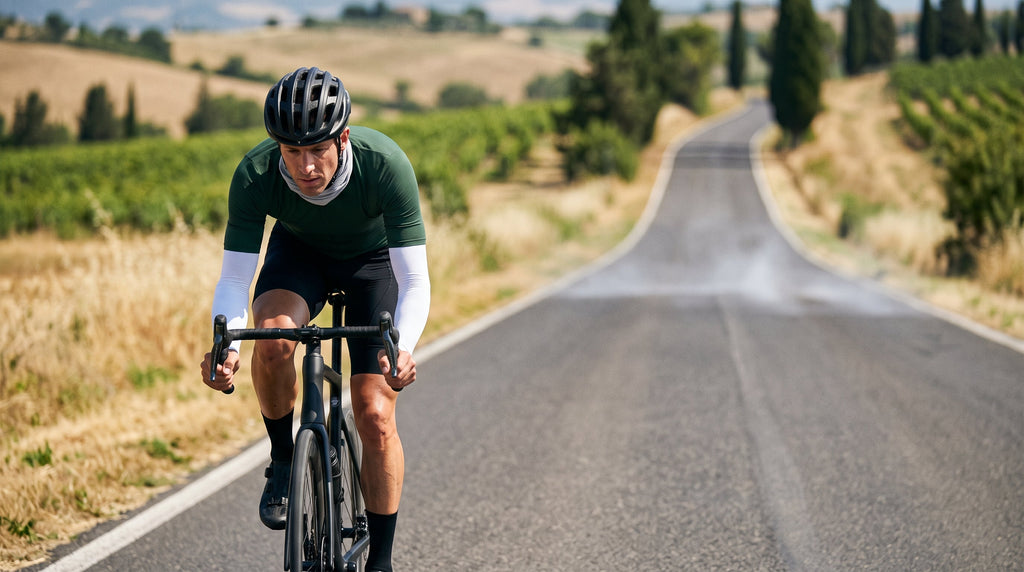
For me, arm sleeves are non-negotiable on any ride longer than an hour. They solve three problems at once. First, they block UVA and UVB at UPF 50+ without the greasy residue that makes gripping handlebars feel like holding a stick of butter. Second, the light compression improves circulation on long climbs, which helps with fatigue. Third, the cooling fabric actually lowers skin temperature through evaporative wicking, which matters when you are grinding up a 6 percent grade at midday.
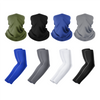
The Finvizo neck gaiter and arm sleeves set is what I reach for most often. The sleeves are contoured for a cycling position—slightly longer at the wrist to cover the gap between glove and jersey, with a gripper band at the bicep that does not slide down when you are in the drops. After a 50-mile ride last month, I peeled them off and my arms were cool, dry, and completely unburned. The jersey underneath was soaked, but the sleeves had managed moisture so well I barely noticed them.
One tip: put your sleeves on before your jersey. Sounds obvious, but if you pull them over a fitted jersey you will stretch the cuff and create a draft gap at the wrist. Base layer, sleeves, jersey, gloves. That order eliminates every entry point for sun and wind.
Neck Gaiters and Balaclavas: Protecting the Gap Zones
The back of your neck is one of the most neglected sun targets on a cyclist. It is horizontal, exposed, and often unshaded by a helmet. A standard cap leaves a gap at the hairline that can burn badly enough to blister. I have been there. A lightweight neck gaiter pulled up to the lower edge of your helmet solves this without adding bulk.
For road cyclists, the gaiter also protects against road grit and exhaust particulates on busy routes. For gravel riders, it keeps dust out of your mouth on dry sectors. The cooling fabric Finvizo uses is thin enough that breathing resistance is negligible even at threshold effort. I have worn mine on 90-degree climbs and the evaporation from the fabric kept my neck cooler than bare skin.
If you ride in a full-face helmet—motorcycle or e-bike commuters—a cooling balaclava is the better call. It covers the entire head and neck area under the helmet, wicks sweat away from your scalp, and prevents the helmet liner from turning into a soaked sponge by mile twenty. The thin material does not affect helmet fit, which is critical for safety.
Heat Management: Sun Protection Is Only Half the Battle
Blocking UV does not automatically keep you cool. On the hottest rides, you need a heat-management strategy that goes beyond fabric. Here is what works for me after years of summer cycling in the Southwest.
Pre-cool before you roll out. I keep my arm sleeves and neck gaiter in the freezer for ten minutes before a hot ride. The cooling effect lasts for the first twenty minutes, which is usually the hardest part of a hot start. Hydrate with electrolytes, not just water. Sodium loss accelerates heat stress, and plain water without salt can actually worsen cramping. I aim for one bottle with electrolytes per hour when the temperature is over 85 degrees.
Plan your route for shade and elevation. A road with tree cover can be 10 to 15 degrees cooler than open asphalt. If you are doing intervals, do the hard efforts in the shaded sections and recover in the sun. Time your rides for early morning or late evening when the sun angle is lower and UV intensity drops. The hours between 10 a.m. and 4 p.m. account for roughly 80 percent of daily UV exposure.
Know the warning signs of heat exhaustion: dizziness, nausea, goosebumps on hot skin, and a sudden drop in sweating. If you stop sweating while still exerting, that is heat stroke territory and you need to stop immediately, find shade, and cool your core with water or ice.
What to Look for in Cycling Sun Gear
Not all sun gear works for cycling. I avoid anything with seams that sit under backpack straps or jersey pockets. I look for flatlock stitching on sleeves to prevent pressure points when I am leaned forward on the bars. And I test every piece on a trainer first—if it bunches, slips, or irritates in a static position, it will be ten times worse at mile forty.
Color matters more than people think. Darker fabrics absorb more visible light but can be treated with reflective cooling finishes that offset the heat gain. Light colors reflect visible light but can let more UV through if the weave is loose. A lab-tested UPF 50+ rating matters far more than color choice. I run black sleeves in summer and have never had a heat issue because the fabric technology—not the dye—is doing the work.
For multi-day touring, pack two pairs of sleeves and rotate them daily. Hand-wash in a hotel sink, wring out in a towel, and they will dry overnight. A dedicated cycling cap with a UPF-rated brim adds face protection without the aerodynamic drag of a full hat. And do not forget lip balm with SPF 30+. Burnt lips on a multi-day tour are misery defined.
Frequently Asked Questions
Do arm sleeves affect aerodynamics on a road bike?
Minimal impact. Quality cycling-specific sleeves are thin and tight-fitting, creating no measurable drag at recreational speeds. The aerodynamic penalty is negligible compared to the comfort and protection gain.
Can you wear a neck gaiter under a cycling helmet safely?
Yes, if the gaiter is thin and cooling-focused. Avoid thick fleece or wool gaiters that could compress or shift the helmet fit. A lightweight polyester-spandex gaiter adds less than a millimeter of bulk and does not compromise safety.
How do you keep cool while wearing sun sleeves on a hot ride?
Pre-cool the sleeves in a freezer or ice water before the ride. Choose moisture-wicking fabric that accelerates evaporation. Stay hydrated with electrolytes. And ride in shaded routes or during cooler hours when possible.
What is the difference between a neck gaiter and a balaclava for cycling?
A neck gaiter covers the neck and lower face, leaving the top of the head exposed for helmet ventilation. A balaclava covers the entire head and neck. Gaiters are ideal for standard cycling helmets; balaclavas work better under full-face or commuter helmets.
How long do UPF cycling sleeves last with regular use?
Quality UPF 50+ sleeves maintain their rating for 30 to 50 washes. With typical cycling use—two to three rides per week, washed weekly—a good pair lasts two to three seasons. Avoid bleach and fabric softener to maximize lifespan.
Is sunscreen still necessary if I wear arm sleeves and a neck gaiter?
Yes, for exposed areas. Apply sunscreen to your face, ears, hands, and any skin not covered by UPF fabric. The combination of fabric on arms and neck plus sunscreen on gaps provides the most reliable protection on long rides.
Ready to build your cycling sun system? Explore the full comparison of neck gaiters, balaclavas, and arm sleeves to find the right combination for your riding style. And if you are planning longer tours, our camping gear checklist covers the full kit you need for multi-day adventures.
Related reading
- Volleyball Arm Sleeves: Why Players Wear Them & Top Picks
- Do Arm Sleeves Actually Keep You Cool? Here's the Science
- Cooling Towel vs Regular Wet Towel: Does It Actually Work Better?

Vivian J is a Product Manager at Finvizo and an avid outdoor enthusiast. She tests gear on real trails and writes from hands-on field experience to help readers choose equipment that performs reliably outdoors.