Cooling Towel vs Regular Wet Towel: Does It Actually Work Better?
TL;DR: A specialized cooling towel outperforms a regular wet towel for sustained outdoor activity. Engineered cooling towels use advanced fabrics to hold moisture longer, providing 1–3 hours of cooling compared to the 15–20 minutes offered by a standard cotton towel. They are also lighter, provide UPF 50+ sun protection, and can be reactivated instantly with a simple snap.
When summer heat hits, you might grab whatever towel is handy to stay cool. But does a cooling towel vs regular towel comparison have a clear winner? As a product manager at Finvizo, I spend a lot of time analyzing how our materials perform in the field. The short answer is yes: while a wet cotton towel works in an emergency, specialized cooling towels are significantly more effective for hiking, camping, and sports.

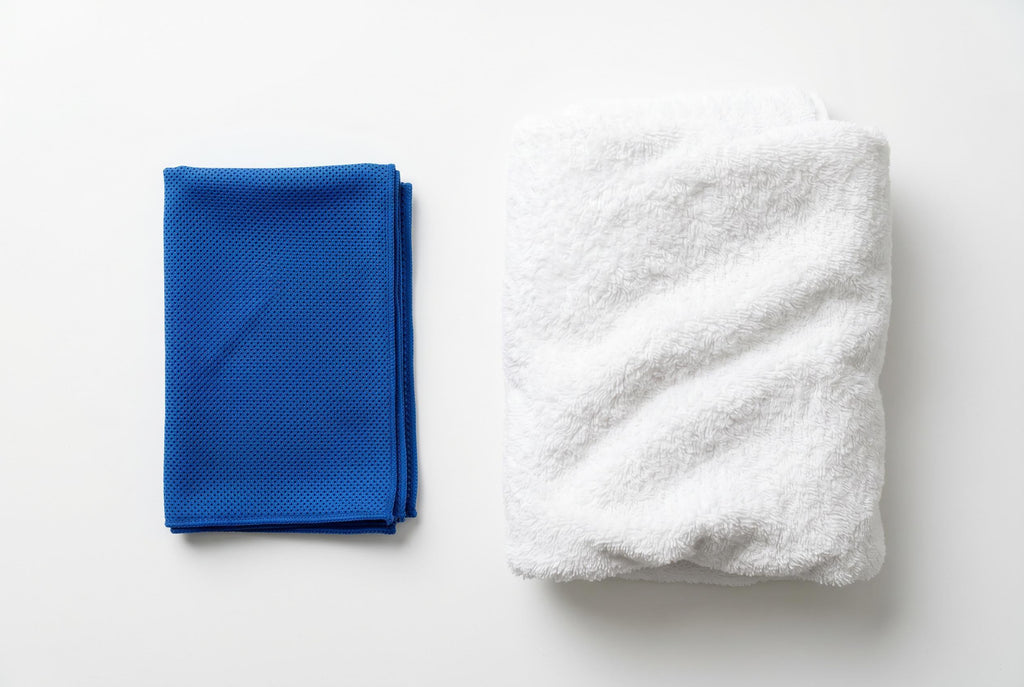
Quick Comparison Table
| Feature | Cooling Towel | Regular Wet Towel |
|---|---|---|
| Cooling Duration | 1–3 hours | 10–20 minutes |
| Activation | Soak, wring, snap | Soak only |
| Weight (Dry) | 2–3 oz | 8–16 oz |
| UPF Protection | UPF 50+ | None |
| Best For | Hiking, camping, sports | Short tasks, emergencies |
What Is a Cooling Towel?
A cooling towel is purpose-built outdoor gear designed for sustained evaporative cooling. Unlike standard cotton, these towels use specialized fabric blends—often PVA or advanced microfibers—engineered to control the rate of evaporation. As water evaporates from the fabric, it draws heat away from your skin.
Quality options, such as the Finvizo 4-Pack Cooling Towels , are designed to retain water without dripping, providing a long-lasting cooling effect while offering UPF 50+ sun protection (see what a UPF 50 rating actually means ).

What Is a Regular Wet Towel?
A regular wet towel is simply a standard cotton towel soaked in water. While it provides immediate relief through conduction (the cool water absorbing heat from your skin), it lacks the technical properties required for long-term use.
Limitations of cotton towels outdoors:
- Rapid Drying: Cotton loses its cool quickly as it warms up and dries out, usually within 20 minutes.
- Excessive Weight: A soaked cotton towel can weigh over a pound, making it a burden on a long hike.
- No UV Protection: Unlike technical cooling fabrics, cotton does not provide a rated barrier against harmful UV rays.
When a Regular Wet Towel Is Good Enough
To be fair, a regular wet towel is not useless. If you are working in the backyard, sitting on the porch, or need a two-minute cool-down after mowing the lawn, a damp cotton washcloth does the job and costs nothing extra. It is also a reasonable backup when you have access to unlimited cold water and zero pack-weight concerns.
The gap appears the moment you move: on a trail, at a tournament, or anywhere you cannot re-soak every fifteen minutes. That is where the weight, dry-time, and cooling-duration differences stop being spec-sheet details and start being the difference between comfortable and miserable.
So, Do Cooling Towels Really Work?
So, do cooling towels really work? Yes—but the honest answer needs context. A cooling towel works through controlled evaporation, not magic fabric: soak it, wring it, snap it, and it holds the effect for 1–3 hours.
Do cooling towels actually work better than just wetting a cotton towel? In the first ten minutes, barely—any damp fabric feels cool against hot skin. From minute twenty onward, the gap turns decisive: the cotton towel is warm and heavy while the cooling towel is still going.
Are cooling towels worth it? If your summer happens outdoors, the cost-per-use math and the UPF 50+ rating say yes.
How I Test Cooling Towels in the Field
When we evaluate a new cooling towel at Finvizo, I take it on real trips rather than relying on lab numbers. My routine is simple: soak the towel at the trailhead, wear it around my neck through the warmest part of the hike, and note how long I actually feel the cooling before I need to reactivate it.
What I have learned is that fabric quality shows up in the second hour, not the first ten minutes. Almost any wet fabric feels cool at first. The towels that earn a place in my pack are the ones still working at mile five, that snap back to life with a splash from my bottle, and that do not drip down my shirt while they do it.
The Activation Trick: Why "Snap" Matters
Many users assume a cooling towel works just like a regular one, but the "snap" is essential. The process is: soak, wring, and snap.
The snap forces air through the damp fibers, which kick-starts the evaporative cooling process. Without this step, you aren't utilizing the fabric's full cooling potential. Once the cooling effect fades during your activity, you don't need a full re-soak; a quick splash of water from a bottle and a snap will reactivate the towel instantly. This is the same routine we recommend in our marathon cooling towel guide .

Portability and Cost-Effectiveness
When you are packing for a trip, every ounce counts. Cooling towels are lightweight (2–3 oz) and fold down to the size of a deck of cards. In contrast, a wet cotton towel is bulky and stays damp for hours, which can lead to odors in your pack.
Regarding cost, while a single cotton towel is cheaper upfront, a high-quality cooling towel is designed for hundreds of uses. When you factor in the durability and the performance benefits, the cost-per-use of a specialized cooling towel is significantly lower for active outdoor enthusiasts.
Care and Storage: Keeping the Cooling Effect
A cooling towel only performs if you look after it. Rinse it after sweaty days, let it dry fully before sealing it in a bag, and avoid fabric softener, which clogs the fibers and slows evaporation— the same washing rules that protect UPF clothing apply here. Stored damp in a hot car or sealed pack, any towel—technical or cotton—will develop odor.
With basic care, a quality cooling towel lasts for years of regular use, which is where the cost-per-use math really pulls ahead of the free cotton towel you keep ruining.
Cooling Towel vs Wet Towel FAQ
Does a cooling towel work better than a wet towel? Yes. Cooling towels provide 1–3 hours of relief compared to 10–20 minutes for a wet cotton towel. They are lighter, faster-drying, and offer UPF 50+ protection.
How long does a cooling towel last before you need to reactivate it? In dry heat, expect one to three hours per soak. A quick splash and snap restores the effect in seconds, so you rarely need a full re-soak during an activity.
Can you turn a regular towel into a cooling towel? No. The cooling effect is a result of the fabric's ability to regulate evaporation, which cotton cannot do effectively. A wet cotton towel is a temporary emergency solution, not a performance equivalent.
Do cooling towels work in high humidity? Yes, though their efficiency is slightly reduced. Because humidity slows down evaporation, you may need to reactivate the towel more frequently, but it will still outperform a wet cotton towel.
Does a cooling towel actually lower body temperature? Yes. By cooling the blood at pulse points (like the neck or wrists), these towels can help moderate your core temperature and reduce perceived exertion during physical activity.
Still choosing between wearable options? Our cooling towel vs cooling neck gaiter comparison breaks down which format suits which activity.
Related reading
- How to Use a Cooling Towel & Why It Stops Working
- Best Gym Towels: Cooling vs Microfiber for Heavy Sweat
- Best Cooling Towel for Neck: How to Stay Cool on the Trail

Product Manager at Finvizo and an avid camper who tests gear on real trails. She writes from hands-on field experience to help you pick equipment that actually holds up outdoors.