Volleyball Arm Sleeves: Why Players Wear Them & Top Picks
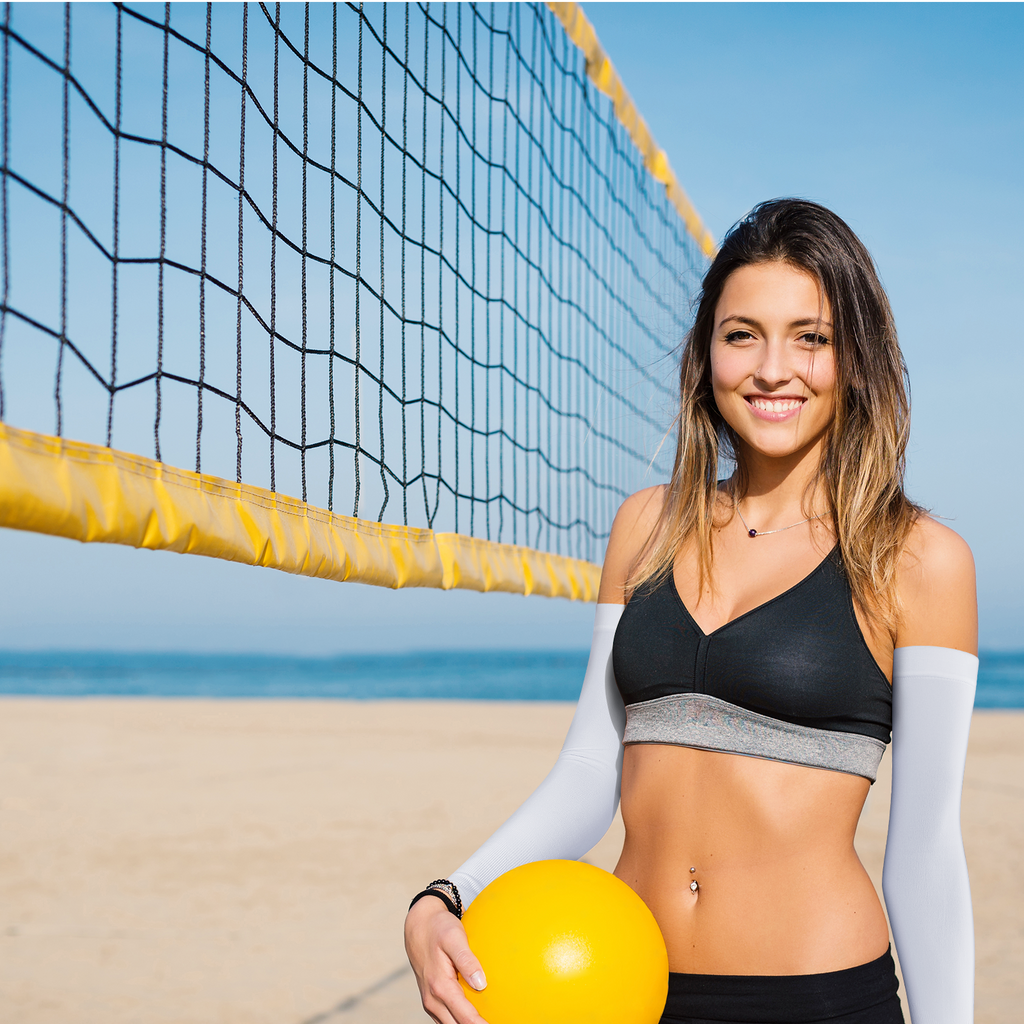
TL;DR: Volleyball players wear arm sleeves for three practical reasons: they prevent floor burns and court rash on digs, the light compression keeps forearm muscles warm between rallies, and they manage sweat so your platform stays predictable. Defensive specialists should look at padded sleeves; hitters and setters usually prefer thin, breathable ones. For outdoor and beach play, pick UPF 50+ fabric that blocks about 98% of UV rays.
I got asked about arm sleeves more than any other product question last fall — mostly from parents whose kids had just made a school team and kept coming home with scraped-up forearms. Full disclosure: I manage the sleeve line here at Finvizo, and I also play in a rec league on Thursday nights, so I've been on both sides of this question. My own forearms told the story pretty clearly: the season I started wearing sleeves, the strawberry-colored floor burns on my left arm finally healed up and stayed healed. If you're shopping for yourself or for a kid who just made the roster, here's everything worth knowing — and if you're playing outdoor or beach ball, our sun protection arm sleeves are the pair I'd point you to first.
Why Volleyball Players Actually Wear Arm Sleeves
Watch any high school match and you'll see sleeves on liberos first — and there's a reason for that. A defensive specialist might hit the floor 15-20 times in a single match, and every sprawl puts the inside of the forearm in direct contact with the court. Hardwood and sport court surfaces take skin off fast; a decent sleeve turns a week-long raspberry into a non-event.
Protection is only part of it, though. Light compression (most volleyball sleeves run 15-20 mmHg) keeps the forearm muscles warm and supported through long tournament days when you're sitting for 40 minutes between matches and then expected to pass perfectly cold. And sweat management matters more than people realize: a bare, sweaty forearm changes the way the ball skids off your platform, especially in humid gyms. A sleeve gives you the same contact surface on every single pass.
There's one more reason for beach and grass players: sun. A morning tournament means 4-6 hours of direct exposure, and sleeves rated UPF 50+ block roughly 98% of UV radiation — more reliable than sunscreen on arms that you're constantly wiping, sweating on, and dragging across sand. I break down what that rating actually means in my UPF 50+ explainer if you want the nerdy version.
Padded vs. Non-Padded Sleeves: Which One Is Yours?
The biggest fork in the road is padding. Neither is "better" — they solve different problems.
| Padded sleeves | Non-padded sleeves | |
|---|---|---|
| Best for | Liberos, DS, aggressive defenders | Hitters, setters, beach players |
| Protection | Foam or gel pad over the forearm contact zone | Fabric barrier against burns and scrapes |
| Ball feel | Slightly dampened — takes 2-3 practices to calibrate | Closest to bare-arm feel |
| Heat | Runs warmer in hot gyms | Coolest option, better sweat wicking |
| Typical price | $15-25 per pair | $10-20 per pair (multi-packs cheaper) |
My rule of thumb after watching a lot of players buy both: if you play back row and your coach has you digging everything, padding pays for itself in the first month. If you're a hitter or setter who mostly wants warmth and sweat control, padding just gets in the way — go thin and breathable instead.


How to Pick the Right Pair
Size by measurement, not by guess. Wrap a tape around the widest part of your forearm — most brands size like this: 9-10.5 inches is a small/medium, 10.5-12 inches is a large/XL. A sleeve that's too loose slides down mid-rally (useless), and one that's too tight leaves a red ring and cuts circulation during long sets. You want firm, even pressure you stop noticing after two minutes.
Fabric: look for a nylon-spandex or polyester-spandex blend in the 80/20 range. It wicks sweat, dries in about half the time of cotton blends, and holds its elasticity through a season of washes. Flatlock seams matter more than any marketing claim — a raised seam right where the ball contacts your forearm will annoy you 40 times a match.
Grip: a silicone band inside the top cuff keeps the sleeve parked on your bicep. Cheap sleeves skip this and migrate down your arm by the second set. Check for it in the product photos before you buy.
Length: most volleyball sleeves run wrist-to-bicep (about 15-17 inches). Youth players with shorter arms should buy youth sizing rather than scrunching an adult small — bunching at the wrist interferes with hand setting.
Indoor, Beach, and Grass: Different Games, Different Priorities
Indoor players should prioritize padding and durability — the court is the hazard. Beach players should flip that priority list: sun protection and sand management come first. Sand works into fabric and acts like sandpaper on digs, so beach sleeves should be smooth-faced, tightly woven, and UPF-rated. Grass sits in between, but add one consideration: dewy morning grass plus bare forearms equals a rash that itches for days, so even rec-league grass players benefit from a basic pair.
If you play multiple surfaces through the year, a multi-pack is the practical answer. Our sleeve sets collection has 4-pair packs that work out to a few dollars per pair — one for the gym bag, one for the beach bag, one in the wash, one spare.
Care: Keep Them Working All Season
Sleeves are elastic, and elastic dies from heat. Wash cold, skip the fabric softener (it coats the fibers and kills the wicking), and air dry — 15 minutes in a hot dryer does more damage than a month of matches. Washed right, a good pair lasts a full school season of 2-3 practices and a match per week. I wrote a full care walkthrough in how to wash UPF clothing — the same rules apply to volleyball sleeves.
Specs at a Glance: Our Sleeve Pick
The Finvizo Sun Protection Arm Sleeves 4-Pair Pack uses UPF 50+ fabric that blocks 98% of UV rays, with graduated compression in a 90% nylon / 10% spandex knit. One size stretches to fit arms 15–43.34 inches long and 3.54–9.84 inches around — youth players included — with anti-slip, anti-pilling, sweat-wicking construction that machine-washes clean.

FAQ
Why do volleyball players wear sleeves on only one arm? Most players wear one sleeve on their dominant digging arm — the one that hits the floor first. It's about protecting the arm that takes the abuse, not symmetry. Plenty of liberos wear both; plenty of hitters wear neither. There's no rule, just what your game demands.
Do arm sleeves actually help you pass better? Indirectly, yes. Sleeves don't add skill, but they remove variables: a dry, consistent platform surface, warm muscles, and no hesitation about hitting the floor. Players pass better when they're not flinching. Think of sleeves as removing excuses, not adding talent.
Are padded sleeves legal in high school volleyball? Yes. NFHS rules allow soft, padded arm sleeves as long as they contain no hard or unyielding material. Foam and gel pads are fine. If your sleeve has any rigid insert, it's not legal — but mainstream volleyball sleeves are designed to comply.
What size arm sleeve should a 12-year-old wear? Measure the forearm at its widest point. Most 10-13 year olds land in youth small/medium (roughly 8-9.5 inch forearm circumference). If your kid is between sizes, size down for court play — a snug sleeve stays put, a loose one spends the match around their wrist.
Can I wear volleyball sleeves for other sports? Absolutely. The same sleeves work for football, basketball, baseball, and outdoor training. The only volleyball-specific feature to watch for is padding placement — volleyball pads sit on the inner forearm where you contact the ball, which differs from football forearm pads.

Written by Vivian J
Product Manager at Finvizo and an avid camper who tests gear on real trails. She writes from hands-on field experience to help you pick equipment that actually holds up outdoors.