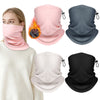
Neck Gaiter for Running: Bounce-Free Sun Protection That Breathes

A high-quality running neck gaiter uses four-way stretch, moisture-wicking synthetic fabric to stay in place at speed without causing overheating during...
Neck Gaiter for Running: Bounce-Free Sun Protection That Breathes
Last June I set a personal rule: no more midday runs without neck coverage. I'd finished a ten-miler along an exposed river trail with the back of my neck so burned it hurt to wear a collared shirt for three days. Sunscreen on the neck is a losing game for runners—it sweats off by mile three, and nobody stops mid-run to reapply. A lightweight neck gaiter solved it permanently, but only after I figured out why my first two attempts ended up around my chest like a sweaty scarf by the second mile. If you're still deciding between coverage options, our comparison of neck gaiters, balaclavas, and arm sleeves lays out which piece works for which activity.
Why Runners Burn in Exactly the Wrong Places
Running exposes a specific set of zones that most sun protection ignores. The back of your neck takes direct sun for the entire run—you're leaning slightly forward, hat brims only shade the front, and your collar shifts constantly. Your ears catch reflected UV off pavement. And if you run shirtless or in a singlet, your shoulders and upper chest absorb hours of cumulative exposure that adds up fast over a training cycle.
The math is ugly: a runner logging 25 miles a week in summer spends four to five hours in peak UV with sweat actively stripping any sunscreen they applied. Dermatologists see the results every August. A gaiter that stays put addresses the neck and lower face continuously, no reapplication, no remembering, no negotiating with yourself at mile eight.
Fit: The Bounce Test That Matters
A running gaiter lives or dies by one thing: whether it stays up at running cadence. Walking fit tells you nothing. The fabric has to grip through 170-plus steps per minute of vertical oscillation, head turning, and sweat. Here's what I've learned separates runners' gaiters from everyone's:
Length matters more than tightness. A gaiter with 18-plus inches of fabric gives you enough material to anchor—fold the bottom two inches under itself at the collarbone and the fold acts like a mechanical lock. Short gaiters have nothing to grip with and migrate down within minutes.
Four-way stretch beats two-way. Fabric that stretches both horizontally and vertically conforms to your jaw and neck without pressure points, and it recovers its shape instead of bagging out by mile five. The Finvizo breathable neck gaiter 4-pack uses exactly this kind of knit—I've put the black one through a full summer of tempo runs and it still snaps back. Four in a pack means a fresh one is always dry, which matters more than any feature list.
Seam placement. A flat seam running along the back of the neck is invisible under movement. A thick side seam presses into your jaw hinge around mile six and becomes the only thing you can think about. Check before you buy.
Breathability: The Difference Between Protection and Suffocation
The objection I hear from every runner: "I'll overheat." Fair—but only with the wrong fabric. A running gaiter needs an open-mesh or micro-perforated knit that moves air at low speed, because running generates its own airflow. At an eight-minute mile you're creating a constant breeze across your face; a breathable knit converts that into evaporative cooling while still blocking UV.
What kills breathability is doubled-up fabric in the wrong place. Over your mouth, keep it single layer—modern UPF knits protect at one layer, so there's no reason to fold it double except in dust or cold wind. Pull it up over your nose on exposed stretches, drop it to your chin on climbs when you're gasping, and use the full face coverage only when conditions actually demand it. That adjustability mid-stride, without breaking pace, is the whole point of the format.
Sweat Management on Long Runs
By mile ten, a gaiter is basically a sweat-management device that also blocks sun. The knit should move moisture from your skin to the outer surface fast enough that you never feel the "wet plastic bag" sensation. Polyester-spandex blends outperform everything else here; cotton is a disaster, and merino—wonderful elsewhere—holds too much moisture against the face for summer running.
One trick from marathon training: on runs over 90 minutes, I carry a second dry gaiter in a waist belt and swap at the turnaround. A fresh gaiter at mile twelve feels like an air-conditioning upgrade. With a six-pack rotation , this habit costs nothing—grab a dry one and go. Rinse the used one in cold water when you get home and it's ready again by the next run.
When to Wear It: A Season-by-Season Guide
Summer: Single layer, neck and lower face, every run between 10 a.m. and 4 p.m. This is non-negotiable protection season. A light color reflects heat; I save darker colors for morning runs.
Shoulder seasons: The same gaiter becomes a wind buffer. Fifty degrees with wind on an exposed ridge feels like forty on bare skin; a gaiter takes the edge off without a jacket. Spring pollen sufferers also get a genuine filtration benefit with the gaiter pulled up.
Winter: This is when thin cooling gaiters hand the job to fleece. Below about fifty degrees with wind, swap to a fleece-lined gaiter and keep the summer one as a sweat layer underneath if you run hard enough to need it.
Runners training for fall trail races should also think through the rest of the layering picture—our fall layering guide covers how the same pieces transition when temperatures drop.
Additional verified guidance
Step 1 Confirm the intended conditions
Identify where and how the item will be used.
Step 2 Compare verified material and fit
Use only specifications present in the product details.
Step 3 Choose the supported option
Reject claims that are not backed by the verified source.
For more context, see 6 Essential Camping Gear Items: The Ultimate Beginner's Checklist. For more context, see Best Arm Sleeves For Men. For more context, see Sun Protection For Cyclists.
FAQ
Can you breathe properly running with a neck gaiter on?
Yes, with the right fabric and fit. Choose a thin, micro-perforated synthetic knit and keep it single-layer over your mouth. Pull it below your chin on hard climbs when you need maximum airflow, then pull it back up on exposed stretches.
How do I stop my gaiter from falling down while running?
Use a longer gaiter—18 inches or more—and fold the bottom edge under itself at the collarbone to create a mechanical anchor. Four-way stretch fabric that conforms to your jaw also migrates far less than loose two-way stretch knits.
Will a neck gaiter make me overheat in summer?
Not if it's a lightweight cooling knit. A breathable gaiter actually aids cooling by spreading sweat for faster evaporation, and it blocks radiant heat from hitting your neck directly. Overheating complaints almost always trace back to doubled fabric or cotton material.
Is a neck gaiter better than sunscreen for running?
For the areas it covers, yes. UPF-rated fabric doesn't sweat off, doesn't need reapplication, and protects continuously for the whole run. You still need sunscreen on exposed skin—face, arms, and legs.
How often should I wash a running gaiter?
After every run. Sweat and salt degrade synthetic fibers and breed odor fast. Cold water, mild detergent, no fabric softener, air dry—and rotating several gaiters means each one lasts far longer.
What do search terms like "cooling neck gaiter running" actually mean?
They're shorthand for a thin, moisture-wicking knit gaiter that cools through evaporation at running pace. The "runners neck" burn pattern—back of the neck, ears, and lower face—is exactly what this style is built to cover. When deep winter arrives, retire it for a fleece-lined neck warmer running model that insulates instead of evaporates.
Related reading
- Fishing Face Cover vs Neck Gaiter vs Sun Mask: What's the Difference?
- Neck Gaiter vs Buff Difference: Is There a Real One?
- Neck Warmer vs Scarf: Which Actually Keeps You Warmer?

Product Manager at Finvizo and an avid camper who tests gear on real trails. She writes from hands-on field experience to help you pick equipment that actually holds up outdoors.