Trail Running Sun, Dust & Wind: Face & Neck Protection Guide
Trail Running Sun, Dust & Wind: Face & Neck Protection Guide
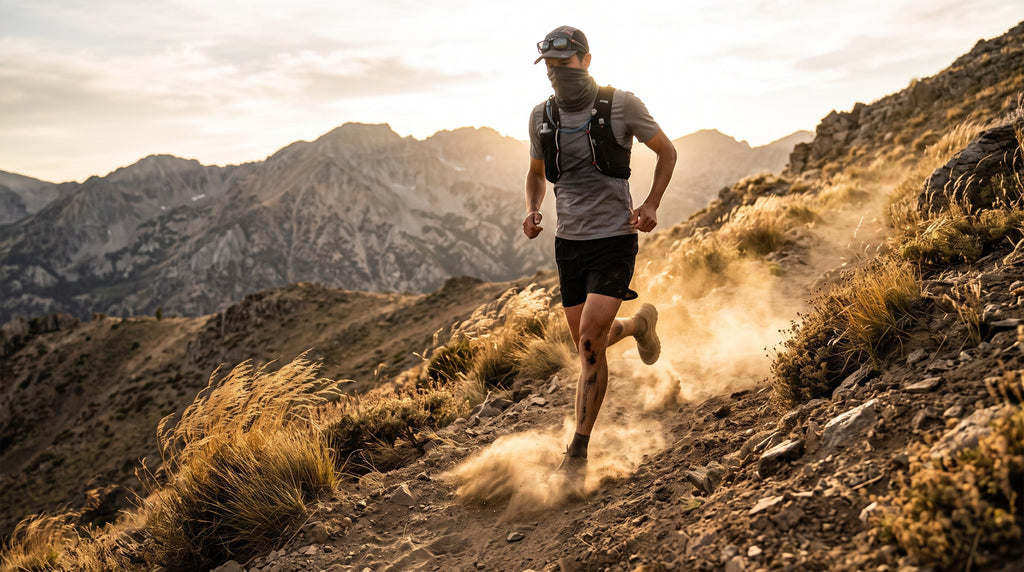
Road running is a negotiation with traffic. Trail running is a negotiation with the elements — and the elements negotiate harder. In a single August morning on my local ridge loop I've taken direct sun above the treeline, eaten dust behind a horseback rider, and gotten sandblasted by ridge wind, all before 9 AM. If you've read our piece on why runners wear neck gaiters, you know the basics of what a gaiter does. This guide is about the trail-specific version: protecting your face and neck when sun, dust, and wind stack up in the same run — without carrying gear that bounces, chafes, or ends up in your pocket by mile two.
Why Trails Beat Up Your Face and Neck More Than Roads
Three things make trail running a different animal for skin and airways.
Exposure is longer and less predictable. Road routes usually have buildings, trees, or at least a direction you can plan around. Trails climb ridges, cross open meadows, and spend long stretches above the treeline where there's zero shade at any hour. A two-hour trail run can mean ninety minutes of full UV on your neck.
Dust is constant. Dry summer trails throw fine dust with every footstrike — yours and everyone else's. Run in a group or pass a mountain biker and you're breathing a cloud. That grit coats your lips, dries your throat, and turns your post-run cough into a tradition nobody wants.
Wind multiplies everything. Ridges and passes funnel wind, and wind drives dust into your face while evaporating the sweat that's supposed to be cooling you. It's why you can feel "fine" on a windy descent and realize at the car that you're sunburned and dehydrated.
Sun: The Exposure You Don't Feel Until the Drive Home
The neck is the most-forgotten real estate in running sun protection. Hats shade your face; nothing shades the back of your neck, which spends the entire run tilted toward the sky — especially on climbs, when your posture opens that angle even more.
Sunscreen helps but has trail-specific problems: sweat rinses it off faster on long climbs, you won't stop to reapply at mile eight, and dusty hands plus lotion equals mud on your face. I've finished enough runs with raccoon stripes of dust and sunscreen to know that's not a system.
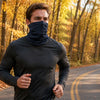
What actually holds up: physical coverage. A lightweight UPF 50 gaiter worn around the neck — pulled up over the ears on exposed ridgelines, dropped to the collar in the trees — blocks UV continuously with no reapplication clock. The Finvizo cooling neck gaiter is what I run in; it weighs about an ounce, and the 4-pack means one lives permanently in my running vest. For arms, sun protection arm sleeves beat the long-sleeve-shirt debate entirely: on at the sunny start, rolled down or pocketed when you hit deep forest, back on for the exposed descent. They're also legitimate brush armor on overgrown singletrack — your sleeves take the thorn scratches instead of your forearms.
Dust: The Trail Runner's Constant Companion
If you've never run behind someone on dry trail in August, here's the reality: a fine particulate cloud hangs at exactly face height, and you will breathe it for as long as you follow. Add summer wildfire haze some years and desert grit others, and dust management becomes a real performance issue, not a comfort nicety.
A gaiter pulled up over the nose and mouth is the practical fix. It filters the coarse dust that coats your lips and throat, and — counterintuitively — it makes breathing in dry air easier, because your exhaled moisture humidifies each inhale instead of losing it to the wind. That humidification trick is why desert ultrarunners have worn face coverings forever.
Two technique notes from my own trial and error:
Fit matters more than fabric. A gaiter that slides down is useless — you'll spend the run tugging it up with dusty hands. Look for a snug, stretchy knit that grips behind the ears, and size honestly. Too loose and it sags; too tight and you'll hate it by mile three.
Wet it on hot, dusty days. Dunking your gaiter at a stream crossing or with a squeeze from your soft flask turns it into an evaporative cooler and traps more dust. On a 90-degree exposed climb, a wet gaiter over the neck is the closest thing to air conditioning that exists on a trail. I keep a cooling towel clipped to my vest for the same trick on my neck and wrists at aid-station-style breaks.
Wind, Cold Starts, and Shoulder-Season Weather
Trail weather swings are harsher than road weather because elevation changes everything: a 55-degree trailhead can mean a 40-degree, windswept summit. The shoulder seasons are when face and neck protection earns its keep most.
My rule: if the forecast low is under 50 or the route crosses a ridge, the gaiter starts the run on my face, not in my pocket. Cold, dry air is brutal on airways during hard efforts — that burning throat on a fast cold descent is real, and warming the inhaled air through fabric genuinely helps. As the run warms, the gaiter migrates: face to neck to headband to wristband. Four functions, one ounce, zero stops.
Wind deserves one specific warning: it hides sun damage. A cool breeze keeps skin temperature comfortable while UV exposure stays exactly the same, so you finish feeling fresh and discover the burn at dinner. Windy days are precisely when I keep coverage on even though I don't "feel" the sun.
Building a Trail Kit That Weighs Nothing
Here's the whole system I run from June through October, total added weight maybe three ounces:
Neck gaiter (on my neck at the start, always) — sun, dust, wind, cold-start warmth.
Arm sleeves (on for exposed sections, pocketed in forest) — sun and brush.
Cooling towel (clipped to vest) — wet-cooling resets on long climbs and at the finish.
Hat with a dark underbrim — cuts glare off light-colored trail dust, which is sneakily intense.
The reason this works when "just wear sunscreen" fails is that none of it requires a decision mid-run. There's no reapplication, no stopping, no fumbling. Coverage is either on or off, and both take two seconds. Trail running already has enough friction — your protection shouldn't add to it.
One last tip from the Finvizo outdoor gear testing pile: keep a dedicated set in your running vest permanently. Gear you have to remember is gear you'll forget at 5:30 AM. Gear that lives in the vest is just there.
FAQ: Trail Running Face & Neck Protection
Should I wear a neck gaiter trail running?
Yes — it's the single most versatile piece for trails. A lightweight UPF gaiter handles sun on exposed ridges, filters trail dust when pulled over your nose, warms cold inhaled air, and weighs about an ounce. It's four pieces of gear in one.
How do trail runners deal with dust?
Pull a snug gaiter up over your nose and mouth on dusty stretches, especially when following other runners or riders. Wetting the gaiter improves dust filtration and adds evaporative cooling on hot days. A snug fit matters — a slipping gaiter gets abandoned by mile two.
Is sun protection necessary for trail running?
More than for road running. Trails spend long stretches above the treeline with zero shade, and ridge wind masks the heat sensation of sunburn while UV exposure stays constant. Physical coverage — gaiter, sleeves, hat — beats sunscreen because there's nothing to reapply mid-run.
What do runners wear on their neck in hot weather?
Lightweight cooling gaiters and wet cooling towels are the standards. Both work by evaporation: wet the fabric and airflow over it pulls heat off your neck, where major blood vessels sit close to the skin. It's the most effective passive cooling you can carry.
Do arm sleeves help with trail running?
Yes, in two ways: UPF-rated sleeves protect arms on exposed sections without the heat of a long-sleeve shirt, and they act as light armor against thorns and brush on overgrown singletrack. Roll them down or pocket them in deep forest shade.
The wet-gaiter cooling trick has real fabric science behind it — our sister post on using cooling towels on hot-weather trails breaks down how evaporative cooling works and how to time your re-wets on long climbs.
Related reading
- Neck Gaiter vs Running Scarf vs Balaclava
- Running Arm Sleeves: Sun Protection, Warmth, or Just Looks?
- Winter Running Face & Neck Protection: A Practical Guide

Vivian J is a Product Manager at Finvizo and an avid outdoor enthusiast. She tests gear on real trails and writes from hands-on field experience to help readers choose equipment that performs reliably outdoors.