Saltwater & Inshore Fishing: Sun, Glare & Heat Protection Guide
Saltwater & Inshore Fishing: Sun, Glare & Heat Protection Guide
Inshore fishing is the meanest sun environment I fish in. No tree line, no canyon shade, no console cover worth the name — just you, an open skiff, and water throwing sunlight back at you for hours. My first redfish trip out of Port Aransas I wore a cap and put sunscreen on at the dock, once. By 2 p.m. my ears were purple and the back of my neck felt like a grill grate. I've built my saltwater setup the slow way since then, on top of the general system I laid out in our complete fishing sun protection setup. This is the salt-specific version: sun, glare, heat, and what salt does to your gear.
Why Saltwater Sun Hits Harder Than Freshwater
Three multipliers stack up inshore that freshwater anglers mostly dodge.
Reflection off open water. A flats skiff sits on a giant mirror. UV bounces off the surface and hits you from below — under the chin, along the jaw, inside the ears, up under your hat brim. These are exactly the spots a cap-and-lotion routine misses, and exactly where I see older saltwater guides with the worst skin damage.
Zero shade structure. Bass guys have docks and timber. Inshore you fish open flats, mangrove edges, and channel markers. There is no "shaded bank side" to retreat to at noon. Your clothing is the only shade you bring.
Longer exposure windows. The tide doesn't care that UV peaks at 1 p.m. If the falling tide lines up with midday, you fish midday. Saltwater trips routinely run eight hours of open exposure because the bite schedule ignores the sun schedule.
Glare: The Inshore Angler's Second Enemy
Sunburn is the slow damage; glare is the acute one. Glare off the water tires your eyes, gives you a headache by early afternoon, and — if you're sight-fishing reds or tailing bonefish — it literally blinds you to the fish you're paying to see.
Polarized glasses are the base layer. Amber or copper lenses for flats and inshore work; gray for offshore blue water. Get side coverage or a wrap fit, because light sneaks in from the edges and reflects off the inside of the lens.
Dark under-brim matters. A hat with a dark underside on the brim cuts the bounce-off from below. A white under-brim reflects water glare straight into your eyes — it feels brighter than no hat at all.
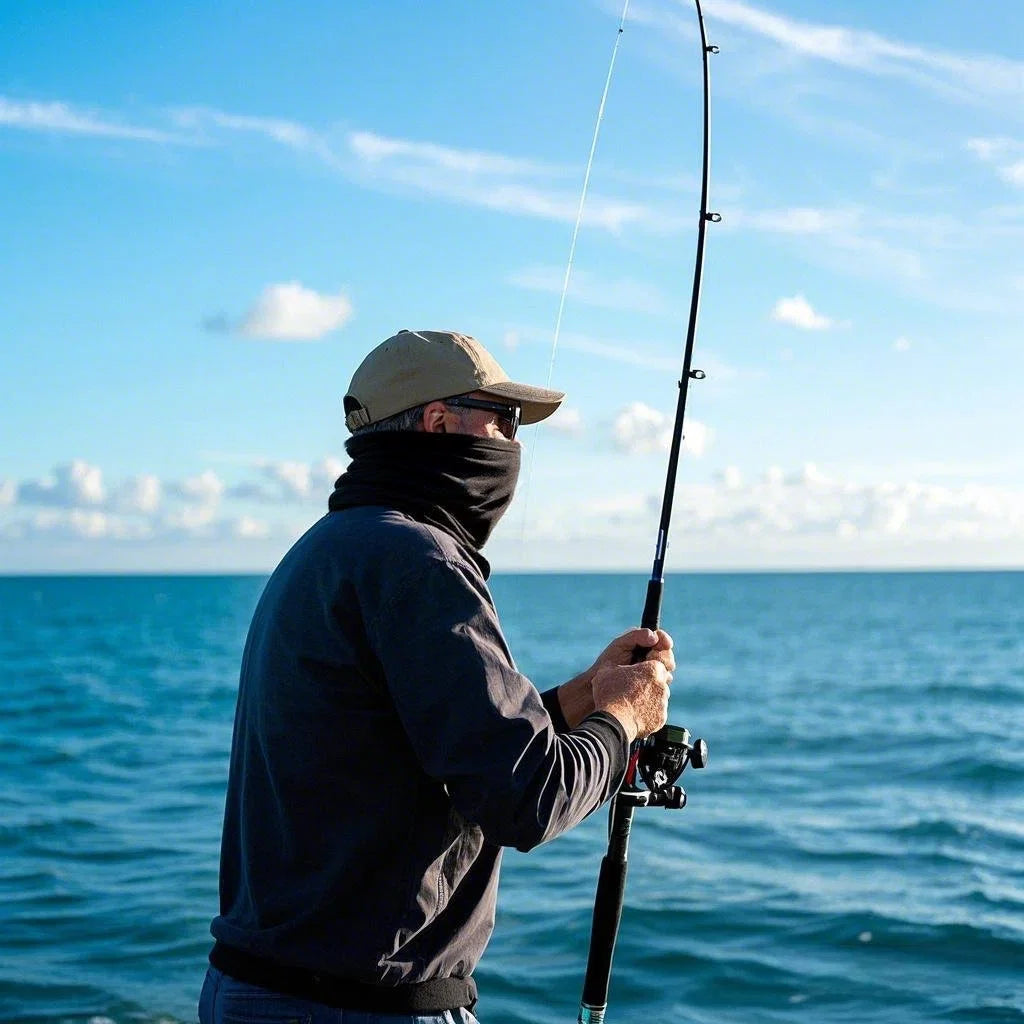
Cover the lower face. This is the piece nobody thinks about: the water reflects sunlight onto your cheeks, nose, and lips all day, and your face reflects it back into your glasses. A light gaiter pulled up over the nose kills a surprising amount of that bounce and protects your lips — the spot everyone forgets until they crack and bleed on day two of a trip.
The Saltwater Coverage Setup I Actually Wear
Here's the full kit, top to bottom, from a decade of getting it wrong first.
Full-brim hat or cap plus gaiter. On a boat at speed a full brim needs a chin strap or it's gone. Most days I run a cap with a gaiter over the ears and neck — same coverage, nothing to blow off.
Lightweight neck gaiter, damp. This is the anchor of the whole system inshore. It covers the reflected-UV targets — jaw, ears, back of neck — and when it's wet it becomes air conditioning in the boat breeze. I keep a Finvizo cooling neck gaiter 4-pack on every trip: one on, one drying on the console grab rail, spares in a dry bag. They dry in maybe twenty minutes in salt air, and the thin knit breathes well enough that pulling it over your nose for glare control doesn't feel like a mask.
Long-sleeve sun shirt plus sleeves for the hands. A UPF shirt is the torso base, but the backs of your hands take a beating holding a rod tip-up for hours. I add thumbhole arm sleeves on high-sun days because they cover wrist to knuckle with the palm open — you keep line feel for working a soft plastic, and there's no sunscreen on your palms transferring to your leader. Guides will tell you fish smell sunscreen on your line; whether or not that's measurable, I've watched bait get refused after a fresh lotion application enough times to just keep it off my hands.
Light pants, not shorts. Deck reflection burns shins through a full day of standing. Quick-dry fishing pants end that problem and dry fast after spray.
Heat Management on an Open Deck
Coverage fails if it cooks you. August inshore fishing is a heat-management problem as much as a UV problem.
Wet everything, repeatedly. Dunk the gaiter, the hat, the sleeves. Evaporation in moving boat air is real cooling — a wet gaiter on the run between spots is the closest thing to AC a flats skiff has. I clip a Finvizo cooling towel around my neck for the midday lull and re-wet it every hour; the 4-pack lives in the cooler so there's always a cold one.
Drink on a timer, not by thirst. Wind and spray mask sweat — you're losing fluid constantly and don't feel it. I set a watch alarm every 45 minutes. Electrolytes after hour four, or you'll cramp through the evening bite.
Rotate out of the helm. If you're running your own boat, the driver sits in reflected heat off the console and gauges. Trade spots with your buddy at every move.
Salt Care: Making Sun Gear Survive the Season
Salt destroys elastic and coatings faster than UV does. Rinse your gaiter, sleeves, and towel in fresh water the same day — not when you get home, at the dock washdown if there is one. Dried salt crystals grind against knit fibers and the fabric goes scratchy and loose in a month. Skip fabric softener when you wash them; it clogs the wicking finish that makes evaporative cooling work. My Finvizo fishing gear gets a plain cold wash and line dry, and a 4-pack of gaiters rotated this way has lasted me three seasons of Gulf trips.
And treat zippers and reel seats on the same day, but that's a different article.
FAQ: Saltwater Fishing Sun Protection
Do you need a neck gaiter for saltwater fishing?
It's the single highest-value piece inshore. Water reflects UV upward onto your jaw, chin, ears, and the back of your neck — the exact areas a hat and top-applied sunscreen miss. A damp lightweight gaiter also doubles as evaporative cooling in boat wind, and pulled over the nose it cuts the glare bounce that fatigues your eyes while sight-fishing.
What should I wear fishing in the ocean in summer?
A full-brim hat or cap-and-gaiter combo, polarized sunglasses, a UPF long-sleeve shirt, thumbhole arm sleeves for hand coverage, and quick-dry pants instead of shorts — deck reflection burns shins all day. Bring spares of anything you plan to wet down, and a cooling towel for the midday heat peak.
Is sunscreen enough for a day on a boat?
Not by itself. Water reflection and constant spray mean you're reapplying every 60-80 minutes to stay protected, and most anglers don't. Physical coverage — gaiter, sleeves, hat, pants — does the structural work; sunscreen fills the gaps like the nose, fingertips, and ankles. And keep lotion off your palms so it doesn't transfer to leaders and bait.
How do you keep fishing gear from getting ruined by salt?
Rinse everything in fresh water the same day, before the salt dries and crystallizes in the fabric. Wash knits cold without fabric softener — softener kills the wicking finish — and line dry. Rotating a multi-pack so no single piece takes every trip roughly doubles how long the elastic stays snug.
If you're piecing together a saltwater kit and want to start with the piece you'll use every single trip, our sister guide on picking the best neck gaiter for fishing breaks down fabrics, fit, and UPF ratings in detail.
Related reading
- Fishing Face Cover vs Neck Gaiter vs Sun Mask: What's the Difference?
- Sunscreen and Bait Don't Mix: Why Anglers Are Switching to Physical Sun Coverage
- Do Fishing Arm Sleeves Work?

Vivian J is a Product Manager at Finvizo and an avid outdoor enthusiast. She tests gear on real trails and writes from hands-on field experience to help readers choose equipment that performs reliably outdoors.