Fishing Sun Protection: The Complete Setup for Long Days on the Water
I learned the hard way that a "quick morning fishing trip" can turn into a sunburn nightmare if you are not geared up right. Last summer, I spent six hours on a local reservoir in Texas and came home with a burned neck, crispy forearms, and a splitting headache from heat exposure. That day changed how I think about fishing sun protection forever.
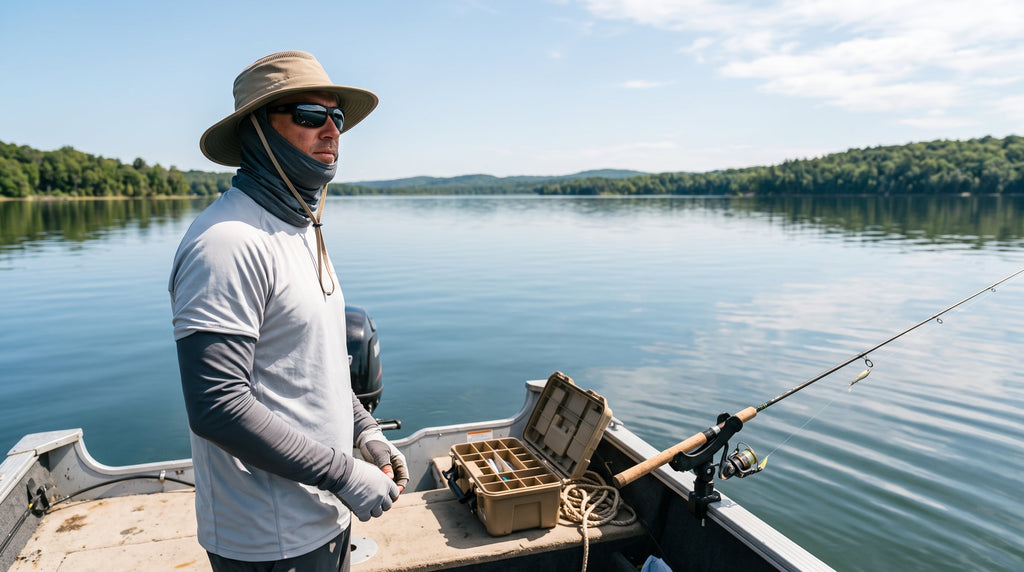
If you are serious about spending long days on the water, a full UPF setup is non-negotiable. I have written before about picking the best neck gaiter for fishing, but this guide pulls the whole system together: face coverage, arm protection, and heat management. Here is exactly what I pack now before every trip.
Why Water Reflection Makes Sun Protection Critical
Most anglers underestimate how much UV hits them on the water. Open water reflects up to 10% of UV radiation, which means your face and neck get hit from above and below. Combine that with hours of exposure with no shade, and even "tan" skin starts taking damage.
I used to rely on sunscreen alone. The problem? It washes off with sweat and spray, needs reapplication every 90 minutes, and honestly gets annoying when you are handling bait and lures. There is also the bait contamination issue. I noticed fish were less aggressive on days when I had just applied thick sunscreen to my hands and forearms. Scent-sensitive species like bass and trout pick up on foreign smells fast.
Switching to physical UPF coverage solved multiple problems at once. A UPF 50+ rated fabric blocks about 98% of UV rays, and it does not wash away when you splash the boat. More importantly, there is no residue transferring to my bait or lures. I can handle worms, soft plastics, and live minnows without worrying about scent contamination.
Face and Neck Coverage: The Core of Your Setup
The neck and lower face are the most burned areas I see on anglers. A wide-brim hat helps, but it leaves your neck completely exposed, especially when you are looking down at your line or net.
I now wear a cooling neck gaiter on every trip. The Finvizo breathable gaiter is rated UPF 50+, and the moisture-wicking fabric actually feels cooler when wet. I dip it in the lake, wring it out, and pull it up over my nose. On 95-degree days, that evaporative cooling makes the difference between staying out until dusk and tapping out by noon.
The stretch polyester construction means it stays put when I am leaning over the gunwale to land a fish or moving around the deck. I have tried cotton bandanas, and they sag, soak up water, and take forever to dry. The synthetic gaiter dries in minutes and maintains its shape all day.
The 4-pack is perfect because I keep one in my tackle bag, one in the truck, one in my vest, and one backup that is always clean. They are machine washable and dry fast, so I never have an excuse to fish without one. At under fifteen dollars for the set, replacing them seasonally is not a big hit.
Arm Sleeves: Skip the Sunscreen on Your Forearms
This was the last piece of gear I added to my kit, and I wish I had done it sooner. Long-sleeve fishing shirts work, but they are hot and bulky in peak summer. UPF 50+ arm sleeves give me the same protection without the extra layer on my torso.
The compression fit also helps on long paddling sessions. My arms feel less fatigued after a full day of kayak fishing, and I am not dealing with sunscreen residue on my reel handles or bait. The 4-pair set gives me plenty of rotation for the week, and they slide on in about two seconds.
What surprised me most was the cooling effect. The nylon-spandex blend has a slight sheen that reflects heat rather than absorbing it. When I first put them on in direct sun, I expected them to feel like wearing black plastic. Instead, they feel slightly cooler than bare skin after the first few minutes.
Pro tip: wet the sleeves before you put them on. The evaporative cooling effect is real, especially when you are moving between spots and getting airflow. I will often dip my arms over the side of the kayak for a quick soak when the sun is at its peak.
Cooling Towels and Heat Management on the Water
Heat exhaustion is not theoretical for anglers. I have seen guys get dizzy on the deck because they pushed through the midday sun without managing their core temperature. A cooling towel is now a permanent item in my kit.
Here is my routine: soak the towel, wring it out, give it a snap, and drape it over my neck gaiter. The hyper-evaporative mesh drops the surface temperature noticeably. I re-wet it every hour or so, and it keeps my head clear even when the air temperature is pushing triple digits.
The 4-pack comes with clips and pouches, so I attach one to my kayak seat and keep another in my cooler. They are small enough that there is no reason to leave them behind. Each towel is about the size of a hand towel when unfolded, but folds down to roughly the size of a deck of cards.
Beyond comfort, there is a safety angle here. When your core temperature rises, your decision-making slows. I have made dumb mistakes on hot days, like casting into snags I would normally avoid or rushing a knot that later failed. Keeping cool literally keeps me fishing better.
Putting It All Together: My Pre-Trip Checklist
Before I launch the boat or hike to my bank-fishing spot, I run through this quick list:
- Neck gaiter: UPF 50+, moisture-wicking, pulled up over nose and ears
- Arm sleeves: UPF 50+, compression fit, wet for cooling
- Cooling towel: soaked, snapped, ready to re-wet
- Wide-brim hat: for top-of-head coverage
- Polarized sunglasses: eye protection from reflected glare
- Water bottle: at least a gallon for a full day
That setup takes me from dawn until the evening bite without a single reapplication of sunscreen. My skin stays protected, my core temperature stays manageable, and I can focus on fishing instead of fighting the sun.
FAQ: Fishing Sun Protection
Is UPF 50+ really necessary, or is UPF 30 enough?
UPF 30 blocks about 96.7% of UV, while UPF 50+ blocks 98%. On the water, where reflection increases exposure, I would not go below 50. The difference adds up over 8-hour days.
Will a neck gaiter make me overheat in summer?
Not if you pick the right fabric. A moisture-wicking, breathable gaiter designed for cooling actually helps regulate temperature. Wet it down for an instant cooling effect. Avoid cotton or thick fleece in hot weather.
Can I just use a long-sleeve cotton shirt instead of arm sleeves?
A standard cotton t-shirt only offers about UPF 5. It is better than nothing, but it is not sun protection. UPF 50+ sleeves or a dedicated sun shirt are purpose-built for this. Cotton also stays wet and heavy if you get splashed.
How do I keep my cooling towel from drying out too fast in dry climates?
Store it in a ziplock bag between uses, or keep it draped over a cooler so evaporation happens more slowly. Re-wet every 45-60 minutes in hot, dry air. In humid climates, it stays wet longer but the cooling effect is slightly reduced.
Do I still need sunscreen with a full UPF setup?
I still apply SPF 30 to any exposed skin, mostly the backs of my hands. The gaiter and sleeves handle the big areas, but a thin layer of sunscreen on hands and face gaps keeps me fully covered. Think of UPF gear as your primary defense and sunscreen as the backup.
Does sunscreen really affect fishing success?
In my experience, yes. Scent-sensitive fish can pick up on chemical odors. I switched to physical sun coverage partly for this reason, and I have noticed more consistent strikes since then. Your mileage may vary by species and water conditions.
If you are hauling gear to a bank or pier spot, the right wagon makes that walk a lot easier. I covered my full fishing wagon loading setup in another post, including how I organize rods, tackle, and coolers for a solo day trip.
Related reading
- Fishing Face Cover vs Neck Gaiter vs Sun Mask: What's the Difference?
- Sunscreen and Bait Don't Mix: Why Anglers Are Switching to Physical Sun Coverage
- Do Fishing Arm Sleeves Work?

Vivian J is a Product Manager at Finvizo and an avid outdoor enthusiast. She tests gear on real trails and writes from hands-on field experience to help readers choose equipment that performs reliably outdoors.