How to Stay Cool While Fishing in Summer Heat
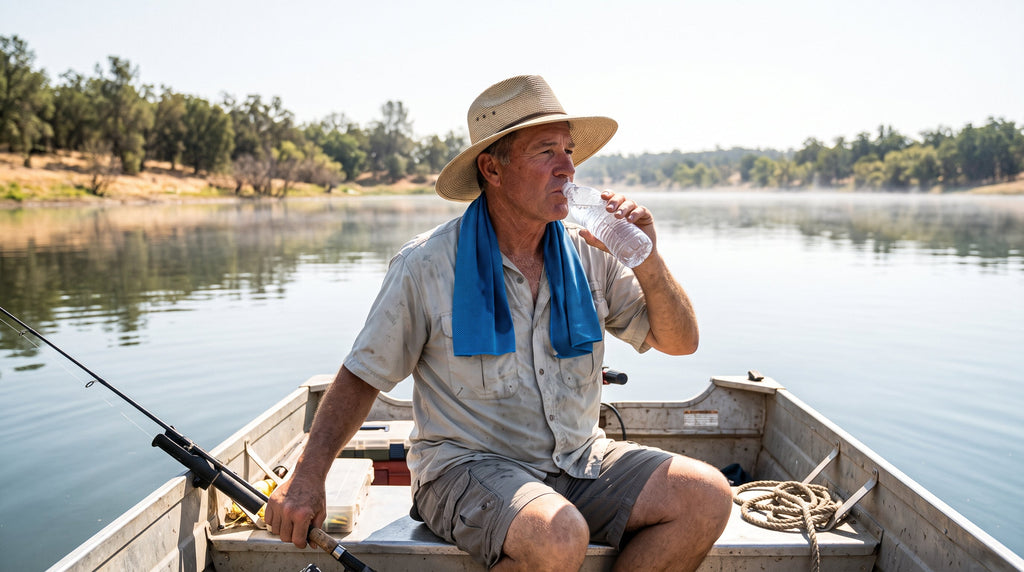
I've spent enough summer mornings on the water to know that the fish don't care how comfortable you are—but your body definitely does. When the sun climbs above the tree line and the humidity starts climbing with it, a peaceful day of bass fishing can turn into a battle against heat exhaustion faster than most anglers expect. Last August, I learned that lesson the hard way on a six-hour kayak trip where I packed everything except a real cooling strategy. That day changed how I approach summer fishing entirely.
If you're serious about staying on the water through July and August, you need more than a hat and a bottle of sunscreen. In my complete fishing sun protection guide, I broke down the full UPF setup I now use for long days on the water. This article zooms in on the cooling side of that equation—the specific tricks, gear, and habits that keep me (and the friends I drag along) from melting when the temperature hits the nineties.
Why Heat Becomes the Real Enemy on the Water
Most people think of sunburn as the biggest summer risk for anglers. It is a problem, but heat itself is often the silent killer of a good fishing trip. When you're standing on a boat deck, a pier, or even wading in shallow water, you're surrounded by reflective surfaces. Water reflects up to 100% of UV radiation in some conditions, but more importantly for this conversation, it bounces heat right back at you. I've checked the deck temperature on my buddy's bass boat at 2 PM in July: 140°F. That's not a typo.
The real danger is that fishing demands patience. You can't just "push through" the heat for twenty minutes and call it a workout. You're sitting, standing, casting, and waiting—for hours. That low-intensity, long-duration exposure is exactly how heat exhaustion sneaks up on you. Symptoms start subtle: a headache you blame on the early wake-up time, slightly heavier breathing, a touch of irritability when the fish aren't biting. By the time you notice the nausea or dizziness, you're already behind the curve.
I've also noticed that overheating ruins my decision-making. When I'm too hot, I make lazy casts, I miss subtle bites, and I pack up early even when the evening bite window is approaching. Staying cool isn't just a comfort issue—it's a performance issue.
Wet Your Neck Gaiter: The Simplest Trick Most Anglers Skip
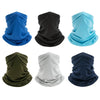
Here's a trick I learned from a saltwater guide in Florida that costs exactly zero dollars and works better than any fancy gadget I've tried: soak your neck gaiter in cold water, wring it until it's damp but not dripping, and wear it around your neck and face. The evaporative cooling effect drops your perceived temperature by a noticeable margin, especially when there's any breeze at all.
The key is using the right fabric. A cotton bandana will work for about ten minutes and then turn into a warm, soggy rag. What you want is a lightweight, high-stretch polyester gaiter with moisture-wicking properties. I use the Finvizo breathable neck gaiter specifically because the fabric is designed for this exact scenario. It dries at a controlled rate—fast enough to stay cool, slow enough to keep working for an hour or more between re-soaks.
On truly brutal days, I'll keep a spare gaiter in a cooler with ice water. When the first one warms up, I swap it out. The shock of that cold fabric against sun-heated skin is genuinely refreshing. I've also started wetting my gaiter and pulling it up over my cheeks and nose when the sun is directly overhead. It adds sun protection and cooling at the same time, which is why Finvizo neck gaiters have become standard issue in my tackle bag.
Ice Towels and Arm Sleeves: Building a Cooling System
The neck gaiter is my first line of defense, but a complete cooling system layers in a few more pieces. The second most important item in my summer kit is a set of cooling towels. I know that sounds like something you'd see in an infomercial, but the physics are real. A proper cooling towel uses polymer fibers that retain water while allowing rapid evaporation. When snapped and draped over your neck or shoulders, it creates a sustained cooling zone.
I keep a Finvizo cooling towel in my tackle bag, another in the cooler, and a third tied to my kayak seat. Rotation is the name of the game. What doesn't work is using one towel all day and expecting miracles. When it dries out or warms up, it becomes a regular towel—fine for wiping fish slime off your hands, useless for cooling your core temperature.
The third piece of my summer setup is arm sleeves. I was skeptical about these for a long time. They look like something a cyclist would wear, not an angler. But after getting a serious sunburn on my forearms during a dock-fishing session (despite reapplying sunscreen twice), I tried a pair of Finvizo UPF 50 arm sleeves and never looked back. They block 98% of UV rays, they're surprisingly breathable, and they actually feel cool against the skin when wet. On hot days, I'll splash water on them every half hour. The combination of evaporative cooling and sun protection is hard to beat.
Together, these three pieces—neck gaiter, cooling towel, and arm sleeves—create a system that covers your most heat-vulnerable areas without requiring you to hide inside a tent or run back to the truck every hour.
Shade, Hydration, and Timing: The Non-Gear Basics
I want to be clear: no amount of specialized gear replaces the fundamentals. If you're not hydrating properly, you're fighting a losing battle. I now bring a dedicated cooler just for drinks, and I force myself to drink water on a schedule—one bottle every hour, minimum. Not when I'm thirsty. By the time thirst kicks in, you're already dehydrated. I also add electrolyte packets to every other bottle. Plain water is great, but when you're sweating for four hours straight, you need salt and potassium replacement.
Shade strategy matters too. I used to just pick the spot with the best casting angle and deal with the sun. Now I actively plan my position based on shade availability. If I'm bank fishing, I'll set up where a tree line or overhang gives me afternoon cover. On a boat, I'll rig a portable umbrella or Bimini top if I'm anchored for a while. Even a small patch of shade drops the ambient temperature by 10–15 degrees, and that makes a real difference over a full day.
Timing is the final piece. The hottest part of the day is usually 11 AM to 3 PM. If I can, I'll fish the morning bite, take a long lunch break in the shade during the midday heat, and get back out for the evening bite. That's not always possible if you're on a guided trip or fishing a tournament, but for casual outings, it's the smartest schedule I've found. The fish often feed better at dawn and dusk anyway, so you're not sacrificing much by skipping the worst heat of the day.
One last non-gear tip: wear light-colored clothing. Dark shirts absorb heat. I used to wear black because it hides fish blood and bait stains, but I've switched to light gray and tan for summer trips. The difference in how hot I feel is immediate and significant.
FAQ
Does wetting a neck gaiter actually work for cooling, or is it just a placebo?
It works—evaporative cooling is real physics. The key is using a synthetic, moisture-wicking fabric rather than cotton. A proper cooling gaiter can lower the temperature around your neck and face by several degrees for an hour or more.
How often should I re-wet my cooling towel while fishing?
In direct sun with low humidity, every 30–45 minutes. In high humidity, evaporation slows down, so you might need to re-wet every 20–30 minutes. Keep a backup in a cooler so you can rotate without interruption.
Can I wear arm sleeves in the water while wade fishing?
Yes, but make sure they're snug-fitting so they don't float or bunch up. Most UPF sleeves are quick-drying, so they'll resume cooling functionality shortly after you exit the water. I prefer to roll them up if I'm wading deep, then roll them back down once I'm on the bank.
What's the best way to cool down quickly if I start feeling overheated?
Get to shade immediately, sit down, and apply cold water or a wet cooling towel to your neck, wrists, and inner elbows—those are where major blood vessels run close to the surface. Drink water with electrolytes. Do not jump straight into cold water, as that can cause shock. If symptoms persist after 15 minutes of cooling, call it a day.
Do cooling towels work in humid climates like Florida or Louisiana?
They work, but less effectively than in dry climates because evaporation is slower. In high humidity, pair your cooling towel with a battery-powered clip-on fan. The forced airflow compensates for the slower natural evaporation.
If you're building out a complete hot-weather fishing kit, I also recommend reading our comparison of cooling towels versus cooling neck gaiters to figure out which piece to prioritize first. Both have their place, but your specific fishing style might make one more useful than the other.
Related reading
- Fishing Face Cover vs Neck Gaiter vs Sun Mask: What's the Difference?
- Sunscreen and Bait Don't Mix: Why Anglers Are Switching to Physical Sun Coverage
- Do Fishing Arm Sleeves Work?

Vivian J is a Product Manager at Finvizo and an avid outdoor enthusiast. She tests gear on real trails and writes from hands-on field experience to help readers choose equipment that performs reliably outdoors.