Best Arm Sleeves for Men: UPF 50, Fit & Cooling Compared
Best Arm Sleeves for Men: UPF 50, Fit & Cooling Compared
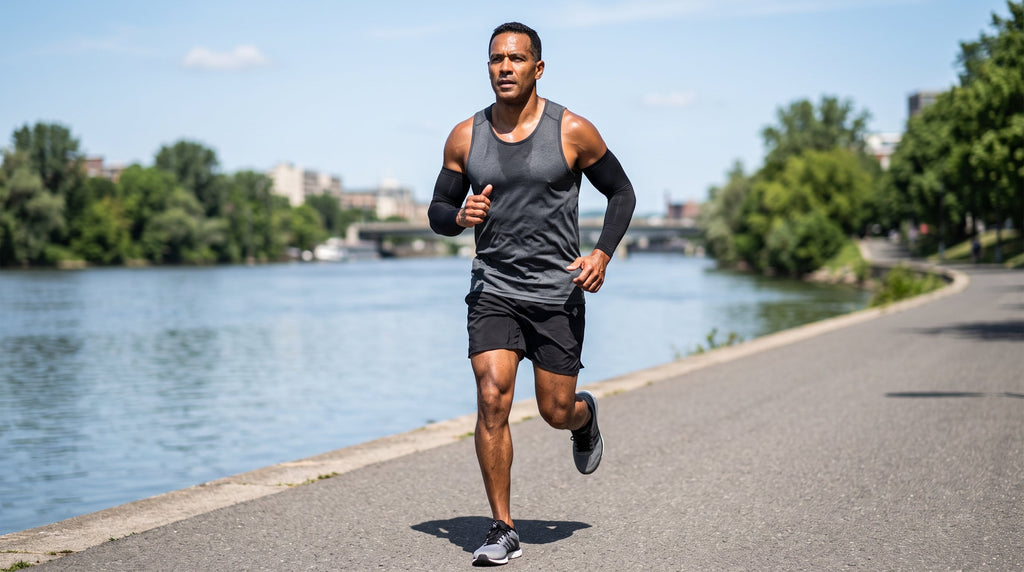
I used to think arm sleeves were a cycling thing—something skinny road racers wore and nobody else needed. Then I spent a July weekend building a fence in full sun, forgot to reapply sunscreen to my forearms, and peeled for a week. A buddy who works roofing jobs laughed at me and pulled a pair of UPF sleeves out of his truck. "Sunscreen for people who actually work," he called them. He was right. Since then I've worn arm sleeves for hiking, paddling, yard work, and long drives, and I've learned exactly what separates a pair you'll wear every day from a pair that ends up in a drawer. If you're still sorting out whether sleeves, a gaiter, or a balaclava belongs in your kit, our breakdown of gaiters, balaclavas, and arm sleeves maps out which piece covers which job. For our hands-on verdict on the Finvizo lineup, read the Finvizo sun protection sleeves review.
Why Fit Is the First Thing to Get Right
Most "men's arm sleeves" complaints I hear come down to sizing, not quality. Too tight at the bicep and the silicone gripper digs in after an hour. Too loose and the sleeve slides down to your elbow by mile two. The fix is measuring your arm, not guessing from your shirt size.
Wrap a tape measure around the fullest part of your bicep with your arm relaxed. For most adult men that lands between 11 and 15 inches. A good sleeve should stretch to about 1.5 times that number without feeling like a tourniquet. If you're between sizes, go with the larger one—light compression still holds the sleeve up, and you keep circulation for all-day wear. I've worn the same pair of Finvizo UPF 50+ arm sleeves through a full summer of trail work, and the four-pair pack matters more than I expected: one pair in the truck, one in my daypack, and two in the laundry rotation means I'm never tempted to "just skip them today."
Fabric: What Actually Keeps You Cool
Here's the counterintuitive part most guys don't believe until they try it: covering your arms can make you cooler, not hotter. A thin synthetic knit—usually a polyester-spandex or nylon-spandex blend—pulls sweat off your skin and spreads it across a large surface area where it evaporates fast. Evaporation is your body's air conditioning, and a good sleeve essentially extends that system to your forearms while blocking the radiant heat that bare skin would absorb.
What to look for: a fabric weight under about 180 gsm, flatlock seams that won't chafe under a pack strap, and a knit with visible micro-ventilation. What to avoid: anything marketed as "thermal" for summer use, cotton blends that hold moisture, and cheap sleeves with a thick rubbery gripper band that traps heat at the bicep. The best gripper is a thin silicone wave pattern—enough friction to stay put, minimal skin contact.
UPF 50: The Number That Actually Matters
Every sleeve worth buying should carry a UPF 50+ rating, meaning it blocks 98% or more of UV radiation. That rating comes from the tightness of the knit plus UV-absorbing treatments in the fiber, and it's the difference between "sun sleeves" and a random tube of fabric from a discount bin. If a listing doesn't state a UPF rating at all, assume it has none.
One thing I check on any new pair: hold the sleeve up to a bright window. If you can clearly see the outline of your hand through a single layer, the knit is too open to trust for a full day outside. A proper UPF 50 knit lets light through as a diffuse glow, not a silhouette. And remember the rating assumes the fabric isn't stretched to its limit—another reason sizing up beats sizing down. Stretched fabric spreads the knit and quietly drops the protection.
Compression vs. Relaxed: Which Style Suits You
Light-compression sleeves feel like a gentle hug and stay put during high-motion activities—trail running, basketball, mountain biking. They're my pick for anything with repetitive arm movement because there's zero fabric migration. The mild compression also genuinely reduces that "heavy arms" feeling on long paddling days, though I'll admit the effect is modest.
Relaxed-fit sleeves prioritize airflow and are easier to pull on and off, which matters when you're in and out of shade all day. For driving, fishing, and yard work, relaxed wins. Many guys end up owning both styles; if you're only buying one, match it to your highest-friction activity. A set like the Finvizo neck gaiter and arm sleeve combo covers the upper half of the sun-exposure map in one shot—sleeves for the arms, gaiter for the neck and lower face, which is where I see the most sun damage on guys who work outside.
Durability: What Survives a Real Summer
Cheap sleeves fail in predictable places: the gripper loses tack after ten washes, the bicep seam pops, or the fabric pills where it rubs a pack strap. Quality sleeves survive a season of weekly washing if you treat them right—cold water, no fabric softener, air dry. Softener coats the fibers and kills both the wicking and the UV treatment, which is the fastest way to turn a good sleeve into a tube sock.
I mark the purchase date on the care label of every pair. Around the 30-to-40-wash mark, I hold them up to the light again. When the knit starts looking thin or the gripper slides during a hike, that pair retires to painting-duty. Sun protection is safety gear; treat its lifespan the way you'd treat a climbing rope, not a t-shirt.
Frequently Asked Questions
Do arm sleeves actually keep you cool in summer?
Yes, counterintuitively. A thin moisture-wicking sleeve spreads sweat across a large surface area so it evaporates faster, and it blocks radiant heat that bare skin would absorb. Most wearers report feeling cooler in direct sun with sleeves than without, especially in dry heat.
What size arm sleeves should I get?
Measure the fullest part of your relaxed bicep. Most adult men fall between 11 and 15 inches. Choose a sleeve that stretches to roughly 1.5 times your measurement, and if you're between sizes, size up—overstretched fabric loses both compression and UV protection.
Can I wear arm sleeves instead of sunscreen?
On the areas the sleeve covers, yes—UPF 50+ fabric blocks 98% of UV and doesn't wear off, sweat off, or need reapplication. You still need sunscreen on hands, face, and anywhere the fabric doesn't reach.
How do I keep arm sleeves from sliding down?
Look for a thin silicone gripper band at the bicep and make sure you're not undersized. Washing off sunscreen and body oil buildup also restores the gripper's tack. If sleeves still slide, the elastic has likely worn out and it's time for a new pair.
How often should I replace arm sleeves?
With proper care—cold wash, no softener, air dry—a quality pair maintains its UPF rating for roughly 30 to 40 washes. Replace them when the fabric looks thin against light, the gripper stops holding, or you notice any sunburn on covered skin.
Stocking up for a season outside? Our essential camping gear checklist covers the rest of the kit—from shelter to sun protection—so nothing important gets left behind.
Related reading
- Volleyball Arm Sleeves: Why Players Wear Them & Top Picks
- Do Arm Sleeves Actually Keep You Cool? Here's the Science
- Football Arm Sleeves: Grip, Turf Burn & Sun Picks

Vivian J is a Product Manager at Finvizo and an avid outdoor enthusiast. She tests gear on real trails and writes from hands-on field experience to help readers choose equipment that performs reliably outdoors.