Neck Warmer vs Scarf: Which Actually Keeps You Warmer?

For pure warmth, a fleece neck warmer beats a scarf: it seals your collar, blocks wind, and cannot unravel. Scarves win on style for dry, low-wind days.
Neck Warmer vs Scarf: Defining the Essentials
A neck warmer is a closed-loop fabric tube designed to provide consistent insulation around the neck, while a scarf is a long piece of fabric that must be wrapped and knotted to cover the same area. When choosing between them, the primary factor is whether you prioritize mechanical security and warmth or aesthetic versatility.
Neck Warmer vs Scarf: Quick Comparison
This table compares the performance of neck warmers and traditional scarves across key operational dimensions.
| Dimension | Neck Warmer (Gaiter) | Traditional Scarf |
|---|---|---|
| Warmth at collar gap | Excellent; seals fully | Variable; gaps open with movement |
| Wind protection | High; stays in place | Low; fabric shifts and allows air entry |
| Stability during activity | Stays put; stretch fit | Poor; requires frequent re-wrapping |
| Face coverage | Easily pulls over nose/cheeks | Awkward; often slips down |
| Bulk under jacket | Low profile | High; can bunch at the collar |
| Best for | Skiing, running, commuting | City wear, mild weather, style |
> Data based on product design specifications for Finvizo winter gear and general textile performance, verified as of 2026-09-16.
Warmth: The Collar Gap Is Everything
The most critical factor in heat retention is sealing the gap between your jacket collar and your chin. When you move your head, a scarf shifts, creating a chimney effect that allows warm air to escape and cold air to rush in.
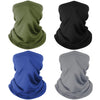
A neck warmer, such as the Finvizo winter neck warmer, functions as a closed tube. Because it maintains a consistent seal against the skin, it traps a pocket of air that acts as an insulator. During my own cold-weather testing, the fleece tube provided more consistent warmth than a wool scarf because it did not require constant adjustment. If you are looking for a complete layering approach, our winter face mask cold weather guide covers the full setup.
Wind: Where Scarves Quietly Fail
Wind resistance is the scarf's greatest weakness. Once wind speeds exceed 10 mph, a loosely wrapped scarf offers minimal protection as air passes through the knit or around the loose ends.
In contrast, a neck warmer’s snug, stretch-fit design eliminates the "sail effect" where fabric catches the wind. For high-motion activities like cycling or skiing, the neck warmer remains secure. I have found that while commuting on a bike, a scarf requires re-wrapping at every stop, whereas a neck warmer stays in place throughout the entire ride.
Where the Scarf Still Wins
Despite the technical advantages of neck warmers, the scarf remains a functional accessory in specific scenarios:
- Style: A wool or knit scarf provides a level of formal elegance that fleece tubes cannot replicate.
- Venting: If you transition from the cold outdoors to a crowded, heated subway, a scarf can be loosened or removed instantly to dump excess heat.
- Mild Weather: On a calm, dry evening where wind chill is not a factor, a scarf provides adequate comfort and allows for easy temperature management.
Which One for Your Scenario
Step 1: Assess your activity level
If you are participating in high-motion sports like skiing, snowboarding, or running, choose a neck warmer. A scarf is a safety hazard in these environments due to the risk of loose ends snagging on equipment. For full head coverage in extreme conditions, consider a winter balaclava.
Step 2: Evaluate the weather conditions
For windy, frigid days, a neck warmer is essential. The Finvizo winter neck gaiter reflective 4-pack provides both warmth and high visibility for dark winter mornings. If the temperature is below 15°F, many outdoor enthusiasts prefer to layer a thin fleece neck warmer under a scarf for maximum insulation.
Step 3: Match the setting
Reserve your scarf for office commutes, dinners, or city walks where style is the priority. For practical outdoor travel and commuting, stick to the neck warmer to ensure your thermal protection does not fail when you are on the move.
For more information on head layering for specific activities, our motorcycle cold weather head layering guide provides detailed insights into maintaining warmth at speed. You can also review our everyday cold weather face masks for additional winter setup options.
FAQ
Is a neck warmer better than a scarf?
Yes, for warmth and wind protection, a neck warmer is superior because it maintains a consistent seal and does not unravel. A scarf is better for formal style and quick temperature adjustments.
Is a neck gaiter the same as a neck warmer?
The terms are often used interchangeably, though "neck gaiter" generally refers to the tube shape, while "neck warmer" often implies a thicker, fleece-lined material specifically for cold weather.
Can you wear a neck warmer instead of a scarf?
You can certainly replace a scarf with a neck warmer for almost all outdoor activities, including commuting and sports. The only limitation is in formal settings where a scarf’s drape is preferred.
What is the warmest neckwear for winter?
A double-layer fleece neck warmer worn tucked under a jacket collar is the warmest practical choice. For extreme cold, layering a scarf over a neck warmer provides additional heat retention.
Are scarves or neck gaiters better for running?
Neck gaiters are significantly better for running because they stay in place, do not flap in the wind, and do not pose a snag hazard. For a deeper dive into running-specific gear, see our neck gaiter vs running scarf vs balaclava comparison.
Related reading
- Fishing Face Cover vs Neck Gaiter vs Sun Mask: What's the Difference?
- Neck Gaiter vs Buff Difference: Is There a Real One?
- How to Keep a Neck Gaiter from Slipping: 7 Field-Tested Fixes

Product Manager at Finvizo and an avid camper who tests gear on real trails. She writes from hands-on field experience to help you pick equipment that actually holds up outdoors.