Motorcycle Balaclava for Winter Riding: Warmth Under the Helmet
TL;DR: At 40 mph, a 40°F day feels like 25°F on your face — winter riding needs a real balaclava, not a summer tube. Pick one thin enough to fit under your helmet, fleece-lined where the wind hits, with a breathing panel and a long neck skirt. Seal it under your jacket collar and never let fabric ride up under your goggle or visor seal.
Motorcycle Balaclava for Winter Riding: Warmth Under the Helmet
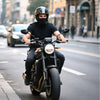
Cold-weather riders learn the math the painful way: windchill doesn't care what the thermometer says. At highway speed, your face is sitting in a wind tunnel of your own making, and the thin summer gaiter that was perfect in July becomes a liability in November. I commute by bike nine months a year and tour through shoulder season, so I've tested every head-and-neck setup against real highway miles. If you're deciding between headwear types more broadly, our balaclava vs ski mask vs neck gaiter comparison covers the category; this guide is specifically about what works under a motorcycle helmet in the cold.
Why Winter Riding Needs a Real Balaclava
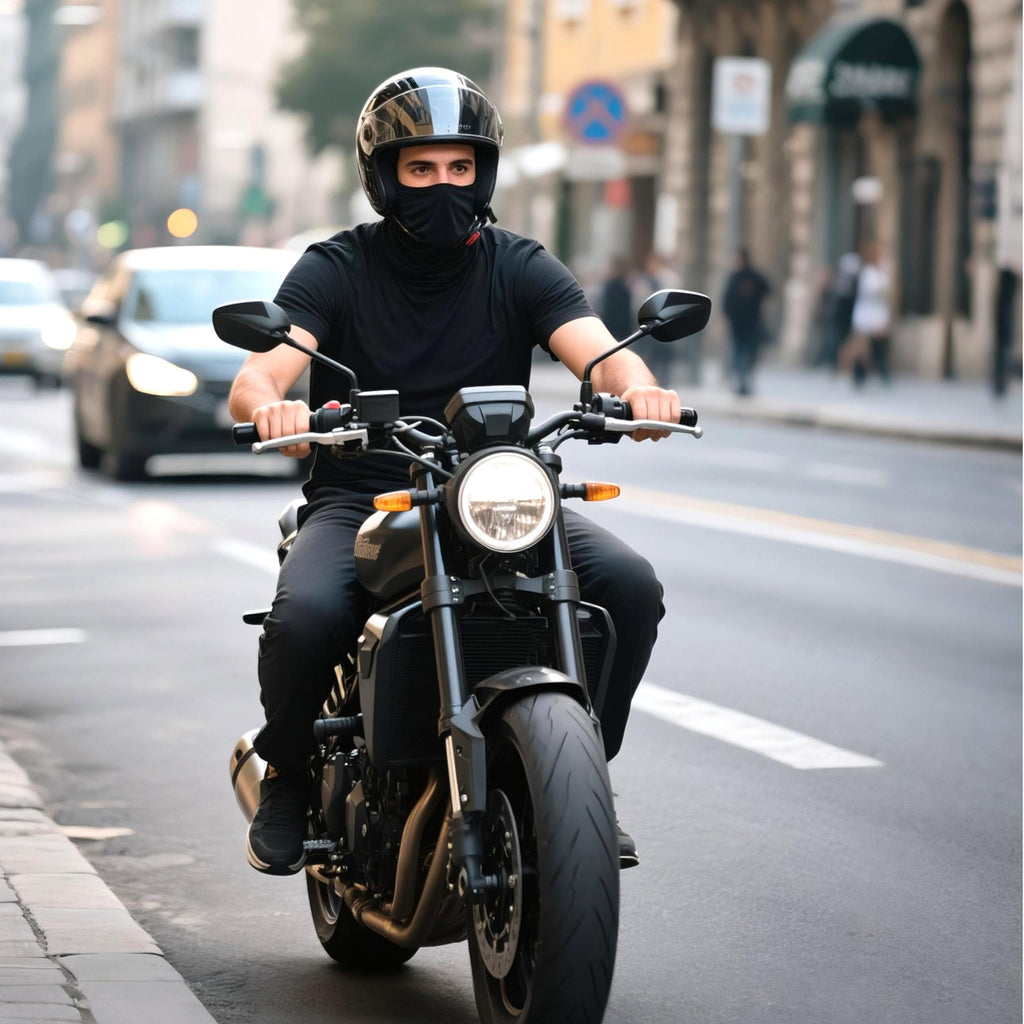
Two forces multiply each other on a bike. First, speed: at 40 mph, a 40°F day produces a windchill around 25°F on exposed skin — and your face leads the bike through that air. Second, exposure time: unlike a hike, you can't warm up by working harder. You sit still while the wind does its worst, for as long as the ride lasts.
A summer-weight neck tube fails here for two reasons: the fabric is too thin to block wind, and it ends at your collar, leaving the gap every rider knows — the stripe of frozen skin between helmet and jacket. A proper winter balaclava solves both: wind-resistant panels over the chest, neck, and face, and a cut long enough to tuck deep into your jacket.
What to Look For Under a Helmet
Thin where the helmet sits, warm where the wind hits. Bulk under the helmet changes fit and creates pressure points on long rides — dangerous, because a too-tight helmet is a headache and a too-loose one is a safety problem. The right balaclava uses flat, thin fabric across the crown and ears, with fleece or windproof panels on the face, throat, and chest. The Finvizo winter balaclava follows exactly this pattern: flatlock seams, a breathable stretch crown, and a hinged face panel you can drop at a gas stop without pulling your helmet off.
Flat seams. A raised seam under a helmet liner becomes a hot spot in twenty minutes. Run your finger along the seams before you buy — if you can feel a ridge, your head will feel it more.
A breathing panel. Mesh or perforated fabric over the mouth lets moist air escape forward instead of up into your visor. This is the single biggest factor in visor fog, which we'll get to.
A long neck skirt. Measure from your collarbone down — the skirt should reach mid-chest so it stays tucked when you turn your head at speed. For riders who prefer a separate layer, a fleece winter neck warmer over the balaclava's skirt seals the collar gap completely.
Helmet Fit and the Fogging Battle
Always test the balaclava with your helmet before a cold ride, not during one. Put the balaclava on, then the helmet: the cheek pads should compress the same way they do bare-headed. If the helmet suddenly feels tight across the forehead, the balaclava crown is too thick for your lid.
Visor fog is breath going the wrong direction. Three rules: keep the balaclava's top edge below your visor's seal line, use the breathing panel (or drop the hinged panel) at stops when you're breathing hardest, and crack the visor one notch below about 35°F — airflow beats anti-fog spray every time. If you wear glasses under your helmet, the full anti-fog playbook is in our guide to keeping glasses and goggles from fogging with a face mask — the nose-seal rules there apply doubly at 50 mph.
One more winter-specific note: dark, pre-dawn commutes mean you're sharing the road with drivers who haven't fully woken up. A reflective winter gaiter over your collar adds hi-vis stripes right at driver eye level — cheap insurance for the darkest months.
Summer Setup vs Winter Setup
The shoulder-season swap is simple. Summer riding is a heat-management game — thin cooling balaclava, maximum breathability, sweat-wicking over insulation. Our summer motorcycle balaclava guide covers that setup in detail. Winter flips the priority: wind-blocking first, breathability second, and coverage that tucks into your jacket instead of ending at it. Many riders own both and swap in October and April — the two setups share the same helmet without any fit drama, as long as both are thin-crowned designs.
The Dry-Spare Rule and Balaclava Care
Breath moisture soaks the face panel on every ride, and a damp balaclava loses most of its insulation — worse, it can freeze stiff on a rack while you're at work. Rotate two if you commute daily, and hang today's inside (not on the bike) so it actually dries overnight. Wash weekly on cold with mild detergent, skip fabric softener (it coats the fibers and kills wicking), and air dry. A balaclava is a fifteen-dollar item that decides whether a twenty-minute ride is fine or miserable — treat it like gloves, not like a sock.
FAQ
Can you wear a balaclava under a motorcycle helmet?
Yes — that's exactly what winter balaclavas are designed for. Choose one with a thin, flat-seamed crown so helmet fit doesn't change, and put the balaclava on before the helmet every time. If your helmet feels noticeably tighter with it on, try a thinner model rather than sizing up the helmet.
What is the best material for a winter motorcycle balaclava?
A hybrid: stretch polyester or merino on the crown and ears for thin comfort under the helmet, with fleece or windproof softshell panels across the face, throat, and chest. Avoid all-cotton, which holds sweat and chills you, and avoid thick fleece crowns, which create helmet pressure points.
How do I stop my visor fogging with a balaclava?
Keep the balaclava's top edge below the visor seal so breath can't channel upward, use a model with a mesh breathing panel, and crack the visor slightly in freezing temps. Dropping the face panel at stops — when you're breathing hardest — prevents most fog before it starts.
Is a neck gaiter warm enough for winter riding?
A summer tube gaiter is not. A fleece-lined winter neck warmer works for short, slow commutes around freezing, but above 40 mph or below 30°F you want a full balaclava with a long skirt — the gaiter leaves your cheeks and chin exposed and can slip below your collar at speed.
How cold is too cold to ride a motorcycle?
Most experienced riders draw the line where roads get icy, typically sustained temps below 35°F, because tires lose grip long before your face gives up — with the right balaclava, jacket, and gloves, your body can handle more cold than your traction can. Below freezing, watch for black ice on bridges and shaded corners, and shorten your rides.

Written by Vivian J
Product Manager at Finvizo and an avid camper who tests gear on real trails. She writes from hands-on field experience to help you pick equipment that actually holds up outdoors.