Winter Hiking Face & Neck Protection: A Layering Guide
TL;DR: Winter hiking face protection works like body layering: a thin wicking gaiter as your base, a fleece neck warmer as your insulating mid, and a windproof balaclava as your shell for ridgelines. The skill is adjusting before you sweat or freeze — drop layers at the start of climbs, add them before exposed sections.
Every winter hiker learns this the hard way: you overdress for the trailhead, sweat through everything on the climb, then freeze at the summit. Your face and neck follow the same rules as your core — one static layer fails. If you're building a winter kit from scratch, our winter face mask guide covers individual pieces in depth; this guide is about how to layer them for a day of constantly changing effort and exposure.
Why Face Layering Matters More on Hikes Than on Slopes
Skiing alternates between high-output runs and cold lift rides, but the pattern is predictable. Winter hiking is one long modulation problem: sheltered forest climb (warm, sweaty), treeline traverse (windy, cold), summit stop (static, freezing), descent (cold face, warm core). A single thick balaclava can't adapt to that. Three thin layers can — each one you add or remove changes your comfort range by roughly 10°F.
The Three-Layer Face & Neck System
| Layer | Piece | Job | When It Goes On/Off |
| Base | Thin wicking neck gaiter | Manages sweat, light wind screen | Always on around neck; up over face on climbs |
| Mid | Fleece neck warmer | Insulation, seals collar gap | Add at treeline or when wind picks up |
| Shell | Windproof balaclava | Blocks wind, full coverage | Ridgelines, summits, sub-15°F |
Base layer: a lightweight gaiter worn around the neck from the car. On the climb, pull it up over your mouth only if the air is biting — otherwise leave it down so sweat vapor escapes. Its real job is being there, ready, wicking.
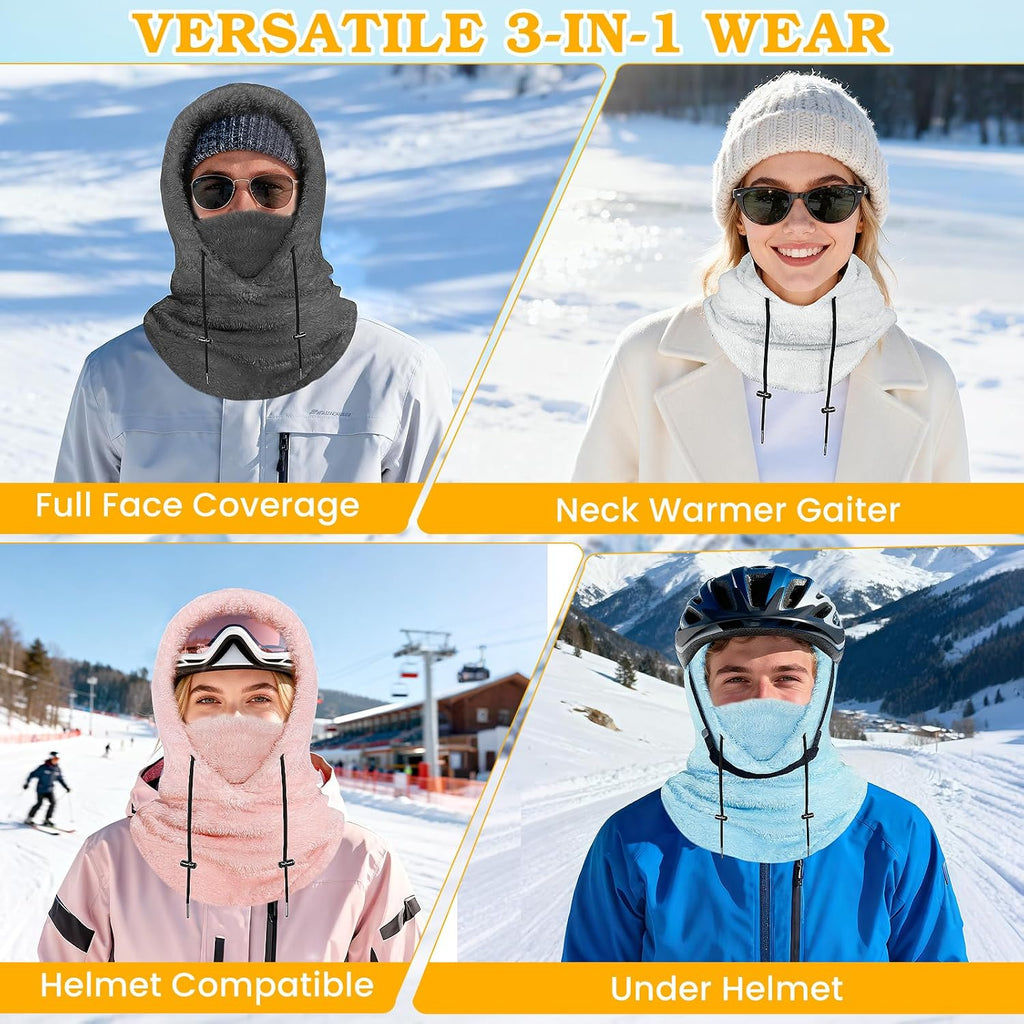
Mid layer: a fleece tube like the Finvizo winter neck warmer lives in your jacket chest pocket. It weighs nothing, and the moment wind replaces shelter it goes on over the base gaiter. This combo — thin wicking layer plus fleece — covers about 80% of a winter hiking day.
Shell layer: for exposed ridgelines and summits, a fleece balaclava goes over everything, hood up, sealing head, ears, and neck into one system. This is your ten-minute piece: summit photos, snack breaks, the coldest traverses.
The Adjustment Rhythm: Anticipate, Don't React
The whole game is changing layers before you need to. Two rules I follow religiously:
Drop layers at the bottom of climbs, not when you feel hot. By the time you feel sweaty, the moisture is already in your base layer. At every uphill, the mid layer comes off and goes back in the pocket. Yes, you'll feel cool for two minutes. That's the point.
Add layers before exposed sections, not after you're cold. Check the map: treeline in half a mile? Stop now, add the fleece, pull the balaclava out where you can grab it. Wind strips heat twenty times faster than still air, and fingers work worse with every degree they drop.
Managing Breath, Goggles, and Glasses on the Move
Hiking generates more sustained moisture than skiing, and glasses wearers suffer most. Three fixes that actually work: keep the top edge of any face layer angled slightly downward so breath routes out the bottom; loosen your pace for two minutes when fog builds (slower breathing, less moisture); and carry a spare dry gaiter — swapping a damp base layer for a dry one at lunch resets the whole system. On multi-hour hikes I rotate two gaiters; the wet one dries on the outside of my pack.
What This Looks Like on a Real Day
Last February, a eight-mile loop in the Whites: 18°F at the trailhead, calm in the trees, 30 mph gusts above treeline. Base gaiter only for the climb, added the fleece neck warmer at treeline, full balaclava for the half-mile summit ridge, back down to base layer within ten minutes of descending into the trees. Three pieces, maybe six ounces total, and I was comfortable in conditions that ranged across 40 degrees of effective temperature. That's the system working.
The same system scales down for easier days, too. On a calm 30°F forest loop I'll carry only the base gaiter and the fleece mid, leaving the balaclava home. The point was never to own the most gear — it's to own a few pieces that combine into exactly the coverage each hour of the trail demands.
Building out the rest of your layering? Our fall hiking layering guide covers the full-body system this face setup slots into, and the ski face mask guide goes deeper on storm-day pieces if your hiking skews above treeline.
Don't Forget Ears, Lips, and Extremities
Face layering fails at the margins. Three small additions save a winter hike: a fleece headband or beanie that covers your ears (the balaclava hood alone can gap at the sides), a tube of SPF lip balm applied every couple of hours (wind-burned lips crack fast, and winter sun at altitude is stronger than summer sun at sea level), and a pair of thin liner gloves so you can adjust all these layers without exposing bare fingers. The layering mindset applies head to toe — our fall layering guide covers the body side of the same system.
FAQ
What should I wear on my face for winter hiking?
A three-layer system: a thin wicking neck gaiter as a base, a fleece neck warmer for insulation, and a windproof balaclava for exposed ridgelines and summits. Adjust the layers with effort and exposure rather than wearing one heavy piece all day.
How do I keep my face warm hiking without overheating?
Layer thin pieces and change them early: remove the insulating layer at the start of climbs before you sweat, and add it back before windy or exposed sections. One thick mask can't modulate; two or three thin ones can.
Is a neck gaiter enough for winter hiking?
In sheltered forest below treeline, often yes — a fleece gaiter covers most mild winter hiking. Above treeline or below 15°F, add a balaclava over it for full head and neck coverage. Carry both; they weigh almost nothing.
How do I stop my glasses fogging when winter hiking?
Angle the face layer's top edge downward so breath exits low, slow your pace briefly when fog builds, and swap damp base layers for dry ones at breaks. Anti-fog spray helps, but breath routing matters more.
What temperature is too cold for winter hiking?
With a proper face layering system, most hikers are comfortable to around 0°F in calm conditions. Wind is the real limit — above 25-30 mph on exposed terrain, frostbite risk on any uncovered skin rises fast, so full balaclava coverage and short exposure windows become mandatory.
Should my face layers be wool or synthetic?
Synthetic fleece and polyester wick faster and dry quicker, which suits the stop-start sweat pattern of winter hiking. Merino resists odor better on multi-day trips. For day hikes, synthetic wins; for backpacking, merino is worth the cost.
Related reading
- What Is a Balaclava? Uses, Fit & How to Wear
- Balaclava vs Ski Mask vs Neck Gaiter: Winter Face Cover Guide
- Best Ski Face Masks 2026: Warmth, Anti-Fog & Helmet Fit Guide

Vivian J is a Product Manager at Finvizo and an avid outdoor enthusiast. She tests gear on real trails and writes from hands-on field experience to help readers choose equipment that performs reliably outdoors.