Best Hunting Gaiters: Camo & Windproof Picks
Hunting gaiters, hunting gaiters should match weather, movement, and legal visibility—not merely a camouflage print. Choose breathable stretch fabric for active mild days, quiet fleece for cold sits, and a tested wind-resistant panel for exposed ridges. The best option keeps your neck warm without blocking sight, hearing, or easy breathing.
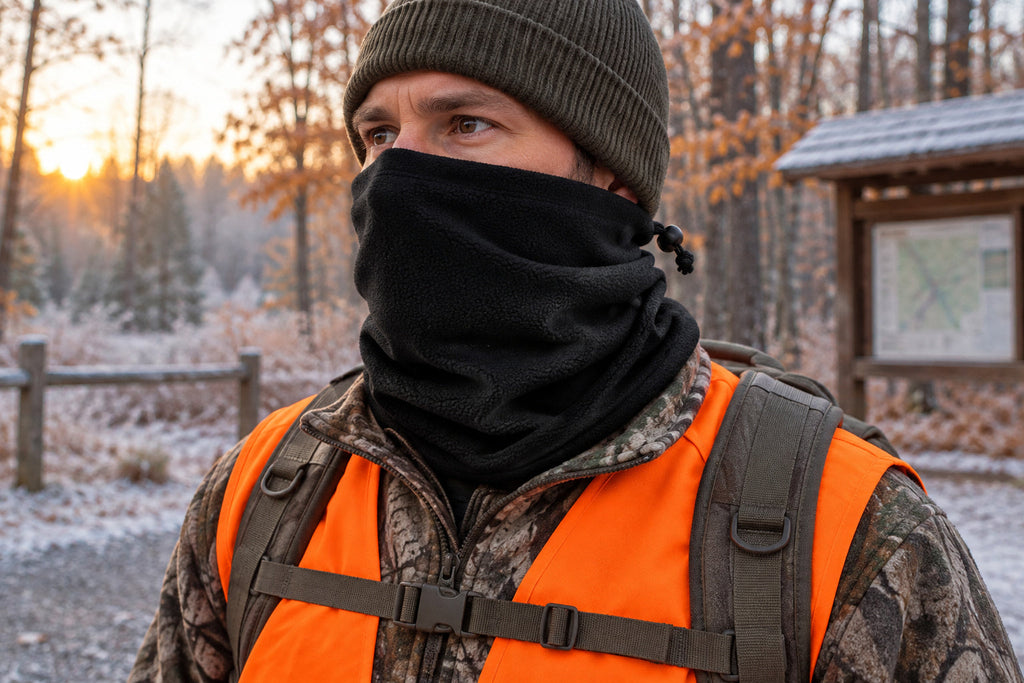
If your priority is cold-weather value, consider the Finvizo Adjustable Winter Neck Warmer. It is a black polar-fleece tube with an adjustable toggle, sold in four- and six-piece sets. It is not camouflage, waterproof, or supplied with a laboratory wind rating, so treat it as a warm layering option rather than technical hunting armor.
What to Look For in Gaiters for Hunting
Warmth without trapped moisture
Match insulation to your pace. Stationary glassing in freezing air can justify high-loft fleece. A steep hike generates enough heat that a thin synthetic or merino-blend tube often feels better. Carrying two weights is practical: hike in the light one, then switch to dry fleece before a long sit. Wet fabric conducts heat away faster and becomes uncomfortable.
Wind resistance you can verify
“Windproof” is not one universal threshold. A densely knit fleece slows drafts, while a laminated panel can block more air but reduce breathability and increase rustle. Look for an air-permeability number or named membrane when you need a technical guarantee. Without one, regard wind protection as relative and use a hood or jacket collar as your main barrier.
Quiet movement and safe fit
Rub candidate fabric against itself before buying. Brushed fleece and many knits are quiet; stiff shells, hook-and-loop tabs, and loose toggles may make noise. The top edge should stay below your eyes, and the fabric should never cover your ears when you need directional awareness. Secure long cords so they cannot snag on branches, straps, or equipment.
Camouflage, color, and visibility rules
A camo neck gaiter may reduce contrast, but camouflage does not replace fieldcraft. Pattern scale should suit the distance and landscape, while a plain dark color works inside a hood. Hunter-orange requirements vary by species, season, and jurisdiction. Check your current agency rules before every trip; never let a face covering obscure mandatory high-visibility clothing.
The International Hunter Education Association is a useful starting point for safety education. The U.S. Fish & Wildlife Service hunting portal also directs you toward refuge-specific opportunities and rules. Local regulations remain controlling.

Top Picks and Comparison
| Pick | Best for | Strength | Tradeoff |
|---|---|---|---|
| Finvizo adjustable fleece | Cold stands and shared kits | Warm, quiet, four- or six-pack value | Black, not camo; no tested wind rating |
| Lightweight printed synthetic | Mobile early season | Fast drying and camouflage choice | Less insulation; print can fade |
| Merino-blend tube | Long mixed-pace days | Moisture and odor management | Higher price; slower than thin synthetic to dry |
| Membrane-backed gaiter | Exposed, persistent wind | Most measurable wind control | Can feel clammy or sound crisp |
Our Pick: Finvizo Adjustable Fleece Neck Warmer
The Finvizo Adjustable Winter Neck Warmer is our value pick for cold, low-output conditions. The product listing specifies polar fleece and an approximate 9.8-by-11.8-inch size. A toggle lets you adjust the opening, and the sets include four or six black warmers.
That multipack helps you keep a dry spare in your pack or issue matching layers to a group. It is machine washable, according to the listing. Choose it for warmth and convenience—not for camouflage, certified windproofing, or scent elimination. Place blaze orange where regulations and safe visibility demand it.

Fleece vs. Lightweight Camo
Fleece wins when warmth, softness, and quiet handling matter most. It also absorbs and holds more moisture than many thin synthetics. Lightweight camo wins during active travel and warm weather because it breathes and packs small, but a print does not add warmth. For variable days, wear the thin gaiter uphill and pull on fleece after cooling down.
Do not assume either category is windproof. Fabric density, stretch, seams, and face coverage change the result. If cold wind is the primary hazard, look for independently stated air permeability or pair your neck layer with a weather-resistant collar. Test breathing comfort while walking before relying on a face-up configuration.
Who Should Buy What?
Cold-weather stand hunter: Start with the Finvizo adjustable fleece, especially if you value a quiet hand and spare units. Keep it dry and lower it whenever condensation builds around your mouth.
Warm, mobile hunter: Pick a thin printed synthetic with flat seams and enough stretch to sit below your eyes. Prioritize sweat transport over insulation.
All-day mixed terrain user: A merino blend balances comfort across temperature swings. Carry a second dry layer rather than expecting one gaiter to manage every condition.
High-wind ridge user: Choose a model with a documented membrane or air-permeability result. Accept that stronger wind blocking may reduce breathability and quietness.
Season-switching kit: Pack a thin synthetic and a dry fleece instead of searching for one universal answer. Label shared pieces, store each in a separate resealable pouch, and change before sweat chills. This two-layer approach also gives you a backup if rain, condensation, or a creek crossing soaks the first gaiter.

Our Finvizo Adjustable Winter Neck Warmer is black polar fleece, roughly 9.8 × 11.8 inches, with an adjustable toggle — $18.89 for a 4-pack (about $4.70 each), with a 6-pack option, machine washable. One honest note: it is not camouflage and carries no standardized windproof rating, so pair it with a camo outer layer where pattern matters.
FAQ
Are black hunting gaiters as effective as camo?
For warmth, color is irrelevant. For concealment, black may create a solid shape, while a landscape-appropriate print can break contrast. Your movement, exposed skin, wind direction, and background usually matter more than one small fabric panel.
Is the Finvizo neck warmer windproof?
The product is described for cold-weather coverage, but no standardized wind test is provided. Its fleece can reduce direct chill; do not treat that as certified windproof performance.
Can a hunting neck gaiter replace blaze orange?
No. Follow the exact visibility requirement for your location, species, and season. A camouflage or black covering must not hide required orange garments.
How do I reduce odor?
Wash according to the label, dry completely, store away from smoke and fuel, and rotate clean pieces. No fabric makes you scent-invisible.
Build a practical cold-weather kit
For a simple, quiet fleece layer with spares, shop the Finvizo Adjustable Winter Neck Warmer. For lighter options and other neckwear, browse Finvizo neck gaiters and match material to your actual conditions.
Product specifications checked against the linked Finvizo listing. Conditions, fit, and regulations vary.
Related reading
- Sun Protection for Golfers: Sleeves, Gaiters & What Actually Works
- Hunting Face Mask (ph4 自备稿)
- Fishing Face Cover vs Neck Gaiter vs Sun Mask: What's the Difference?

Written by Vivian J
Product Manager at Finvizo and an avid camper who tests gear on real trails. She writes from hands-on field experience to help you pick equipment that actually holds up outdoors.