How to Wash UPF Clothing Without Ruining Sun Protection
How to Wash UPF Clothing Without Ruining Sun Protection
Last summer I learned an expensive lesson. I threw my favorite UPF 50 arm sleeves into a hot wash with my gym clothes, then tossed them in the dryer on high heat. Two weeks later, I got a sunburn on my forearms during a six-hour paddleboarding trip. The sleeves looked fine, but the UV protection had degraded without me noticing. If you're investing in UPF-rated gear—and you should be, especially if you spend real time outside—knowing how to wash and care for it is just as important as knowing what UPF rating to buy. Before we get into the details, if you're still figuring out what UPF numbers actually mean, our guide to UPF 50 ratings breaks down exactly how much protection you're getting and why it matters for all-day outdoor work.
Why Regular Laundry Detergent Can Strip UPF Ratings
UPF clothing works because of two things: the tight weave or knit of the fabric itself, and chemical UV absorbers that are either embedded in the fibers or applied as a surface treatment. Regular laundry detergent is not your enemy here, but optical brighteners and harsh surfactants can gradually break down those UV-blocking treatments. Over time, the fabric may look perfectly intact while its sun protection quietly drops from UPF 50 to something closer to UPF 15. Neck gaiters get the same treatment — the benefits are laid out in why a UPF neck gaiter is worth it.
Worse yet, bleach and fabric softener are genuinely destructive. Bleach oxidizes the synthetic fibers that most UPF clothing is made from—polyester, nylon, and spandex blends—and permanently damages the UV-absorbing compounds. Fabric softener leaves a waxy coating on the surface that can actually reduce the fabric's ability to block UV rays, not to mention it clogs the moisture-wicking channels that keep you cool.
The Right Way to Wash UPF Clothing (Step by Step)
I now wash all my UPF gear in a dedicated load, and I've developed a routine that keeps it performing season after season. Here's exactly what I do:
Step 1: Rinse immediately after use. If I've been sweating heavily or the gear has picked up sunscreen residue, I rinse it in cool water as soon as I get home. Salt, sweat, and mineral sunscreen can all degrade fibers over time if left to sit.
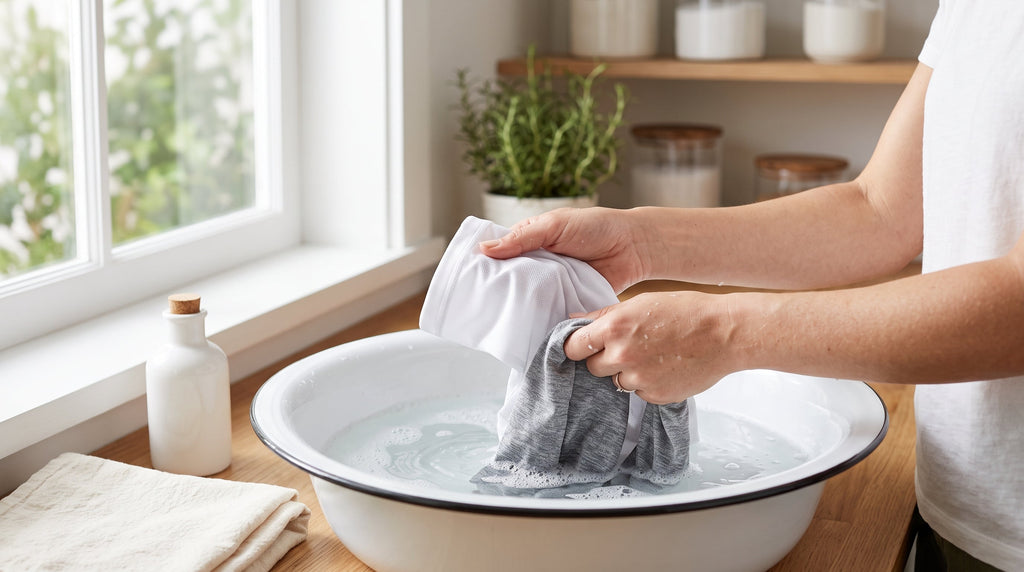
Step 2: Use cold water and a gentle cycle. Hot water is the fastest way to weaken synthetic fibers and fade UV treatments. I set my machine to cold and choose the delicate or permanent press cycle. Agitation should be minimal—too much friction stresses the fabric.
Step 3: Choose the right detergent. I use a mild, fragrance-free liquid detergent without optical brighteners. Powder detergents can be abrasive and don't dissolve as well in cold water, leaving residue that interferes with wicking. I avoid anything with bleach additives or "color-safe bleach" claims.
Step 4: Skip the softener and dryer sheets. This is non-negotiable. Fabric softener coats the fibers and reduces both UV protection and moisture-wicking performance. If you want that soft feel, a half-cup of white vinegar in the rinse cycle works as a natural softener without leaving residue.
Step 5: Wash UPF items inside out. This protects the outer surface from abrasion against zippers, buttons, and other clothing in the load. The UV treatments and dense weave are what you're protecting, so minimizing surface friction helps longevity.
I apply this same routine to my Finvizo UPF 50+ arm sleeves, which I wear on almost every summer outing. After eight months of regular washing this way, they still block UV as effectively as the day I opened the package.
Drying UPF Gear: Air Dry vs. Machine Dry
Heat is the silent killer of UPF clothing. The synthetic fibers in most sun-protective garments start to degrade at temperatures above 140°F, which most dryers exceed on medium and high settings. Even the tumbling action in a dryer creates friction that can wear down the fabric surface over time.
I air dry all my UPF gear on a flat mesh rack, out of direct sunlight. Hanging wet garments by their edges can stretch the fabric, especially if they contain spandex, so laying them flat is the safer move. If I'm in a hurry, I'll roll the item in a clean towel to absorb excess water before laying it out—this cuts drying time significantly without adding heat.
That said, if you absolutely must use a dryer, the lowest heat setting with a short cycle is the least damaging option. Remove the items while they're still slightly damp and let them finish air drying. But honestly, once you build the habit of flat-drying, it becomes automatic and your gear lasts noticeably longer.
How Often Should You Wash UPF Clothing?
This depends on how hard you're using it. For everyday casual wear—say, a UPF shirt worn for a walk around the neighborhood—I wash after two to three wears. For high-sweat activities like hiking, cycling, or yard work, I wash after every single use. Salt and sweat left in the fibers don't just smell bad; they're mildly acidic and will break down synthetic fibers over time.
Sunscreen is another factor. Chemical sunscreens contain oils and solvents that can stain and degrade fabric. Mineral sunscreens with zinc oxide or titanium dioxide leave a white residue that builds up in the weave and can reduce breathability. If I've been layering sunscreen under my UPF gear, it goes straight into the wash that evening.
For my neck gaiters, which sit directly against my skin and collect both sweat and breath moisture, I treat them like base layers: one wear, one wash. The Finvizo neck gaiter and arm sleeve set holds up well to frequent washing when you follow the cold-water, no-softener rule, and having multiples in the rotation means you're never caught without a clean one.
Storage Tips That Protect the Fabric's UV Blocking Power
How you store UPF clothing between seasons matters more than most people realize. I learned this the hard way when I left a stack of arm sleeves in my car's glove compartment over a Texas summer. Three months of heat exposure had noticeably weakened the fabric.
Store UPF gear in a cool, dry place away from direct sunlight. UV exposure through a window or in a bright closet can gradually degrade the fibers even when you're not wearing them. Avoid storing in plastic bags, which trap moisture and encourage mildew; breathable cotton storage bags or open shelves are better.
I also keep my UPF clothing separate from rougher fabrics like denim or canvas, which can abrade the surface of synthetic knits during storage. A simple drawer divider or separate bin solves this.
When to Retire Your UPF Gear
UPF clothing doesn't last forever, even with perfect care. The general rule from textile labs is that a well-cared-for UPF garment maintains its rating for about 30 to 40 washes. After that, the UV absorbers begin to deplete and the fiber structure may have loosened from wear.
Visible signs it's time to replace: the fabric has become thin or see-through when held up to light, the surface is pilled or fuzzy, the garment has stretched and no longer fits snugly, or you've noticed sunburn in areas the garment covers. If you're getting pink on your forearms after a day outside and you know you didn't miss a sunscreen spot, your sleeves are probably done.
I mark the date I buy UPF gear with a fabric pen on the care label. It helps me track wash count and decide when it's time for a replacement before I get caught with degraded protection on a long trip.
Frequently Asked Questions
Can I use regular detergent on UPF clothing?
Yes, but choose a mild liquid detergent without optical brighteners, bleach, or fabric softener additives. Powder detergents and heavily fragranced formulas can leave residue that interferes with UV protection and moisture wicking over time.
Does washing UPF clothing reduce its sun protection?
Proper washing does not significantly reduce UPF ratings. However, hot water, bleach, fabric softener, and high-heat drying can degrade the UV-blocking fibers and chemical treatments. Following the care guidelines above preserves the protection for the full lifespan of the garment.
Can I dry UPF clothing in the dryer?
Air drying is strongly recommended. If you must use a dryer, choose the lowest heat setting and remove the items while slightly damp. High heat damages synthetic fibers and can permanently reduce UV blocking performance.
How long does UPF clothing last with regular washing?
Most well-made UPF garments maintain their rated protection through 30 to 40 washes, assuming proper care. After that, UV absorbers deplete and fabric wear may reduce effectiveness. Replace the garment when it becomes thin, stretched, or you notice sunburn in covered areas.
Should I wash UPF clothing after every wear?
For high-sweat or high-sunscreen activities, yes. For light casual wear, every two to three wears is fine. Sweat, salt, and sunscreen residues are acidic and can break down synthetic fibers if left in the fabric.
What about UPF accessories like neck gaiters and arm sleeves?
Treat them the same as UPF clothing: cold water, gentle cycle, mild detergent, no softener, and air dry flat. Accessories often see harder use than shirts because they're worn tightly against skin and exposed to more friction, so they may need replacement slightly sooner.
If you're heading out for a multi-day trip soon, make sure your gear checklist is solid. Our essential camping gear checklist covers everything from shelter to sun protection so you don't forget the items that keep you safe and comfortable on the trail.
Related reading
- Volleyball Arm Sleeves: Why Players Wear Them & Top Picks
- Do Arm Sleeves Actually Keep You Cool? Here's the Science
- Cooling Towel vs Regular Wet Towel: Does It Actually Work Better?

Vivian J is a Product Manager at Finvizo and an avid outdoor enthusiast. She tests gear on real trails and writes from hands-on field experience to help readers choose equipment that performs reliably outdoors.