Arm Sleeves vs Sunscreen: Which Actually Protects Better?
Arm Sleeves vs Sunscreen: Which Actually Protects Better?
Every summer I watch the same scene unfold at the trailhead: someone pulls a brand-new bottle of SPF 50 from their pack, squeezes a generous dollop onto their forearms, and heads out for a four-hour hike. By mile three the sweat has carried half of it into their eyes, and by the turnaround point their arms are the color of a sunset. I used to be that person. Then I switched to UPF 50+ arm sleeves for anything longer than an hour in direct sun, and the difference was immediate. But sunscreen still has its place, and the honest answer is that "better" depends on how you actually use your time outdoors. In this piece I will walk through the real-world trade-offs—protection level, cost over a season, convenience, and comfort—so you can decide what makes sense for your routine.
What UPF 50+ Actually Blocks (And What SPF Misses)
UPF 50+ fabric blocks at least 98 percent of UVA and UVB rays. That number does not degrade after two hours of sweat. It does not wash off in a stream crossing. It does not require reapplication every 80 minutes. When I am guiding a group through open ridge lines above treeline, the last thing I want to worry about is whether my chemical barrier is still intact. For the full kit beyond sleeves, see our sun protection gear buying guide.
SPF 50 sunscreen, by contrast, blocks about 98 percent of UVB if you apply the correct amount—two milligrams per square centimeter, which translates to roughly one ounce for full adult coverage—and reapply on schedule. In reality, most people use half that amount and forget the second coat. A 2021 study from the University of Liverpool found that the average user achieves only 30 to 50 percent of the labeled SPF because of under-application. Fabric does not suffer from user error.
The catch is coverage. Sleeves protect your arms from wrist to bicep. They do nothing for your neck, ears, hands, or face unless you pair them with a neck gaiter and a cap. Sunscreen is still the only practical option for anything sleeves cannot cover. The question is not arm sleeves or sunscreen. It is arm sleeves plus targeted sunscreen for the gaps.
The Math Nobody Talks About: Cost Per Season
Let me run the numbers for a typical active summer. A quality broad-spectrum SPF 50 bottle runs about twelve to fifteen dollars for six ounces. If you are outdoors three days a week and reapplying every two hours, you will burn through two to three bottles a month. That is roughly a hundred dollars over a four-month season, and that assumes you are not sharing with family.
A set of UPF 50+ arm sleeves costs less than a single month of sunscreen and lasts multiple seasons with basic care. I have pairs going into their third summer that still test out at full UPF rating. The upfront cost is higher, but the per-wear cost drops to pennies after the first season.
There is also the hidden cost of sun damage. A single blistering sunburn in childhood or young adulthood roughly doubles your lifetime risk of melanoma according to the Skin Cancer Foundation. Prevention is cheaper than treatment by orders of magnitude. Sleeves remove the reapplication variable entirely, which matters if you are the type who forgets the second coat.
Comfort and Heat: The Surprising Winner
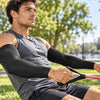
This is the objection I hear most often: "Won't extra fabric make me hotter?" It sounds logical, but it is backwards. Modern cooling arm sleeves are built from lightweight polyester-spandex blends with moisture-wicking channels. When sweat evaporates from the fabric surface, it creates a microclimate that feels cooler than bare skin baking in direct radiation.
I tested this personally on a 95-degree day in Sedona. One arm bare, one arm in a Finvizo sleeve. After thirty minutes of hiking, the sleeved arm was measurably cooler to the touch. The fabric was doing two jobs: blocking UV and accelerating evaporative cooling. Sunscreen, on the other hand, can trap heat and create a sticky film that collects dust and grit. On long gravel rides, I have had sunscreen turn into a paste that actually increases friction against handlebar tape.
The comfort factor extends to convenience. Sleeves slide on in five seconds. Sunscreen requires a pre-application ritual, a timer in your head, and a re-application break that interrupts flow. For cyclists, runners, and anglers who do not want to stop mid-session, sleeves are the clear ergonomic winner.
When Sunscreen Still Wins
I am not anti-sunscreen. There are absolutely situations where a chemical or mineral block is the right tool. If you are swimming in open water, fabric sleeves are useless once submerged. If you need full-body coverage in a bathing suit, sunscreen is the only practical route. And for short exposures—a twenty-minute dog walk, a quick grocery run—slapping on lotion is faster than pulling on gear.
Sunscreen also shines in transitional weather. On a cool 65-degree morning that warms to 85 by noon, you might not want the slight compression of sleeves during the chilly start. A thin layer of SPF bridges that gap without adding bulk. The smartest approach is a hybrid: sleeves for your arms during extended activity, sunscreen for face, neck, hands, and any unexpected exposure.
How to Choose Arm Sleeves That Actually Work
Not all sleeves are equal. I look for three things before recommending a pair to anyone on my camping trips.
First, the UPF rating must be lab-tested, not just claimed. UPF 50+ is the gold standard. Anything below UPF 30 is barely better than a cotton t-shirt. Second, the fit needs to be snug without being restrictive. If the sleeve bunches behind the elbow or slides down your wrist, you will fiddle with it constantly. Look for silicone gripper strips at the bicep opening and a contoured cut that follows arm anatomy. Third, the fabric should breathe. A thick compression sleeve designed for basketball recovery is not the same as a sun-protection sleeve. The latter is thinner, lighter, and built for all-day wear.
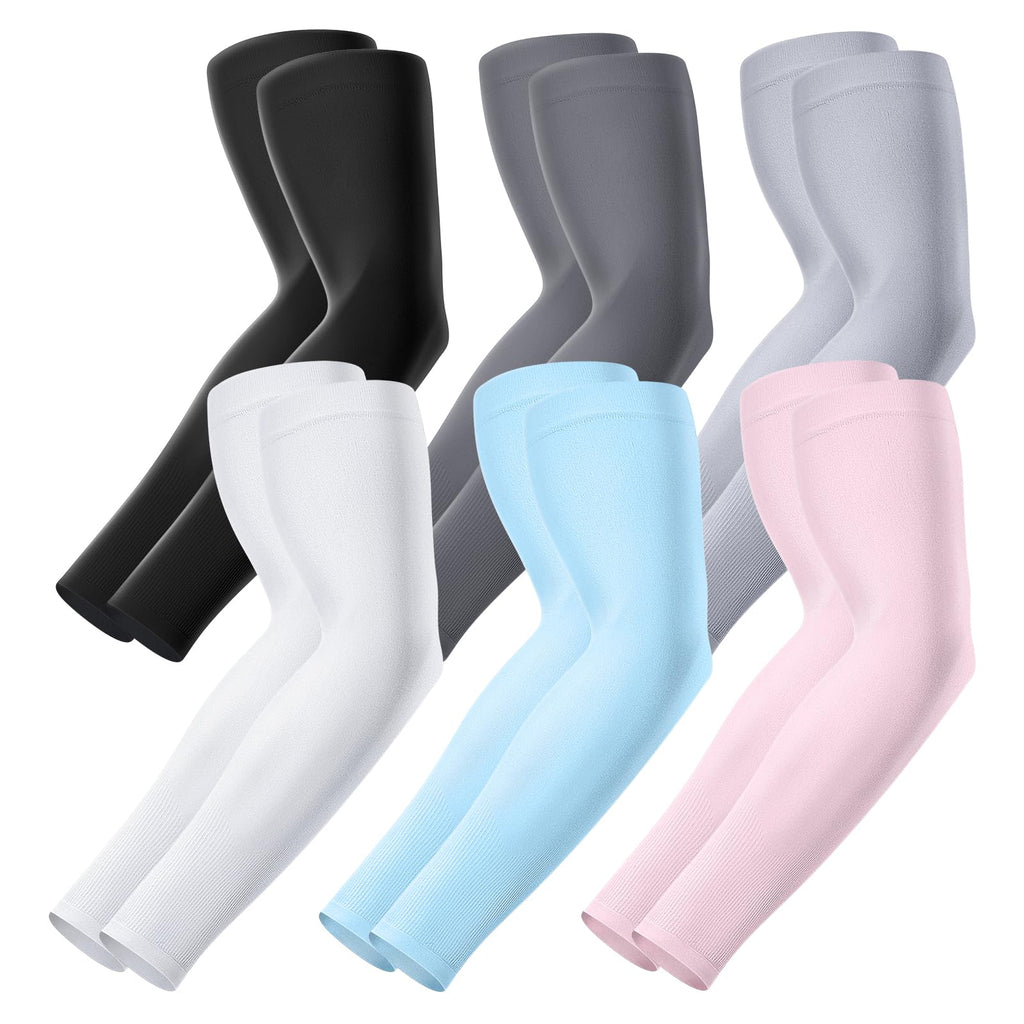
The Finvizo 4-pair set checks all three boxes. I keep a pair in my car, a pair in my hiking pack, and a backup pair in my cycling jersey. After three seasons of washing, they have not pilled, stretched, or lost their cooling effect. For anyone who spends real time outside, they are the single most cost-effective sun upgrade you can make.
Frequently Asked Questions
Do UPF arm sleeves really block more UV than sunscreen?
Yes, if used correctly. UPF 50+ blocks 98 percent of UV consistently, while the effective protection of sunscreen depends heavily on application amount and reapplication frequency. Most people under-apply sunscreen, dropping real-world protection to SPF 15 or lower.
Can you get sunburned through arm sleeves?
Not through properly rated UPF 50+ fabric. The weave density and fabric treatment block the vast majority of UVA and UVB. Cheap cotton sleeves without a UPF rating, however, offer minimal protection.
Are cooling arm sleeves comfortable in hot weather?
Surprisingly yes. The moisture-wicking fabric accelerates sweat evaporation, creating a cooling effect that often feels better than bare skin in direct sun. Look for lightweight polyester-spandex blends rather than thick compression materials.
How many times can you wash UPF sleeves before they lose protection?
Quality UPF 50+ sleeves retain their rating for 30 to 50 washes if cared for properly. Wash in cold water, avoid fabric softener, and air dry. I have pairs entering their third season with no measurable drop in performance.
Should I wear arm sleeves and sunscreen together?
For maximum protection, yes. Use sleeves on your arms and a broad-spectrum SPF 50 on exposed skin like your face, neck, ears, and hands. The combination eliminates the reapplication burden on your arms while protecting the areas sleeves cannot cover.
How much money do arm sleeves save compared to sunscreen over a summer?
A typical active adult spends eighty to a hundred dollars on sunscreen over a four-month season. A set of UPF 50+ sleeves costs less than twenty dollars and lasts multiple seasons. The break-even point is usually within the first month of regular use.
Ready to upgrade your sun strategy? Browse the full guide to UPF ratings to understand exactly what the numbers mean, or check out our camping gear checklist for a broader look at trail-ready essentials.
Related reading
- Volleyball Arm Sleeves: Why Players Wear Them & Top Picks
- Do Arm Sleeves Actually Keep You Cool? Here's the Science
- Football Arm Sleeves: Grip, Turf Burn & Sun Picks

Vivian J is a Product Manager at Finvizo and an avid outdoor enthusiast. She tests gear on real trails and writes from hands-on field experience to help readers choose equipment that performs reliably outdoors.