How to Wash a Hiking Backpack Without Damaging It
Want to wash hiking backpack without damage ruining your favorite gear? Most hikers learn how to wash a hiking backpack without damaging it the hard way. Good news: hiking gear cleaning is simple once you know how to clean a backpack gently. This 45-minute guide covers prep, hand washing, and air drying, so your pack stays fresh for years. Still shopping? See our guide to choosing the right hiking backpack size.
Why Cleaning Your Hiking Backpack Matters
Sweat, mud, and trail dust slowly corrode your fabric and waterproof coating. Grit jams zippers, damp corners grow mold, and odor sets in fast. Regular backpack maintenance is not cosmetic; it directly helps you extend backpack lifespan and save money. A clean hiking pack performs better and lasts years longer.
What You'll Need
Gather a mild detergent for backpacks (no bleach, no softener), a soft brush, a sponge, a tub or basin, lukewarm water, towels, and a hanger. Skip enzyme laundry soap; it strips DWR. See REI's expert guide to backpack care for detergent details.
Every Finvizo pack — including the Finvizo 50L Ultralight Backpack — is built with durable ripstop nylon that responds best to gentle hand washing. And if carrying comfort is the real issue rather than cleaning, see how to hike with a 50L backpack without back pain.

How to Hand Wash a Hiking Backpack: Step-by-Step
Step 1 — Empty and Prep Your Pack
Empty every pocket and unzip all compartments. Remove detachable parts: hip belt, frame sheet, and hydration reservoir. Shake out crumbs and debris, then vacuum the interior lining on low power for 30 seconds.
Step 2 — Pre-Treat Stains, Straps, and Zippers
Dry-brush caked mud off the shell. Dab mild detergent onto sweat-heavy zones (shoulder straps, back panel) for 10 minutes, and clean backpack straps and zippers with an old toothbrush.
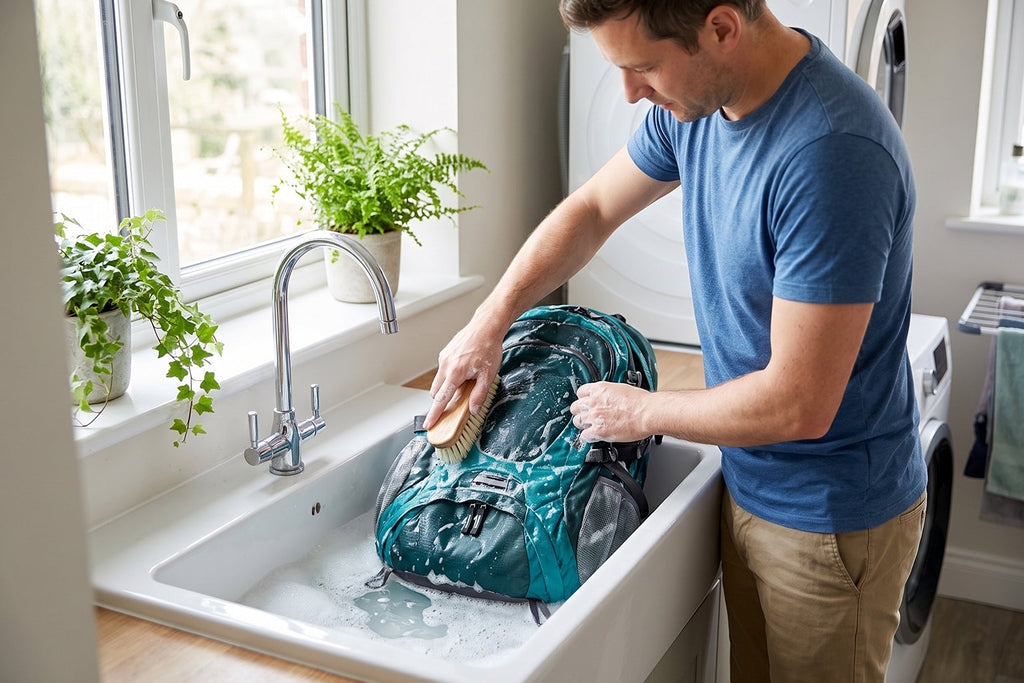
Step 3 — Hand Wash in Lukewarm Water with Mild Detergent
Fill the tub with lukewarm water around 85–95°F (30–35°C) and a small squirt of detergent. Submerge the pack and soak it for 15–30 minutes. Gently scrub with a sponge; never wring or twist the fabric.
Step 4 — Rinse Thoroughly
Drain the tub and rinse under clean water until no suds remain, usually 3–4 full refills. Leftover detergent attracts dirt, irritates your skin, and slowly degrades the coating.
Step 5 — Air Dry the Right Way
Press (don't wring) the pack with towels to remove moisture, then air dry a backpack upside down in a shaded, ventilated spot with every zipper open. Full drying takes 1–2 days.
Pro Tips for Long-Term Backpack Care
Deodorize with Baking Soda
To remove smell from backpack lining, dust in 2–3 tablespoons of baking soda, leave overnight, and shake out.
Protect the Waterproof (DWR) Coating
Stick to cool or lukewarm water and shade-dry only. If rain stops beading on the surface after 6–12 months, refresh the waterproof coating with a spray-on DWR treatment.
Clean Zippers and Buckles Monthly
Rinse hardware with fresh water and scrub grit with a toothbrush. Zipper wax keeps sliders smooth and prevents corrosion.
Wash the Hydration Reservoir Separately
Clean the reservoir with dedicated tablets and dry its parts apart from the pack to stop mold spreading into your lining.
Store It Dry, Cool, and Unstuffed
Store your pack only when 100% dry, loosely packed in a cool closet, so fabric and coating stay flexible.
Backpack Washing Mistakes to Avoid
Unless the brand allows it, never machine wash a backpack — agitation bends frames and tangles webbing. Skip the dryer, bleach, softener, and water above 100°F; all destroy DWR and glued parts. Never twist or sun-dry the pack. When in doubt, check Osprey's official pack care instructions, and build daily gear care habits between washes.
How Often Should You Wash a Hiking Backpack?
Over-washing also wears fabric out, so follow a simple backpack maintenance schedule: deep hand wash once per season, spot clean in between.
| Usage Scenario | Spot Clean | Deep Hand Wash |
| Weekend day hikes | After muddy trips | Every 4–6 months |
| Multi-day backpacking | After every trip | Every 2–3 months |
| Daily commuting / gym | Monthly | Every 2 months |
| After rain / sweat-heavy trips | Same week | As needed |
| Before long-term storage | Yes | Always |
Repair or Replace: When Washing Isn't Enough
Loose threads, broken buckles, and sticky zippers are cheap fixes. But brittle fabric, peeling waterproof film, or a cracked frame means the pack is done. If it is time to upgrade, the Finvizo 50L Ultralight Backpack uses reinforced ripstop nylon built to survive years of trail use — and easy hand washing. Compare options in the full Finvizo backpack collection.

FAQ
Can you machine wash a hiking backpack?
Generally no. Agitation can damage the frame, webbing, and coating. If you must machine wash a backpack, use a laundry bag, cold water, and a gentle cycle after checking the care label.
Can you put a hiking backpack in the dryer?
No. High heat harms the DWR coating, webbing, and plastic hardware. Towel-press the water out and hang the pack upside down in a shaded, airy spot for 1–2 days instead.
What detergent should you use to wash a hiking backpack?
Use a mild, fragrance-free detergent or a cleaner made for technical outdoor gear. Avoid bleach, fabric softener, and strong alkaline formulas; they break down coatings and fabric fibers.
How do you get the smell out of a hiking backpack?
Hand wash it first using the steps above. If odor lingers, dust 2–3 tablespoons of baking soda into the lining, leave it overnight, then air dry the pack completely in the shade.
Does washing a backpack ruin the waterproof coating?
Proper hand washing with lukewarm water, mild detergent, and shade drying will not. Hot water, machine washing, and dryers accelerate DWR failure; restore the finish with a spray-on DWR treatment when needed.
Keep Your Pack Trail-Ready
One proper 45-minute wash can add years to your pack's life. Explore the Finvizo Hiking Backpack Collection, check out the Finvizo 50L Ultralight Backpack, or read our hands-on Finvizo backpack review before your next trip.

Related Guides:

Written by Vivian J
Product Manager at Finvizo and an avid camper who tests gear on real trails. She writes from hands-on field experience to help you pick equipment that actually holds up outdoors.