Best Budget Travel Backpacks Under $100 (2026 Guide)

Budget travel backpacks under $100 offer solid zippers and laptop sleeves but usually lack hip belts, which are key for carrying heavier loads comfortably.
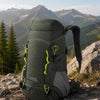
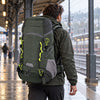
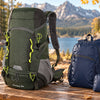
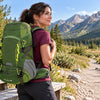
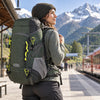
Finvizo 50L Camping Backpack — ventilated frame with rain cover
For campers and budget travelers who need real capacity on a budget, this 50L pack carries tents, sleeping bags, and gear on a curved ventilation frame.
View ProductOur Pick: Finvizo 50L Camping Backpack
Explore the Finvizo 50L Camping Backpack for an affordable, durable option with a padded hip belt and rain cover. Ideal for camping and travel, it balances capacity and comfort just beyond the $100 budget mark.
A lifetime warranty on a $60 bag is often more valuable than extra pockets.
Check Price on FinvizoQuick Picks: The Short Version
Best overall under $100: The tomtoc Navigator-T66 class of 40L clamshell pack (~$80-96). YKK zippers, full clamshell opening, a proper 17.3-inch laptop compartment, and carry-on-legal dimensions. The catch, like everything in this price band: no hip belt. Not sure when a hiking pack beats a travel pack? We mapped it out in what situations actually call for a hiking backpack .

Best under $35: The Matein-style personal-item pack (~$24-32). Sized at roughly 18.1 x 13.4 x 8.7 inches to slide under airline seats, with a USB pass-through pocket. Thin padding and budget zippers — treat it as a 1-2 year bag and it's a bargain.
Best if you actually carry weight (the stretch pick): A hiking crossover with a suspended frame and hip belt — our 50L Camping Backpack — just past the budget line — or the lighter 45L Airflow. They're the only packs on this list that move load onto your hips, and after hour two in an airport that matters more than any pocket layout.
Third-party prices cited below are typical U.S. street prices as of October 2026; see current Finvizo pricing on each product page.
What $100 Actually Buys You (and What It Doesn't)

Every review site dancing around this price point eventually admits the same three trade-offs. I'd rather put them up front:
No hip belt. This is the big one. A real, load-bearing hip belt — not a decorative webbing strap — transfers 60-80% of pack weight off your shoulders. At 10 lbs of gear you won't miss it. At 18 lbs with a 40-minute connection through O'Hare, you will. Sub-$100 travel packs skip it because a padded, load-rated belt with a frame to attach it to is expensive to build. This is precisely the gap where hiking crossovers win.
Weak suspension in general. Budget packs hang the whole load off two shoulder straps with foam padding. Fine for a train-to-hotel day; punishing on a three-terminal sprint. Look at product photos: if you can't see any frame structure behind the back panel, there isn't one.
A durability ceiling around 3-5 years. Budget packs typically use 600D polyester and lighter zippers. That's not a dealbreaker — do the math in cost per year. A $30 pack replaced every year costs you $30/year. An $80 pack that lasts four years costs $20/year. An $85 pack you baby for five years is the cheapest bag on this page. Buy once at the $80 sweet spot unless you fly twice a year or less.
The Comparison Table
Same packing list in every bag: 7 days of rolled clothes, 15-inch laptop, toiletries, shell, bottle. "Real capacity" is what actually fit with the zipper closing without a fight.
A few notes from the packing table. The Amazon Basics bag is the one I'd steer a friend away from at full price: the expansion zipper is clever, but the shoulder straps bottom out around 15 lbs and it was the only bag my shoulders remembered the next morning. The Matein is the opposite story — nothing about it is impressive, and everything about it is fine, which at $28 makes it the best dollar-per-trip value here. And the tomtoc is the pack I'd hand someone who flies monthly and refuses to spend three figures.

What Owners Report
Across 28 owner reviews of our 45L and 50L packs, the same themes keep coming up. Organization is the most praised feature — owners repeatedly single out the multiple compartments for keeping gear sorted on multi-day trips. Comfort runs a close second: padded straps and torso adjustability get mentioned by hikers who carried the pack fully loaded. Several owners describe the 45L as spacious enough for a 3–4 day trip while still working as a carry-on, and one owner compared the build quality favorably to $250 packs at outdoor retailers.
The honest caveat: on the 50L ultralight, owners note the sleeping-bag compartment runs tight — if your bag doesn't compress small, plan to strap it externally or size your kit accordingly. That's the trade-off for a 2.2 lb listed pack weight.
Airline Carry-On Rules: The Numbers That Actually Matter
"Carry-on sized" on a product page means nothing until you check it against the airlines you actually fly:
US majors (Delta, United, American): 22 x 14 x 9 inches. Every 40-45L clamshell in the table fits this. The 45L Airflow's 9.05-inch depth is technically a hair over 9 inches when fully stuffed — in practice it squishes into the sizer because soft bags compress, but pack the laptop sleeve last and don't fight the gate agent.
Budget carriers play a different game. Frontier's personal item allowance is 18 x 14 x 8 inches — a 40L clamshell does NOT qualify, and they'll charge you at the gate. The Matein-style pack at 18.1 x 13.4 x 8.7 inches is built exactly to this line, which is the real reason to own one. European budget lines like Ryanair go smaller still. If a $29 flight is your style, size your bag to the personal-item box, not the overhead bin.
The 50L reality check: At 24.4 inches tall, a full 50L pack is checked luggage, period. It's the right bag for road trips, campgrounds, and train travel — not for carry-on-only flying. I'd rather tell you that than have you find out at the gate.
| Airline | Carry-on size limit (in) | Notes |
|---|---|---|
| Alaska Airlines | 22 × 14 × 9 | Includes handles and wheels |
| American Airlines | 22 × 14 × 9 | Basic Economy includes a carry-on |
| Delta Air Lines | 22 × 14 × 9 | — |
| United Airlines | 22 × 14 × 9 | Basic Economy (domestic) = personal item only |
| JetBlue | 22 × 14 × 9 | Blue Basic = personal item only |
| Hawaiian Airlines | 22 × 14 × 9 | 25 lb weight limit |
| Southwest | 24 × 16 × 10 | The most generous major carrier |
| Frontier | 24 × 16 × 10 | 35 lb limit; carry-on is a paid add-on |
Limits current as of October 2026 — always confirm on the airline's official page before you fly, especially on Basic Economy fares and regional aircraft.
How to Test a Budget Backpack Before You Fly (7 Steps)
Five minutes in your living room tells you more than fifty product reviews. Run this checklist the day the bag arrives, while the return window is still open:
- Check the zipper brand. Look for YKK or SBS stamped on the pulls. Unbranded coil zippers are the first failure point on every sub-$100 pack I've owned.
- Load 15 lb and walk for 10 minutes. If the shoulder straps dig in across your living room, they'll dig in at the terminal.
- Look for a hip belt. Even a simple 2-inch webbing belt shifts about 20% of the load off your shoulders. No belt means your traps carry everything.
- Measure it against your airline's sizer. 22 x 14 x 9 inches for US majors, 18 x 14 x 8 if you fly budget carriers with a personal-item-only ticket.
- Run the 30-second water test. Sprinkle water on the fabric. Beading means the coating works; dark wet patches mean you need a rain cover.
- Pack it once, clamshell-style. If you're digging from the top to find a shirt, that's your daily life with this bag.
- Read the warranty fine print. A lifetime warranty on a $60 bag is worth more than one extra zipper pocket.
When Spending More Actually Makes Sense
The usual advice here is "buy the $199 Farpoint." I'll give you the honest version: what you get past $150 isn't a brand logo, it's structure — a real hip belt, a ventilated frame, and harness adjustability. That's exactly the short list of things every sub-$100 pack skips. The easiest stretch is our 50L Camping Backpack — only slightly past the cap, adding the padded hip belt and rain cover every sub-$100 pack drops. Want lighter? The 45L Airflow (2.87 lbs) packs travel-style organization onto a suspended hiking frame rated for 44 lbs. Fly with 15+ lbs more than a few times a year, and the cost-per-year math beats defaulting to cheap. Not sure what capacity you need? The backpack size guide walks through liters-by-trip-length, and whether 50L is enough covers the big-bag end.
How I picked. No lab, no aggregated Reddit sentiment — I packed every bag with the same 7-day kit, carried each for at least one full travel day (two of them came through O'Hare with me), and scored comfort, access, and zippers after the trip, not before. Prices are street prices as of early September 2026 and move around; treat anything with a "~" as "check before you buy."

Our Pick: Finvizo 50L Camping Backpack
- 50L large capacity — room for sleeping bag, tent, and camp gear.
- Curved ventilation frame — airflow against your back on long carries.
- Rain cover included — weather protection without the add-on price.
- Budget-friendly — full-size features under the $100 line.
Which Budget Travel Backpack Is Right for You?
Choosing the best backpack depends on your travel style, load, and budget:
| Traveler Type | Recommended Backpack | Why It Fits |
|---|---|---|
| Light traveler on a budget | Matein-style personal-item pack (~$24-32) | Fits under seat, low cost, good for carry-on only |
| Frequent flyer, 7-day trips | tomtoc Navigator-T66 (~$80-96) | Clamshell design, padded laptop sleeve, carry-on legal |
| Carrying heavy gear (15+ lbs) | Finvizo 50L Camping Backpack | Hip belt, rain cover, durable and comfortable |
| Hiking and travel crossover | Finvizo 45L Airflow Backpack | Suspended frame, hip belt, hydration compatible |
| Budget traveler, occasional flights | Amazon Basics carry-on (~$40) | Good capacity, less comfort for heavy loads |
If you plan to carry over 15 lbs regularly, I recommend stretching your budget just above $100 to get a pack with a padded hip belt for better comfort.
See Fix Broken Backpack Strap Field for tips on backpack repairs. For rainy conditions, see Best Waterproof Backpack.
FAQ
Do I really need a hip belt for travel?
If your packed weight stays under 12-15 lbs, a hip belt isn’t essential. For heavier loads, a padded hip belt shifts most weight to your hips, greatly boosting comfort on long walks.
Will a 40L backpack work on budget airlines like Frontier or Ryanair?
No, 40L clamshell packs usually exceed personal item size limits for these airlines (Frontier’s limit is 18 x 14 x 8 inches). For free personal item status, pick a smaller bag like the Matein-style pack.
Is the "buy cheap and replace every year" strategy actually cheaper?
Rarely. A $30 pack replaced annually costs $30/year, while an $80-90 pack lasting four years costs about $20/year, making the latter better value for frequent travelers.
When do travel backpacks go on sale?
Reliable sales occur during Black Friday through Cyber Monday, January clearance sales, and Amazon’s July events for budget brands like Matein and Amazon Basics.
Is a 45L backpack carry-on legal?
Usually yes, with some caveats. Most US airlines allow 22 x 14 x 9 inches. Soft 45L packs like the Finvizo Airflow (20.1 x 12.6 x 9.05 inches) fit if you avoid overstuffing.
What features should I prioritize if I travel with a lot of gear?
Look for a ventilated frame, padded hip belt, and adjustable harness to distribute weight and reduce fatigue during long airport days.
How do I know if a backpack’s zippers are durable?
Check for YKK or SBS branding on zipper pulls. These are known for quality and durability, unlike unbranded coil zippers common on cheaper packs.
Related reading
- What Situation Can I Use Hiking Backpack?
- Hiking Backpack Size Guide
- Is a 50L Backpack Big Enough? Capacity Guide by Trip Length

Product Manager at Finvizo and an avid camper who tests gear on real trails. She writes from hands-on field experience to help you pick equipment that actually holds up outdoors.