Is a 50L Backpack Big Enough? Capacity Guide by Trip Length
A 50L backpack fits most 2-4 day trips with standard gear, balancing capacity and comfort for weekend and multi-day hikes.
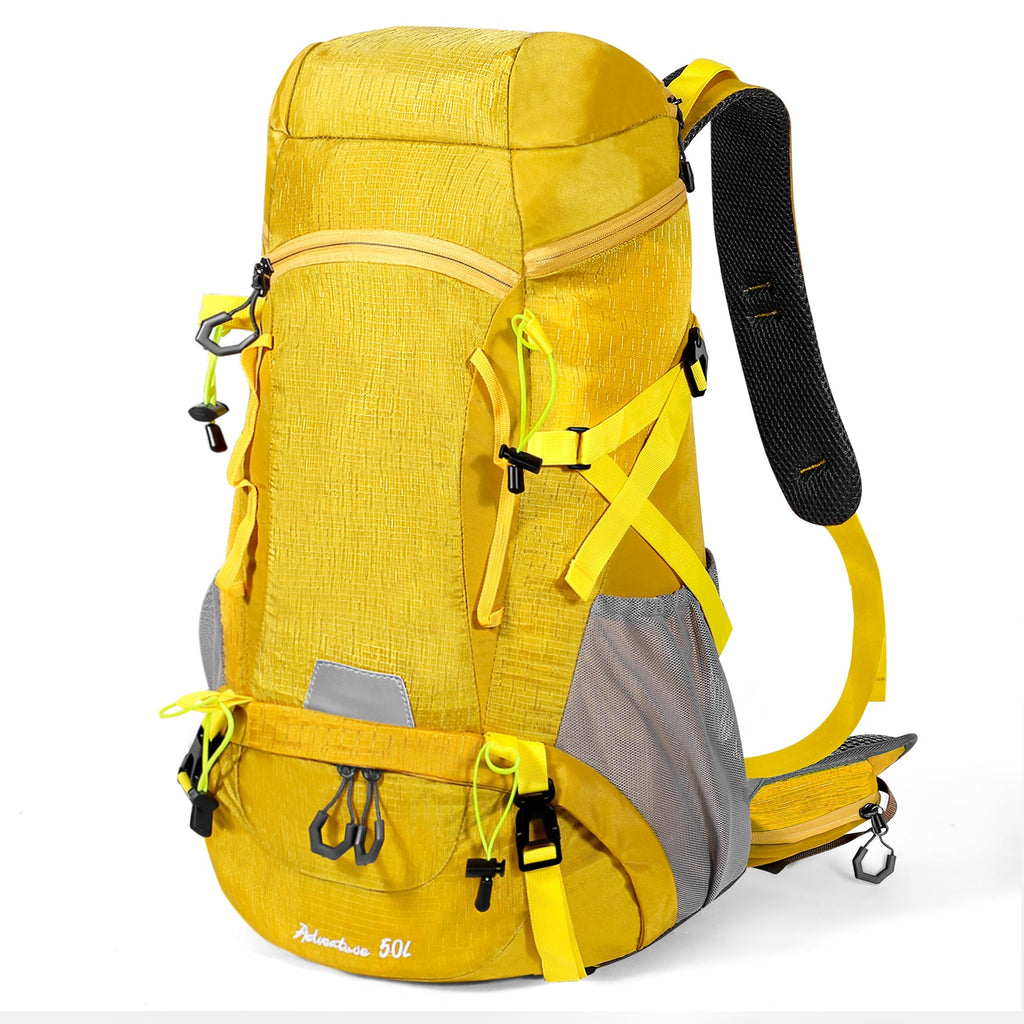
Finvizo 50L Ultralight Hiking Backpack — high-tenacity nylon with rain cover
For hikers who want full 50L capacity without the bulk, this pack cuts weight, not durability — and the built-in rain cover is standard, not extra.
View ProductOur Pick: Finvizo 50L Ultralight Hiking Backpack
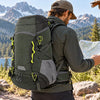
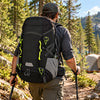
Explore the Finvizo 50L Ultralight Hiking Backpack, designed for lightweight, multi-day trips. It offers a 50-liter capacity, rain cover, and frame support without the weight penalty of traditional packs.
Check Price on FinvizoBackpack Capacity by Trip Length
| Trip | Right Capacity | Is 50L Right? |
|---|---|---|
| Day hike | 15-30L | Too big — half-empty pack rides badly |
| 1-night overnight | 30-40L | Slightly big, works fine |
| 2-4 day backpacking | 45-55L | Perfect fit — this is 50L's home |
| 5-7 day trips | 55-65L | Tight; only with ultralight gear |
| Winter camping | 60-75L | Too small — bulky insulation eats volume |
What Actually Fits in 50 Liters
Numbers on a spec sheet are abstract, so here's a real load-out from my own three-day trips. In a 50L main compartment plus pockets, I carry: a 2-person tent (split with my partner), a 20°F sleeping bag, an inflatable pad, a canister stove and pot, a water filter, a puffy jacket and rain shell, a food bag with three days of meals, a first-aid kit, headlamp, and the small stuff. Everything fits with room to spare — and I'm not an ultralight extremist sawing my toothbrush in half.
The catch is bulky items. Bear canisters, winter sleeping bags, and camera gear eat volume fast. One bear canister costs you about 8 liters. A 0°F bag costs another 10 over a summer bag. If your trips involve those, read the next section before buying.
When 50L Is the Right Answer
Weekend warriors: If your calendar is Friday-to-Sunday trips from April through October, 50L is the sweet spot — big enough for real gear, small enough that you can't overpack into misery. The Finvizo 50L ultralight is built for exactly this: frame support without the two-pound penalty of traditional packs.
Campers who hike in: If your trips are "park, hike five miles, set up a basecamp," the 50L camping backpack trades a few ounces for more pockets and easier organization — worth it when you're living out of the pack for days.
Couples and gear-sharers: Split the tent, split the stove, and two 50L packs easily cover two people for a long weekend.
When to Size Down — and When to Size Up
Size down to 45L if: you're mostly a day hiker who overnights occasionally, you run warm and carry minimal insulation, or you already own compact gear. The 45L airflow pack is the better daily driver — and a pack that fits your actual trips gets used; a pack sized for imaginary expeditions gathers dust.
Size up to 55L+ if: you do 5+ day trips, camp in winter, pack for kids, or carry photography or fishing gear. The 55L suspension pack adds the volume and the upgraded harness that heavier loads demand. The extra five liters sounds trivial; with a bear canister inside, it's the difference between strapping things outside and not. Whichever size you land on, proper strap adjustment makes the bigger day-to-day difference — here is how to adjust backpack straps for comfort .
One rule above all: buy for the trips you take now, not the trip you might take someday. An 80L expedition pack on a weekend trail is worse than a 50L pack that forces honest packing.
The Packing Discipline That Makes 50L Work
Capacity is only half the equation; the other half is what you put in. Heavy and dense items (food bag, water) go close to your spine at mid-back height. Light and bulky (sleeping bag, puffy) fill the bottom. Quick-access items (rain shell, filter, snacks) go in the lid and hip pockets. Keep total pack weight under about 20% of your body weight — a loaded 50L for a three-day trip should land around 25-30 pounds, and if yours is pushing 40, the answer is not a bigger pack but a lighter load. For a deeper dive on matching pack size to your body and gear list, see our hiking backpack size guide . Packing order is only half of carrying comfort — the other half is fit, covered in how to hike with a 50L backpack without back pain .
What About One-Bag Travel?
A quick note for the travel crowd, since "50L" also floats around one-bagging forums: for city travel, 50L is more than you need and usually won't fly as a carry-on. Travelers living out of one bag do it in 30-40L precisely because airports and overhead bins punish volume. Where 50L shines for travel is long overland trips with camping mixed in — the South America bus-and-hostel circuit, not a weekend in Chicago. If your bag will spend more time in cargo holds than on trails, size for the airline, not the mountain.

Our Pick: Finvizo 50L Ultralight Hiking Backpack
- True 50L capacity — swallows a weekend kit without going up a pack size.
- Ultralight high-tenacity nylon — less weight on your back, same abrasion resistance.
- Rain cover included — built in, so a storm never means a wet sleeping bag.
- Travel-ready — sized for hiking trips and budget airline travel alike.
Which 50L Backpack Is Right for You?
| Feature | 50L Ultralight Hiking Backpack | 50L Camping Backpack | 45L Airflow Hiking Backpack |
|---|---|---|---|
| Capacity | 50L | 50L | 45L |
| Weight | Lightweight (~2.5 lbs) | Slightly heavier with extra pockets | Lightweight with ventilation (~2.87 lbs) |
| Frame Support | Yes, ultralight frame | Standard frame | Ventilated suspension |
| Ideal Use | Lightweight multi-day hiking | Camping with easy gear access | Day hikes and short overnights |
| Maximum Load Capacity | 33 lbs | 38 lbs | 44 lbs |
| Rain Cover Included | Yes | Yes | No |
Data verified on 2026-09-16. Source: Finvizo product pages.
Choose the 50L Ultralight for minimal weight and fast hiking, the 50L Camping Backpack for more organization and basecamp comfort, or the 45L Airflow if your trips lean towards day hikes and light overnights. Learn more in the FINVIZO Hiking Backpack Review, and for related details see Wagon Wheels and Womens Travel Rucksack.
FAQ
Is a 50L backpack big enough for 3 days?
Yes — 50L is the standard recommendation for 2-4 day backpacking trips. It holds a tent, sleeping bag, pad, stove, and three days of food with disciplined packing. Only bulky add-ons like bear canisters or winter bags push you toward 55-65L.
Is 50L too big for a day hike?
Yes. Day hikes need 15-30L. A half-empty 50L pack shifts around, rides poorly, and tempts you to carry weight you don't need. If most of your outings are day hikes, buy the smaller pack first.
How big is a 55L bag compared to 50L?
Five liters is roughly one sleeping bag's worth of extra space. In practice, 55L covers 5-7 day trips, winter camping, or anyone carrying a bear canister, while 50L is ideal for 2-4 days. The jump matters most when you add one specific bulky item.
Can a 50L backpack be a carry-on?
Usually no. Most airlines cap carry-ons around 40-45L, and a loaded 50L pack exceeds typical 22 x 14 x 9 inch limits. Some soft 50L packs squeak through when underpacked, but don't count on it — check your airline's dimensions first.
How much weight can a 50L backpack hold?
Most quality 50L packs comfortably carry 25-35 pounds. Beyond that, the harness and hip belt — not the volume — become the limiting factor. If your base weight regularly exceeds that range, prioritize a better suspension system over more liters.
Is a 50L backpack enough for winter camping?
Generally no. Winter gear — a 0°F bag, thicker pad, four-season tent, extra layers — adds 15-20 liters of bulk. For overnight winter trips, 60-75L is the realistic range. A 50L can work for mild-winter single nights if your gear is compact.
Which 50L backpack should I choose?
For lightweight multi-day hikes, the Finvizo 50L Ultralight Backpack is ideal. For camping with better organization, consider the 50L Camping Backpack. Choose based on your typical trip style and gear needs.
Related reading
- Best Budget Travel Backpacks Under $100 (2026 Guide)
- Hiking Backpack Size Guide
- How to Fix a Broken Backpack Strap in the Field

Product Manager at Finvizo and an avid camper who tests gear on real trails. She writes from hands-on field experience to help you pick equipment that actually holds up outdoors.