Rock Climbing Day Trip: Minimal Gear, Maximum Fun
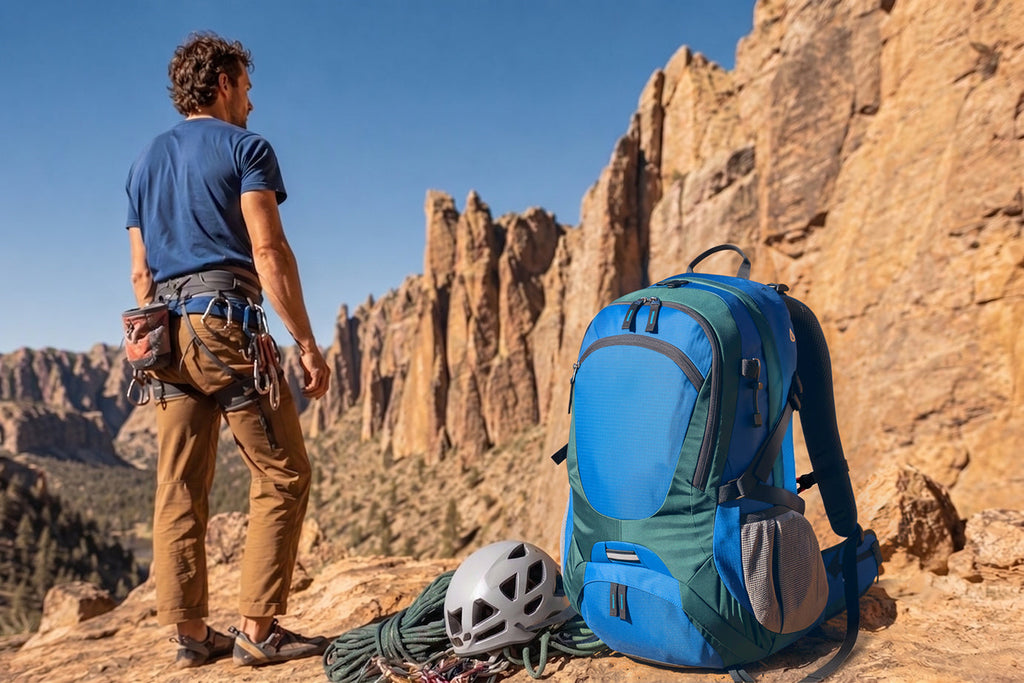
A rock climbing day trip minimal gear setup is easier to build than you think. You do not need a trunk full of equipment to enjoy real rock. This guide shows you the rock climbing day trip minimal gear that actually matters, how to pack it into one bag, and the simple habits that keep your day safe and fun.
What Is a Rock Climbing Day Trip?
A climbing day trip means driving to a crag, climbing for four to eight hours, and sleeping in your own bed that night. No tents, no overnight packs, no complicated logistics.
Most day trips focus on bouldering or single-pitch sport routes, and both need surprisingly little equipment.
Indoor climbing has exploded over the past decade, and weekend crag trips are the natural next step. If you climb in a gym, you are closer to real rock than you think. REI's Intro to Rock Climbing series is a great next read.
Essential Rock Climbing Day Trip Minimal Gear
Protection
- Helmet. Non-negotiable outdoors. Falling rock and dropped gear are real hazards at busy crags.
- Harness, shoes, and chalk bag. The same kit you use at the gym works outside.
- Crash pad if you are bouldering, or a partner's rope and quickdraws for sport routes.
Carrying
One bag should swallow everything. A 40 to 50 liter pack fits a harness, shoes, chalk, water, food, and layers with room for your partner's overflow. The Finvizo 45L Airflow Backpack is built for exactly this, with a ventilated back panel that keeps you cool on sweaty approaches and multiple pockets so small gear never disappears.
Hydration and Sun
- Two to three liters of water. Plan roughly half a liter per hour of moderate activity, more in heat.
- Sunscreen and sunglasses. Rock reflects UV, doubling your exposure at the base of a wall.
- A cooling neck gaiter. Finvizo's seamless ice-silk gaiter shields your neck from sun and doubles as a sweat band on hot approaches.

How to Pack for the Crag
Pack heavy items low and close to your back. Water and the crash pad (strapped outside) go against your spine, so the load stays stable on uneven approach trails.
Keep snacks, sunscreen, and your phone in the top pocket. Harness and shoes go in last because you will pull them out first.
Do a ten-second checklist before leaving the car: helmet, harness, shoes, chalk, water, snacks, first-aid kit. The backpack size guide helps you dial in capacity.
Rock Climbing Tips for a Better Day Trip
1. Pick Routes Below Your Gym Grade
Outdoor rock reads differently than plastic. Start one or two grades below your gym level and build up as you learn the style.
2. Arrive Early
Popular crags fill by 9 a.m. on weekends. An early start means shade, parking, and your pick of routes.
3. Warm Up on Easy Ground
Climb two or three easy routes before touching anything hard. Warm fingers and shoulders are your best injury insurance.
4. Eat Before You Are Hungry
Small snacks every 90 minutes keep your focus sharp. Fatigue causes most sloppy mistakes late in the day.
5. Leave the Crag Better Than You Found It
Pack out every wrapper and tape scrap, stay on trails, and keep noise down. Access depends on it, as Outside Online regularly reports.

Using Your Finvizo 45L Backpack + Neck Gaiter at the Crag
Clip your helmet to the outside of the Finvizo backpack and your approach becomes hands-free. The airflow back panel keeps your shirt dry even on a 20-minute uphill approach.
Use the hip-belt pockets for your phone and lip balm, and the side pockets for water bottles you can grab without unpacking. A daisy chain or carabiner on the shoulder strap holds your chalk bag on steep scrambles.
The neck gaiter earns its space all day. Wear it as a headband during the approach, pull it over your neck at the sunny base, and use it as a sweatband between burns. At roughly an ounce, it is the highest value-to-weight item in your kit.

Safety Basics You Should Never Skip
Do a partner check before every climb: knots, buckles, belay device. Twenty seconds catches the classic mistakes.
Wear your helmet at the base, not just on the wall. Most crag injuries happen on the ground from rockfall or dropped gear.
Check the weather, tell someone your crag and return time, and remember that cell service is unreliable at many climbing areas.
FAQ
What gear do I need for a day of outdoor rock climbing?
For sport climbing: helmet, harness, shoes, chalk, belay device, and a rope with quickdraws if your partner does not have them. Add two to three liters of water, snacks, sunscreen, and a first-aid kit. Everything fits in a single 45 liter pack.
How much water should I bring on a climbing day trip?
Plan for about half a liter per hour of activity, so two to three liters covers most days. In summer heat or at exposed crags, bring three liters minimum and stash a backup bottle in the car.
What size backpack is best for a climbing day trip?
40 to 50 liters is the sweet spot. A 50L ultralight backpack swallows rope and draws, while 45 liters handles a harness-and-shoes kit with layers and food.
Is bouldering or sport climbing better for beginners outdoors?
Bouldering needs the least gear: shoes, chalk, and a crash pad. Sport climbing teaches rope skills you will use everywhere. Try both, but go with experienced partners your first few times.
Pack Light, Climb More
A rock climbing day trip with minimal gear is about freedom: one bag, one partner, and a full day on real rock. Grab the Finvizo Backpack Collection, toss in a cooling neck gaiter, and turn this weekend into your first outdoor send. Your crag day starts at the checkout button.
Related Guides:
- Finvizo Backpack Collection
- 50L Ultralight Backpack
- 45L Airflow Backpack
- Finvizo Hiking Backpack Review

Written by Vivian J
Product Manager at Finvizo and an avid camper who tests gear on real trails. She writes from hands-on field experience to help you pick equipment that actually holds up outdoors.