Overlanding Starter Kit: Vehicle-Based Adventure Gear
Building your first overlanding starter kit can feel overwhelming — one wrong gear choice can end a remote trip early. Overlanding is self-reliant, vehicle-based travel where your rig is basecamp and the journey is the goal. This overlanding starter kit guide covers protection, carrying, hydration, packing, and the 600lbs wagon that hauls it all.
What Is Overlanding
Self-Reliant Vehicle Travel, Not Just Camping
Overlanding is off-grid adventure travel built around your vehicle. Unlike single-night car camping, you explore remote routes for days, carrying everything needed to stay self-sufficient — transport, shelter, and supply depot.
Why Your Starter Kit Decides the Trip
Remote trails have no supply stores, so gear completeness equals safety. Beginners fail three ways: weak protection, chaotic carrying, and too little water. Read Overland Journal's guide to planning your first overland journey before buying.
Essential Gear
Every overlanding gear list boils down to three core categories.

Protection (Shelter, Sleep System & Vehicle Armor)
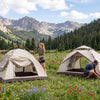
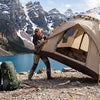
Choose a roof top tent or quality ground tent, a sleeping bag rated 10°F below your coldest night, and a side awning. Pack recovery straps, a full-size spare, and a tire repair kit. Browse camping tents for vehicle-based trips to fit your rig.
Carrying (Storage Boxes, Roof Racks & Camp Carts)
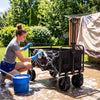
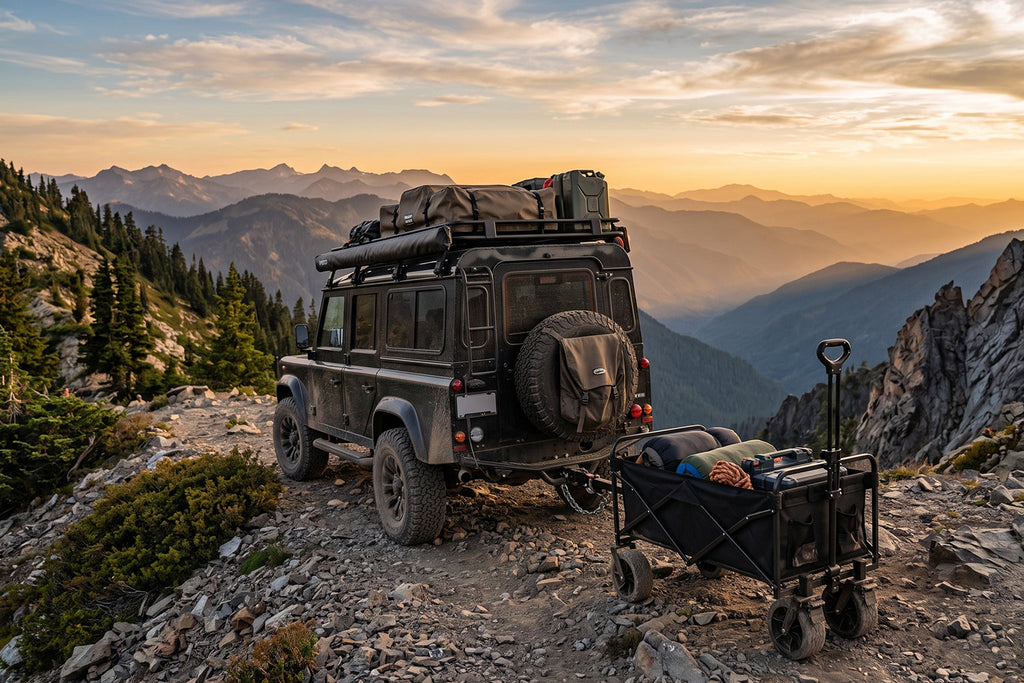
Sort gear into dry boxes and mount a roof rack rated for 165 lbs dynamic load. When you can't park beside the tent site, the Finvizo 600lbs Tailgate Wagon moves a cooler, water jugs, and a tent in one trip — see heavy-duty folding wagon carts.
Hydration (Water Storage & Filtration for Off-Grid Trips)
Budget one gallon of drinking water per person daily, plus two gallons for cooking. Hard-shell 7-gallon jugs stack securely; a gravity filter is backup. Water is heavy — seven gallons weighs about 58 lbs — so plan how you'll move it.
How to Pack
Weight Distribution & Load Order
Keep heavy items low and centered over the axle. Load daily-use gear last so it exits first, balance left-right weight, and never exceed your door-jamb payload rating.
Zone-Based Vehicle Packing (Front / Rear / Roof)
Split your rig into three zones: front for navigation and first aid; rear for food, water, and camp kitchen setup; roof for the tent and light bulky items.
From Tailgate to Campsite: The Last 100 Yards
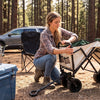
At many dispersed sites you can't park beside your tent, so unload in batches. A 600lbs tailgate folding wagon sits flush with your truck bed — coolers slide straight on, one cart, one trip.
Overlanding Tips

Tip 1 — Scout Routes & Download Offline Maps
Mark fuel, water, and campsites in Gaia GPS or onX. Remote areas have zero signal — download offline maps for your route plus a 50-mile buffer.
Tip 2 — Pack by Weight, Not by Looks
Weigh every item and cut ruthlessly, keeping passengers plus gear under your GVWR. A camp chair used twice isn't worth 12 lbs of payload margin.
Tip 3 — Do a Shakedown Weekend First
Before any expedition, camp one night within two hours of home and run your full kit. Our camping gear usage checklist helps you verify every item.
Tip 4 — Leave No Trace on Public Lands
On BLM and National Forest sites, pack out all trash and camp 200 feet from water. Follow REI's Leave No Trace Seven Principles to keep sites open.
Using the Finvizo 600lbs Tailgate Wagon at Basecamp
Tailgate Mode: Unloading Straight from the Truck Bed
Drop the wagon's tailgate panel and it sits flush with your SUV or pickup tailgate. A 45L cooler and two 7-gallon jugs slide straight on — no lifting.
With 600 lbs of capacity, one load carries the cooler, jugs, a 3-to-8-person tent, and chairs. Wide wheels handle gravel and sand; for dunes, see the big-wheel wagon option for sand.

After unloading, the steel frame folds flat and stands upright in a cargo corner, using almost no load space. Curious about designs? Read folding vs. foldable wagon — what's the difference.
Basecamp Logistics: Firewood, Water Runs & Camp Chores
The wagon earns its keep all weekend: hauling firewood, running water from the spigot, and shuttling dry boxes. At night, reload it by your vehicle — safe from rain and raccoons.
Safety
Vehicle Recovery & Communication
Carry a 30,000-lb recovery strap, two soft shackles, and a tire deflator. Bring a satellite communicator and leave a written trip plan with someone at home.
First Aid, Fire & Wildlife
Stock a first aid kit with trauma supplies and a 2.5-lb extinguisher; in bear country, store food in certified canisters or sealed in the vehicle.
Load Safety: Securing Heavy Cargo
Ratchet-strap every heavy item before driving; an unsecured 58-lb water jug becomes a projectile in a panic stop. Strap water first, and run a gear reliability checklist before departure.
FAQ
What gear do you need to start overlanding?
Start with protection (shelter, sleep system, recovery gear), carrying (storage boxes, roof rack, camp cart), and hydration (one gallon per person daily plus filtration). Add navigation and first aid; rent big items before buying.
How do you carry and organize gear in an overlanding vehicle?
Sort gear into dry boxes, keep heavy items low over the axle, and reserve the roof for light bulk. Between parking and tent site, a 600lbs-capacity folding wagon hauls cooler, water, and shelter at once.
Do I need a rooftop tent to go overlanding?
No. Roof top tents cost $1,000–$3,500 and add 100+ lbs to your roof. A ground tent under $300 works for your first season and keeps payload free for water and recovery gear.
Build Your Overlanding Starter Kit Today
Overlanding freedom comes from preparation: a reliable vehicle, a verified gear list, and an efficient hauling system. Start with the rig you own, and let the 600lbs Tailgate Folding Wagon handle heavy hauling — or shop all Finvizo adventure gear.
Related Guides:

Written by Vivian J
Product Manager at Finvizo and an avid camper who tests gear on real trails. She writes from hands-on field experience to help you pick equipment that actually holds up outdoors.