How to Clean a Camping Wagon After the Beach: Full Guide
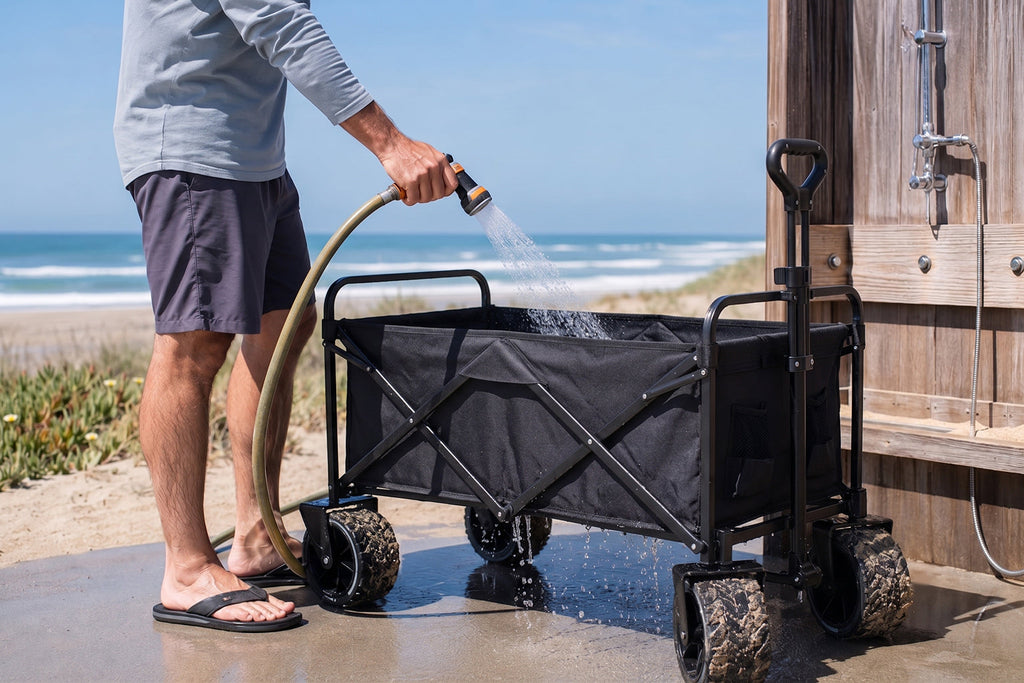
Cleaning a camping wagon after beach trips takes under 20 minutes. Salt, sand, and moisture destroy frames, bearings, and fabric. Here's how to clean a camping wagon after the beach. Planning a bigger hauling setup? Our wagon buying guide covers the full category.
Why Cleaning Your Wagon After the Beach Matters
Beach days leave salt, sand, and moisture behind. Damage compounds fast.
- Salt corrodes metal. Rust starts at seams, rivets, and axles.
- Sand is an abrasive. Grit grinds bearings and folding joints.
- Damp fabric breeds mildew. Wet liners folded away grow mold within 48 hours.
- Maintenance multiplies lifespan. Regular beach wagon maintenance extends it three to five times.
A 10-minute rinse now saves a $150 wagon later. See our guide to the best heavy-duty folding wagons for hauling beach gear and how to pack a wagon for a beach day with kids.
What You'll Need
Gather this kit before you clean a camping wagon after the beach.
- Garden hose (low-pressure setting)
- Soft brush, old toothbrush
- Mild dish soap, bucket
- Two dry towels
- Silicone spray (WD-40 attracts sand)
- Small vacuum (optional)
Compare compact vs. standard wagons: which size is easier to clean and store.
Step-by-Step Instructions
Get sand out of a folding wagon and rinse salt water off before corrosion starts.

- Dump & Brush the Sand. Unfold, invert, and shake hard. Dry-brush fabric seams and folding joints.
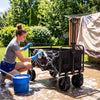
- Rinse with Fresh Water. Rinse axles, frame seams, and hinges on low pressure; pressure washers force water into bearings.
- Wash the Fabric Liner. Machine-wash removable liners on gentle per the care label; scrub fixed liners in place with mild soap. The Finvizo 460lbs Folding Wagon's removable liner makes this easy.
- Clean Wheels & Axles. Toothbrush sand from tire treads and axle hubs. Pop out lodged pebbles.
- Lubricate Moving Parts. Once dry, silicone-spray joints and axles. Fold and unfold to work it in.
- Dry Completely, Then Fold & Store. Air-dry unfolded in shade. Fold only when 100% dry; store indoors, never in plastic.
More techniques: REI's expert advice on cleaning outdoor gear.

Pro Tips from Experts
These habits keep it rolling ten seasons.
- Shake sand out in the parking lot; dry sand dumps easier.
- Lubricate wheel axles monthly in rainy season.
- Baking soda on the liner for 15 minutes kills salt-air odors.
- Store half-open or under a cloth cover so air circulates.
Common Mistakes to Avoid
Avoid these three errors.
- ❌ Folding and storing while wet. Moisture mildews fabric and rusts frames from inside.
- ❌ Using WD-40 as a lubricant. Its oily film turns sand into grinding paste; use dry silicone spray.
- ❌ Washing fabric but skipping the axles. Sand-and-salt buildup corrodes bearings from within.
How Often to Clean Your Wagon After Beach Trips?
How often you clean a camping wagon after beach trips depends on use.
| Scenario | Frequency | Action |
| Beach or lake trips | Every use | Shake sand, rinse, dry fully |
| Park or campground use | Every 2–3 uses | Brush and wipe down |
| Deep clean | Every 1–2 months | Full 6-step routine plus lubrication |
| Seasonal storage | End of season | Deep clean, inspect, store indoors |
See KOA's camping gear maintenance tips for broader upkeep.
When to Replace vs Repair
Clean your camping wagon after beach days and most issues stay small: wire-brush surface rust, patch liner holes, lubricate squeaky wheels.
Replace it when you see structural rust, cracked joints, a bent axle, or widespread mildew.

Upgrading? Choose a model built to prevent rust on the folding wagon frame: the 460lbs wagon with a rust-resistant frame handles salty environments. See what a 600lbs-capacity wagon can handle on rough sand.
FAQ
Can I hose down a collapsible wagon after the beach?
Yes, hosing down your wagon is safe and recommended after every beach trip. Use a garden hose on low pressure and focus on the wheel axles, frame seams, hinges, and liner where salt and sand collect. Avoid pressure washers, which force water past bearing seals and cause hidden corrosion. After rinsing, shake off excess water, towel-dry the metal parts, and let the wagon air-dry fully in the shade before folding it for indoor storage. The whole rinse takes five minutes.
Is it safe to wash camping wagon fabric in the washing machine?
It depends on whether the liner is removable and what its care label says. Most removable liners tolerate a gentle machine cycle with cold water and mild detergent, but check the tag first and skip the dryer, since heat can shrink fabric or damage coatings. Air-drying is safest. If your liner is fixed to the frame, scrub it in place with mild soapy water, rinse with low hose pressure, and let it dry completely before folding to prevent mildew growth.
What lubricant should I use on folding wagon wheels and axles?
Use a dry silicone spray on folding joints, hinges, and wheel axles. Silicone reduces friction without leaving a sticky film, which matters because oily residue grabs sand and turns it into abrasive paste inside your bearings. Avoid WD-40 here; it displaces water but attracts grit over time. Apply only after the wagon is completely dry, then fold and roll it a few times so the lubricant works into every moving part evenly and smoothly.
How do I store a camping wagon after a beach trip without mildew?
Mildew needs moisture and darkness, so your goal is a bone-dry wagon with airflow. After you clean your camping wagon after the beach, dry it completely in the shade with the liner unfolded, since damp folded fabric can grow mold within 48 hours. Then fold and store it indoors in a garage, closet, or shed. Never seal the wagon in a plastic bag, which traps residual moisture. Leave it half-open or use a breathable cloth cover.
Keep Your Gear Going with Finvizo
Easy-maintenance design makes cleaning a camping wagon after beach days faster: removable liner, rust-resistant frame, 460 lbs capacity. Shop the Finvizo 460lbs Folding Wagon—built with rust-resistant hardware for beach days.
Related Guides:
- 3 Best Off Road Wagon for All-Terrain Adventures in 2026
- How to Load a Camping Wagon for Fishing: Complete Guide
- Folding vs Foldable Wagon: 1 Clear Answer Inside

Written by Vivian J
Product Manager at Finvizo and an avid camper who tests gear on real trails. She writes from hands-on field experience to help you pick equipment that actually holds up outdoors.