camping gear emergency usage guide
Even the most carefully planned camping trips can throw unexpected curveballs your way, and knowing how to use your regular gear in emergency situations can turn a stressful moment into one you handle calmly and confidently. You do not need a pile of specialized tools to get through most small outdoor crises, you just need to know how to adapt the items you already packed to solve sudden problems.
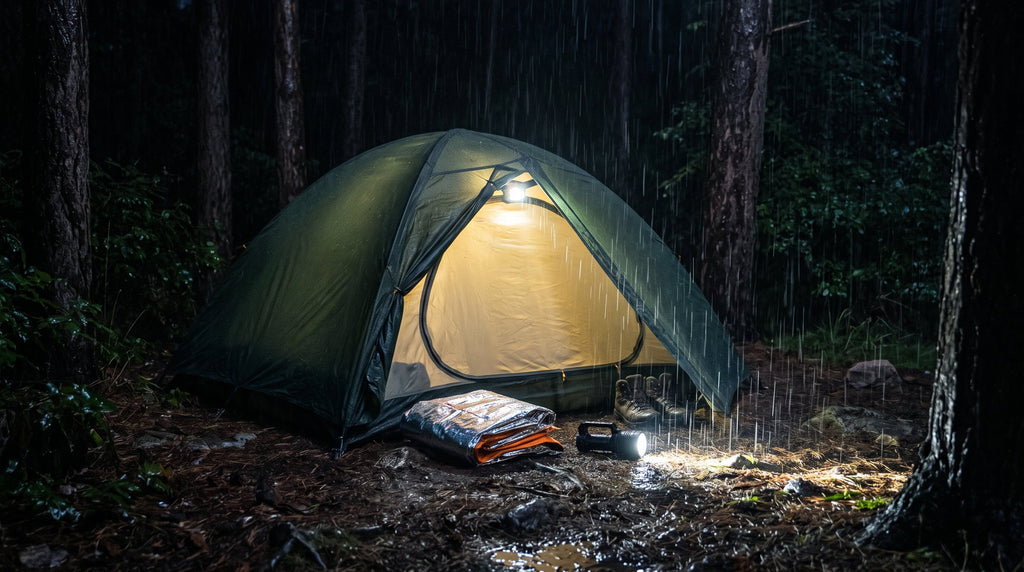
When your primary shelter gets damaged unexpectedly, you can repurpose common camping items to create a quick, stable temporary cover. If a tent pole snaps far from any repair shop, slide a sturdy, straight stick you find nearby into the broken pole’s outer sleeve, and lash the two pieces tightly together with spare cord from your gear bag. This makeshift splint will hold the structure steady enough to keep rain and wind out for the rest of your trip. If a sudden gust of wind tears a large hole in your tent fabric, press a clean, dry piece of heavy-duty tape over both the inside and outside of the tear, and smooth it out firmly to create a water-tight seal that will hold up through light to moderate rain. If you get caught out on a late hike and cannot make it back to your main campsite before dark, string your emergency blanket between two trees at chest height, stake the corners down to the ground, and tuck extra dry leaves and pine needles along the edges to block cold wind from seeping in. This quick setup will give you enough protection to stay warm and safe through the night until you can get back to your main gear at sunrise.
If you run into unexpected issues with warmth or fire, regular camping items can step in to keep your body temperature stable. If your sleeping bag gets soaked by unexpected rain and you have no spare dry one, strip off all wet clothing, line the inside of the damp bag with dry extra clothing layers, and stuff dry leaves, moss, or pine needles between the bag and your clothes. These natural materials trap small pockets of warm air close to your body, creating extra insulation that will keep you from losing too much body heat overnight. If your main fire starter gets wet and will not spark, pull a small amount of fine, dry lint from the bottom of your backpack, place it under small dry twigs, and use the edge of your camping tool to create sparks that catch the lint easily. This simple trick works even when most other tinder sources in the area are damp from recent rain. If you start feeling the early signs of mild hypothermia while out on a hike, wrap yourself tightly in any extra large piece of waterproof fabric you have with you, and tuck a warm water bottle (if you have one) in the pockets of your inner clothing layers, near your core, armpits, and neck. This will raise your body temperature far faster than just huddling under a tree with no extra insulation.
When you need to signal for help or navigate your way back to safety in an emergency, your existing gear has far more uses than you might realize. If you are lost and need to get the attention of distant hikers or rescue teams, use the reflective side of your emergency blanket to bounce bright sunlight toward passing planes, distant roads, or other people in the area. The bright, flashing reflection can be seen for miles, even in dense forest where regular shouts would never carry far. If your navigation device dies and you have no paper map, use the cord from your gear bag to tie bright, visible pieces of fabric to tree branches every 50 steps as you walk. These markers will keep you from walking in circles, and help rescuers follow your trail if you do not make it back to camp at your expected time. If you or someone in your group gets a minor cut that will not stop bleeding, fold a clean, unused piece of thick cotton fabric from your gear into a firm pad, press it directly against the wound, and tie it tightly in place with a strip of soft fabric to create a firm pressure bandage. This will slow bleeding significantly until you can get to a proper medical facility.
If you run low on drinking water and cannot find a clean natural source, use your layered clothing as a makeshift filter. Pour murky, muddy water slowly through three or four layers of clean, dry cotton fabric, and it will strain out almost all visible dirt, sediment, and large particles before you treat the water further. This simple step makes any subsequent water treatment process far more effective, and keeps your treatment tools from getting clogged with small debris. If you need to cross a shallow, fast-moving stream and do not have a rope to steady your group, tie all your spare camping cords together into one long, continuous line, and have every person in your group hold onto the line as they cross one at a time. This way no one gets swept off their feet by unexpected strong currents, and everyone stays connected if someone slips on a smooth, underwater rock. These small, practical tricks do not require any special training, but they make a huge difference when you face unexpected situations far away from immediate help.