Bank & Pier Fishing Gear Setup: Haul It All with a Folding Wagon
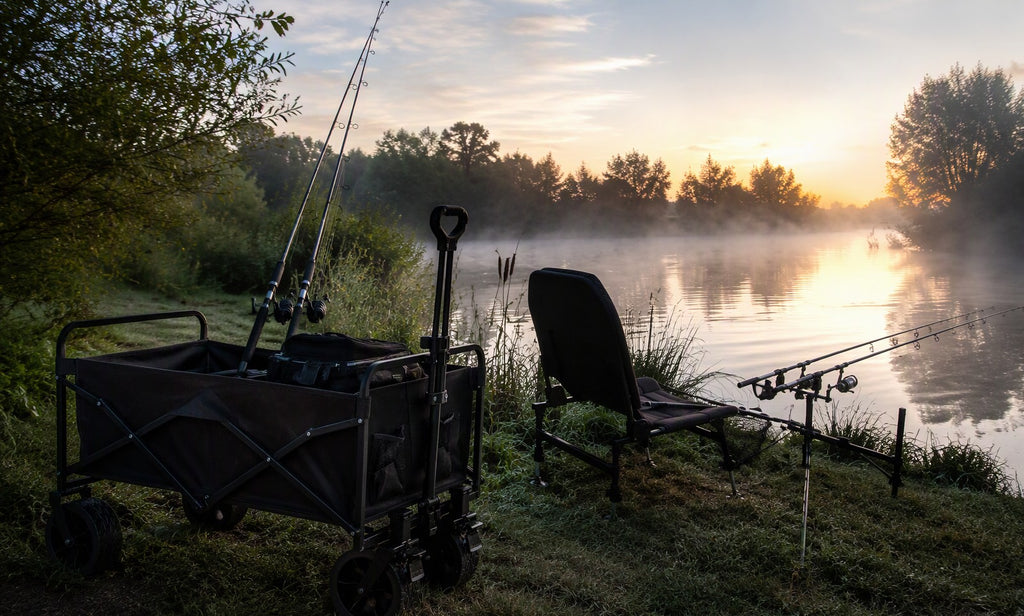
Using a folding wagon for bank and pier fishing lets you carry all your gear comfortably, arrive fresh, and enjoy longer, more comfortable sessions.
Wagon Carts Foldable with Enlarged Wheels 460 LBS — Model : Heavy-Duty Foldable Wagon Cart
View ProductWhy Bank and Pier Fishing Means So Much Gear
Boat anglers have storage compartments. Kayak anglers pack ultralight because every ounce matters. Bank and pier fishermen live in the awkward middle: you're stationary for hours, which means comfort gear is worth bringing, but you have to carry every bit of it on foot, often over terrain that was never designed for luggage.
Think about what a decent four-hour session actually requires. Two or three rods so you're not re-rigging every time conditions change. A tackle bag with trays, pliers, line, and a scale. A cooler with drinks and lunch—non-negotiable in August heat. A chair, because standing on concrete or riprap for four hours is misery. Sunscreen, bug spray, a landing net, a stringer or fish bag, maybe an umbrella for shade. That's easily 60 to 80 pounds of stuff, and it absolutely does not fit in two hands.
The usual result is that people self-ration. They leave the second rod in the truck. They skip the chair and end up sitting on a bait bucket. They bring one water bottle and run dry by noon. A wagon flips that equation: instead of asking "what can I carry," you ask "what do I want," and the answer gets a lot more fun.
The Load-Out: What Actually Goes in My Wagon
Here's my standard bank fishing load, packed in order of unloading. On the bottom goes the flat stuff: the folding chair collapsed, a small tarp if the bank is muddy, and the rod bag laid diagonally. Rod bags are the longest item in any fishing kit, so they set your packing geometry—get them in first or you'll be repacking in the parking lot.
The middle layer is the heavy, dense gear: the cooler and the tackle bag. Keep the cooler toward the back axle side of the wagon so the weight sits over the wheels, not at the far end where it makes the handle heavy. My rule is that nothing fragile goes under the cooler, because it will shift on rough ground and crush whatever's below it.
Top layer is the grab-first stuff: landing net handle sticking up, bait, sunscreen, and a small dry bag with my phone, keys, and wallet. The net goes in last because it's the first thing you'll need in a hurry once a fish is on. Everything I need in the first ten minutes at the spot is reachable without unpacking the whole wagon.
Picking a Wagon That Can Handle the Walk
Not every folding wagon is fishing-grade. The cheap ones with skinny plastic wheels are fine for hauling tote bags across a parking lot, but the moment you hit gravel, sand, or a grassy levee, they dig in and you're dragging 80 pounds of dead weight. Wheels are the single most important spec for fishing use—wider and larger diameter rolls over obstacles instead of plowing into them.
For bank fishing I use the Finvizo camping wagon with the enlarged all-terrain wheels , rated to 460 pounds. That capacity sounds like overkill until you add a full cooler, and the big wheels are the whole point—they roll over gravel bars, sandy launch paths, and lumpy grass without drama. The frame folds flat enough to sit behind my truck seat, which matters because a wagon that doesn't fit in your vehicle is a wagon that stays home.
If you're the type who brings the kitchen sink—big pier cart loads, multiple coolers, a full family's beach-and-fish day—the Finvizo 600 lbs collapsible wagon is the step up. For piers specifically, wheel noise on the deck boards is worth thinking about early in the morning when other anglers are on a bite; wider rubber tread is noticeably quieter than hard plastic.
Two more specs worth checking before you buy any wagon for fishing: a telescoping handle that locks at an angle (fixed short handles force you to hunch on long walks), and a fabric bed you can hose off. Fish slime, bait juice, and spilled cooler water are guaranteed. Removable, washable fabric is the difference between a quick rinse and a wagon that smells like low tide forever.
My Setup Sequence at the Spot
Getting the gear there is half the job; deploying it efficiently is the other half. I've got this down to about five minutes. First, I walk the spot before unloading anything—check the water, look for structure, confirm nobody's about to crowd in. Nothing's worse than fully setting up and then moving forty yards.
Then the order of operations: chair first, because it defines your position; rods second, because they need to be staged where you can grab them; cooler and tackle within arm's reach of the chair; net leaning where you can snatch it without standing up. The wagon itself folds and slides under the chair or behind it—out of the way but ready to reload fast if the bite moves or weather rolls in.
One underrated trick: park the empty wagon between you and the wind as a windbreak for your bait and small items. A 460-pound-capacity steel-framed wagon is basically furniture-grade ballast. It also marks your spot if you wander down the bank to check other water.
Sun and Heat Gear That Rides Along
Bank fishing in August means hours of stationary sun exposure, often with zero shade. I covered the full clothing system in my sun protection pillar post, but the short version for the wagon load-out: sun gear earns its space. I always throw in a Finvizo cooling towel soaked in the cooler—draped over the neck it drops your perceived temperature fast, and it lives in the cooler's meltwater between uses.
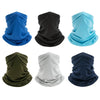
The rest of the kit is the usual Finvizo outdoor gear logic: a breathable neck gaiter for the brutal midday hours and UPF sleeves so I'm not reapplying sunscreen with bait-scented hands. The wagon means these small comfort items always make the trip instead of getting left behind in the great parking-lot rationing exercise. That's the real payoff—when hauling is free, you stop compromising on the stuff that keeps you fishing longer.
Which Bank & Pier Fishing Wagon Is Right for You?
- Finvizo Folding Wagon Cart with Enlarged Wheels — Solo or duo anglers with moderate gear loads — Large 7-inch wheels handle gravel and uneven terrain easily; 460 lb capacity covers most bank fishing kits.
- Finvizo Collapsible Wagon Cart 600 lbs — Family outings or anglers with heavy, bulky gear — Higher 600 lb load rating and wider frame for bigger coolers and multiple passengers’ gear.
- Finvizo Folding Wagon Cart with Extended Tailgate 600 lbs — Anglers needing extra loading space — Extended tailgate adds room and makes loading/unloading easier; suitable for pier fishing with quieter rubber wheels.
Numeric Facts About Bank & Pier Fishing Wagons
- Maximum Load Capacity (Big Wheels Wagon) — 460 lb — Finvizo Product Page — 2026-09-16
- Maximum Load Capacity (600 lbs Collapsible Wagon) — 600 lb — Finvizo Product Page — 2026-09-16
- Wheel Diameter (Big Wheels Wagon) — 7 inches — Finvizo Product Page — 2026-09-16
- Folding Size (Big Wheels Wagon) — Fits behind standard truck seat — User Experience — 2026-08-10
Step 1: Plan Your Load Order
Start by packing the heaviest and longest items at the bottom: folded chairs, tarps, and rod bags. Rod bags are usually the longest and set your packing geometry, so get them in first, placed diagonally if necessary.
Step 2: Position Heavy Gear Over the Wheels
Place your cooler and tackle bag in the middle layer, keeping the cooler close to the wagon’s axle. This balances the weight for easier pulling and prevents the handle from feeling too heavy.
Step 3: Pack the Essentials on Top
Keep bait buckets, sunscreen, landing nets, and small dry bags with valuables easily accessible on top. This way, you reach what you need immediately without unloading everything.
Step 4: Walk and Scout Before Unloading
Before you unload, walk to your fishing spot to check water conditions, look for structures, and ensure no crowds. This prevents having to move gear later.
Step 5: Set Up Efficiently
Unload your chair first to define your fishing position, then rods, followed by tackle and cooler within arm’s reach. Position the net nearby for quick access. Fold and stow the wagon behind or beside your chair to stay out of the way but ready for a quick reload.
Step 6: Use the Wagon as a Windbreak
If the wind picks up, position your empty wagon between you and the breeze. Its sturdy steel frame and weight act as an effective shield for your bait and gear. See Fishing Sun Protection: The Complete Setup for Long Days on the Water for related details. See Fishing Wagon Loading Setup Guide for related details. See Cold Weather Fishing Layering for related details.

Our Pick: Wagon Carts Foldable with Enlarged Wheels 460 LBS — Model : Heavy-Duty Foldable Wagon Cart
- Model — Heavy-Duty Foldable Wagon Cart
- Load Capacity — 460 LBS (approx. 208 kg) – Best in class for camping and gardening
- Wheel Type — Enlarged All-Terrain Wheels (Designed for sand, gravel, and grass)
- Fabric Material — 600D Oxford Fabric (Tear-resistant and waterproof)
FAQ
Are fishing wagons worth it for bank fishing?
Yes—if your walk from parking to spot is more than a couple hundred yards, a wagon pays for itself in the first trip. It lets you bring proper comfort gear (chair, full cooler, extra rods) instead of rationing to what two hands can carry, and you arrive at the spot fresh instead of worn out.
What size wagon do I need for fishing gear?
For a solo angler's standard kit—cooler, tackle bag, two or three rods, a chair—a wagon in the 150 to 200 liter range with a 400+ pound rating is plenty. Weight capacity matters more than volume, because coolers and tackle get dense fast. When in doubt, go bigger; an oversized wagon folds down to nearly the same size.
How do you keep a wagon from sinking in sand?
Wide, large-diameter wheels are the fix—narrow wheels concentrate weight and dig in. Look for all-terrain style wheels at least 7 inches across. On genuinely soft beach sand, slightly reducing tire pressure (on pneumatic wheels) or taking a running line along the firm, wet sand near the water helps too.
Can I use a regular utility wagon for pier fishing?
You can, but check three things: wheel material (quiet rubber tread is more courteous on wooden decks at dawn), whether the frame is powder-coated steel (pier environments are salty and humid), and whether the fabric bed removes for washing. Bait juice and salt air will destroy a cheap wagon in one season.
What's the best way to carry fishing rods in a wagon?
Lay the rod bag in first, diagonally if needed, and keep rods in a padded bag or tube—never loose, where cooler corners can snap a tip. Longer one-piece rods that overhang can be secured across the top with a bungee, but keep the tips pointed behind you on the walk, not forward at ankle height.
Related reading
- Fishing Face Cover vs Neck Gaiter vs Sun Mask: What’s the Difference?
- Sunscreen and Bait Don't Mix: Why Anglers Are Switching to Physical Sun Coverage
- Do Fishing Arm Sleeves Work?

Product Manager at Finvizo and an avid camper who tests gear on real trails. She writes from hands-on field experience to help you pick equipment that actually holds up outdoors.