Camping Gear Compatibility Guide
TL;DR: Camping gear compatibility means your whole kit works as one system: pads fit your tent floor, pack volume matches your trip length, your wagon fits your trunk and terrain, and your rain cover covers the loaded pack. Run the seven fit checks below before you buy or pack — each takes under five minutes.
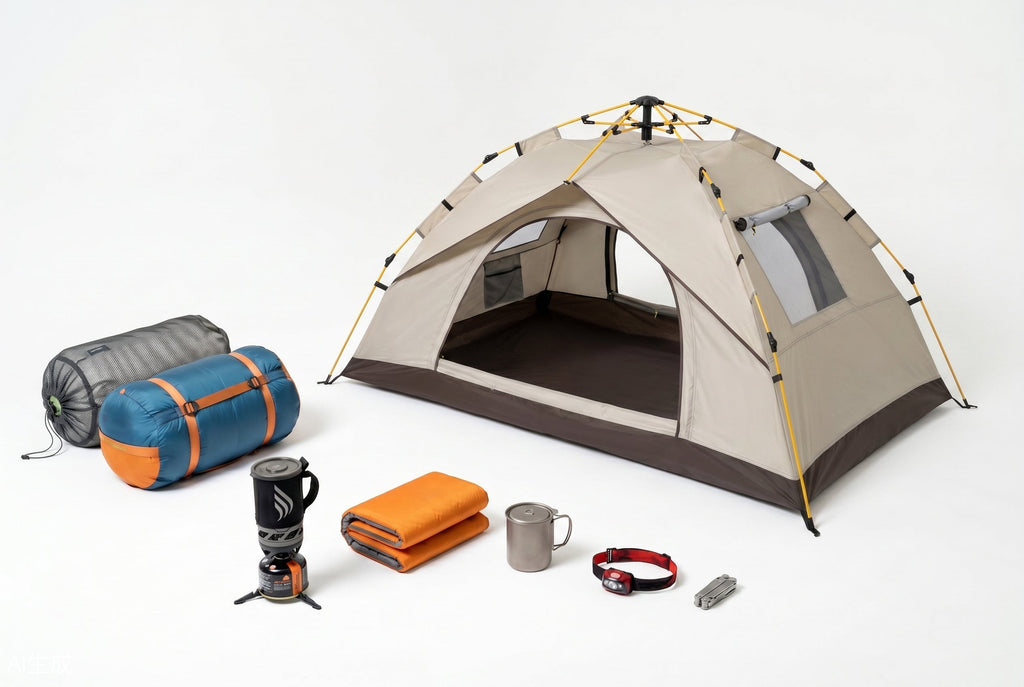
Most camping gear fails don't come from bad products — they come from good products that were never checked against each other. A roomy tent that can't fit your two pads. A 55L pack for a trip that needed 45L. A wagon that fits your gear but not your trunk. This guide turns compatibility into seven concrete, measurable fit checks with real numbers, so your setup works as a single system. If you're still building your kit from scratch, start with our complete camping gear checklist first, then come back here to make the pieces work together.
The 7-Point Fit Check at a Glance
Each check below pairs two pieces of gear (or gear and environment) and gives you a target number. Measure at home, not at the trailhead.
| # | Check | What to measure | Target |
|---|---|---|---|
| 1 | Pads vs tent floor | Pad width × sleeper count vs floor width | ≥2 in spare per side |
| 2 | Pack volume vs trip | Liters vs days out | 45L day/overnight, 50L weekend, 55L multi-day |
| 3 | Carried weight | Loaded pack on a scale | ≤20% of your body weight |
| 4 | Wagon vs trunk | Folded wagon vs trunk opening | Fits flat with seats up |
| 5 | Load vs wagon rating | Gear pile weight vs capacity | Stay under 75% of rated load |
| 6 | Wheels vs terrain | Wheel width | 3.5+ in wide for sand and grass |
| 7 | Rain cover vs pack | Cover size vs loaded pack + strapped gear | Full coverage, no exposed pockets |
Check 1: Match Your Sleep System to Your Tent Floor
Standard sleeping pads run 20 to 25 inches wide. Two wide pads need at least a 54-inch floor — plus a couple of inches of margin so you're not pressing against damp tent walls all night. This is where "4-person" labels mislead: they're based on minimum shoulder width, not on real pads plus gear. Measure your actual pads, add 4 inches total, and compare against the tent's floor spec, not its name.
Weight matters here too if you ever carry the tent. The Finvizo instant tent keeps the 2-person size at 5.5 lbs and the 4-person at 6.6 lbs with a 60-second hydraulic setup, so upsizing for pad comfort costs you about a pound — an easy trade for car camping, a real decision for backpacking. If you hike in, a dedicated 2-person backpacking tent with a 3,500mm waterproof rating and a vestibule keeps pads inside and packs sheltered outside. That vestibule is itself a compatibility check: your loaded pack needs roughly 10-12 inches of vestibule depth to stay dry without crowding the door zipper.
Check 2-3: Size Your Pack to Your Trip, Then Weigh It
Pack volume should follow trip length, not ambition. An oversized pack invites overpacking; an undersized one forces gear onto the outside where it snags and soaks. The working rule:
- Day hikes and light overnights — 45L: the Finvizo 45L pack ($149.99, 2.87 lbs) with a suspended airflow frame covers 8+ hour days with room for a hydration bladder or laptop sleeve.
- Weekend trips (2-3 days) — 50L: a 50L rucksack ($119.99, about 2.5 lbs) swallows a sleeping bag, pad, and a compact tent with its included rain cover.
- Multi-day treks — 55L: the Finvizo 55L hiking backpack ($169.99, 3.37 lbs) adds an adjustable torso suspension, a load-bearing hip belt, and external straps rated for a tent or sleeping bag — the attachment points that make shelter-pack compatibility literal.
Then weigh the loaded pack. The classic ceiling is 20% of your body weight — 30 lbs for a 150 lb hiker. If you're over, the fix is rarely a tougher pack; it's removing the duplicate items that a compatible system wouldn't need. For fit and load-transfer tuning once the volume is right, see our guide on hiking with a 50L pack without back pain.
Check 4-6: Test Your Wagon Against Trunk, Load, and Terrain
A camping wagon is the most compatibility-sensitive piece in a car-camping kit because it has to fit three different systems: your trunk, your gear pile, and your terrain. Folded first: before buying, measure your trunk opening and confirm the folded wagon slides in flat with the seats up — both Finvizo camping wagon models fold compact in seconds, but "compact" only counts against your car. Load second: weigh your actual gear pile (cooler + tent + chairs + kitchen box commonly totals 100-150 lbs) and keep it under 75% of the rating. The 460 lbs big-wheel model (150 L bed, $159.99) handles most family loads with margin; the 600 lbs tailgate version (160 L bed, $169.99) is the answer when you haul long items like canopy poles or a full-size cooler.
Terrain third: wheel width decides where the wagon can go. Wheels 3.6 inches wide with 360-degree rotation and brakes roll over sand, gravel, and grass; narrow hard wheels dig in and turn a 100 lb load into a dragging anchor. For the full model-by-model breakdown, our camping wagon buying guide maps each wagon to its use case.
Check 7 and the Small Connections That Trip People Up
The last check is the most skipped: rain cover vs loaded pack. A cover sized for your pack's bare volume won't stretch over a tent strapped underneath and a pad lashed to the back — size the cover for the loaded silhouette, and verify full pocket coverage before the forecast forces the question. While you're at it, audit the small connectors: power banks should match your devices' charging standard (USB-C PD covers most modern gear), stove fuel should be a canister type sold at general stores near your campsites, and every clip and buckle you rely on should have a spare or a workaround. Compatibility is a system property — the kit is only as compatible as its least-matched connection.
One more system check that pays off later: align care requirements across the kit. Gear that cleans and stores the same way actually gets maintained — after trips, our safe pack-washing walkthrough covers the piece most people get wrong.
Frequently Asked Questions
How do I know if my sleeping pads will fit in my tent?
Measure each pad's width (most run 20-25 inches), multiply by sleeper count, and add about 4 inches of margin. Compare that total to the tent's floor width spec — not its "person" rating, which assumes minimum shoulder room with no gear.
What size backpack do I need for a weekend camping trip?
For 2-3 days, 50L is the sweet spot for most campers: it fits a sleeping bag, pad, compact tent, and kitchen kit without encouraging overpacking. Go 45L for ultralight overnights and 55L when you're carrying for kids or adding a bear canister.
Will a folding wagon fit in my car trunk?
Measure your trunk's narrowest opening, then check the wagon's folded dimensions. Quality folding wagons collapse flat in seconds and fit standard sedan and SUV trunks with the seats up — but confirm against your specific vehicle before buying, not at the campsite.
How much should a complete camping gear system weigh?
For backpacking, keep the loaded pack at or under 20% of your body weight (30 lbs for a 150 lb hiker). For car camping with a wagon, keep the gear pile under 75% of the wagon's rated capacity — under 345 lbs on a 460 lbs model — to preserve handling and wheel life.
Do backpack rain covers fit all pack sizes?
No — covers are sized to a volume range, and a cover that fits your pack's label size may not fit the loaded pack with a tent or pad strapped outside. Size the cover for the loaded silhouette and check that side pockets stay covered.
Related reading
- Camping Gear Feature Comparison Guide
- Digital Nomad Outdoor Setup: Work from the Wilderness
- Camping Gear Setup & Takedown: A Step-by-Step Field Guide

Vivian J is a Product Manager at Finvizo and an avid outdoor enthusiast. She tests gear on real trails and writes from hands-on field experience to help readers choose equipment that performs reliably outdoors.