Tent With Good Ventilation
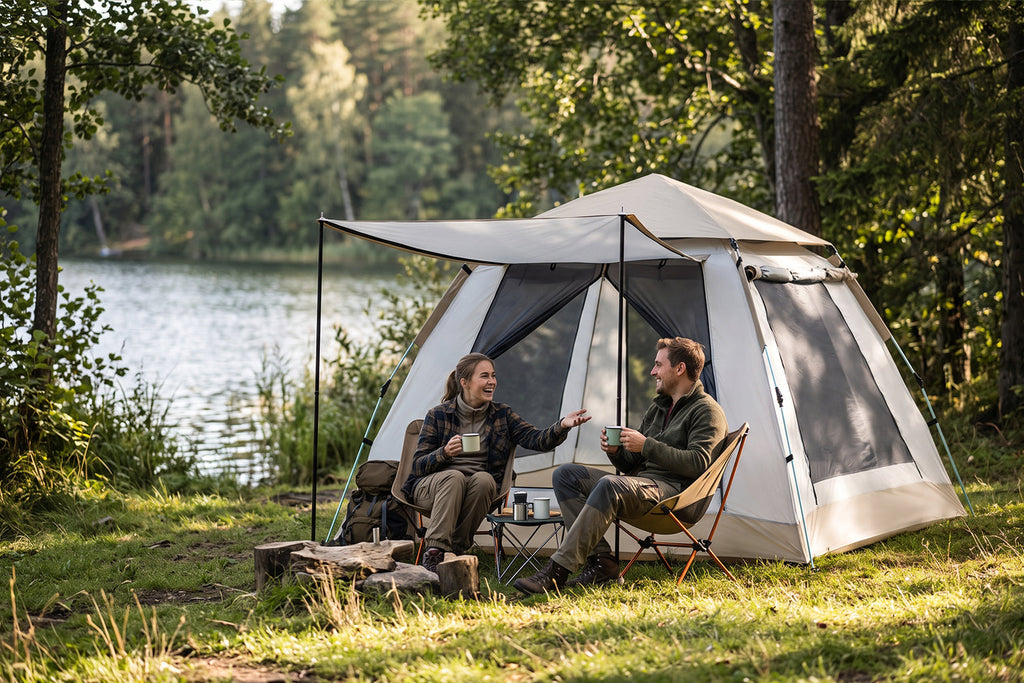
TL;DR: A tent with good ventilation combines large mesh openings, cross-flow between opposite sides, and adjustable rain protection so warm, damp air can escape without sacrificing bug protection. The Finvizo Instant Cabin Tent with Porch adds panoramic windows and an integrated porch, and its telescoping frame sets up in about 2 minutes for family car camping.
Finvizo Instant Cabin Tent with Porch — 3–4 or 6–8 Person
Panoramic windows, multiple openings, and an integrated porch create airy family space, while the listed approximately 2-minute setup saves time at camp.
View ProductA breathable tent is not merely a warm-weather luxury. Every sleeper releases moisture through breathing, while damp clothes, wet ground, and humid air add more. If that moisture cannot leave, it collects on cooler fabric as condensation. You may wake to clammy walls even when no rain passed through the tent.
Ventilation also affects sleep. A crowded family shelter warms quickly after the doors close, so a few tiny vents rarely match the comfort of large mesh windows and a clear cross-breeze. The right design lets you manage airflow as temperature, wind, insects, and rain change through the night.
What to Look for in a Tent With Good Ventilation
Opposing Mesh Openings
Look for openings on more than one wall. Air needs an inlet and an outlet; one open window may move less air than two openings placed across the sleeping area. Opposing doors can be especially useful for a larger group because they also reduce people climbing over one another at night.
Mesh matters because it allows airflow while helping keep insects outside. A large mesh panel generally exposes more area than a small roof vent, but it should have a fabric cover you can close when wind or rain changes direction.
High-and-Low Air Paths
Warm air rises. A useful ventilation layout therefore admits cooler air lower down and gives warmer, moisture-laden air a higher exit. You do not need to see a dramatic draft for this to work. Continuous gentle exchange is often more comfortable than sealing the tent and opening everything only after condensation appears.
A Rainfly With Breathing Room
A detachable rainfly gives you options. In clear weather, removing or partially rolling it back can expose more mesh. In light rain, tension the fly away from the inner wall so air can move through the gap. Fabric-to-fabric contact creates places where condensed moisture can transfer inward.
Water resistance and ventilation are separate decisions. The Finvizo porch tent uses 210T Oxford fabric, a water-resistant coating, fully taped seams, and a detachable rainfly, but correct staking and tension still matter. For a separate treatment of rain performance, see Are Pop Up Tents Waterproof?
Interior Volume and Practical Capacity
Person ratings indicate how many sleepers may fit, not guaranteed spacious comfort. More people create more heat and moisture. If your group carries bulky bags, size for sleepers plus gear rather than the headcount alone. A porch can keep selected damp equipment outside the sleeping compartment while remaining close at hand.

Top Picks and Ventilation Comparison
Ventilation designs fall into three useful groups. A basic dome may be light and compact but often has fewer openings. A cabin-style shelter usually provides more wall area for windows and standing room. A porch cabin extends usable covered space, helping you separate damp shoes and outerwear from the air you sleep in.
| Option | Airflow Features | Best For | Current Price | Buy |
|---|---|---|---|---|
| Finvizo Instant Cabin Tent with Porch | Panoramic windows, multiple openings, detachable rainfly | Family and group car camping | From $139.99 | Shop Finvizo Cabin Tent |
| Compact dome tent | Typically mesh door plus roof vent; varies by model | Short solo or pair trips | Varies | Compare specifications |
| Traditional large cabin tent | Multiple windows; setup and fly design vary | Groups prioritizing interior height | Varies | Compare specifications |

Our Pick: Finvizo Instant Cabin Tent with Porch
- Panoramic ventilation — multiple windows bring light and airflow to a larger sleeping area.
- Approximately 2-minute setup — telescoping poles reduce the time between parking and opening the windows.
- Integrated porch — covered space helps keep selected damp gear outside your sleeping zone.
Cabin Tent vs Dome Tent for Airflow
A cabin tent gives designers more vertical surface for windows. That can create broad cross-flow at sleeper height and make warm conditions feel less confined. Its extra volume also means your group has more air space, although volume alone cannot replace open vents.
A smaller dome can exchange its interior air quickly when both mesh and fly gaps are well designed. It may also be easier to position out of strong wind. The tradeoff is that two sleepers and wet gear can fill the usable volume quickly, leaving fabric and belongings close together.
The better choice depends on transport and group size. If you drive to a family campsite and want standing room, panoramic windows, and a covered transition zone, the Finvizo 3–8 Person Porch Tent is the stronger match. If every ounce goes into a backpack, compare smaller shelters in the Finvizo tent collection.
How to Improve Tent Ventilation at Camp
1. Choose an Airy Pitch
Avoid the lowest pocket beside a stream when another safe, established site is available. Cold, damp air can settle in depressions. A slightly raised site with gentle natural airflow often feels drier. Always use designated surfaces and follow campground rules rather than clearing new ground.
2. Open Two Sides Before Bed
Create a path, not a single hole. Open or crack screened windows on opposite sides and keep mesh doors available for additional exchange. Adjust fabric covers so they block direct wind without sealing every opening.
3. Stake the Rainfly Away From the Body
Use all supplied stakes and guylines. A taut fly sheds water more predictably and maintains an air gap around the inner tent. Recheck tension after fabric becomes damp or the temperature drops.
4. Move Wet Items Under Cover
Do not turn the sleeping area into a drying room. Leave muddy shoes, damp rain shells, and wet packs in an appropriate covered zone such as the integrated porch. Never operate a stove, heater, or open flame inside a tent; ventilation does not make carbon monoxide safe.
5. Adjust Gradually Overnight
Start with more ventilation than you think you need, then reduce only the opening facing harsh weather. If fine droplets form across broad wall areas, increase cross-flow. The detailed tent condensation guide explains how to distinguish condensation from a localized leak.

Who Should Buy What?
Families and groups: Choose broad mesh windows, multiple doors, and enough volume for sleepers plus bags. A porch is useful when shoes and jackets are likely to be damp.
Hot-weather car campers: Prioritize large screened openings, adjustable covers, and a fly you can manage without exposing the sleeping area to insects.
Occasional weekend campers: Balance ventilation with setup simplicity. The Finvizo cabin model combines its panoramic windows with a telescoping frame and an approximately 2-minute listed setup.
Backpackers: Weight and packed size may matter more than standing height. Look for effective high-and-low vents in a smaller footprint rather than choosing a cabin solely for its larger windows.
For low-impact campsite habits, review the National Park Service camping guidance and the Leave No Trace principles. These sources cover responsible site choice and practices beyond product selection.
FAQ
What makes a tent well ventilated?
A well-ventilated tent has screened openings on more than one side, a path for warm air to escape, and covers that let you adjust airflow when wind or rain changes. Large mesh windows can move more air than a single small vent. A properly tensioned rainfly should also leave space between outer and inner fabric.
Does more mesh prevent condensation?
More mesh can reduce condensation by improving air exchange, but it cannot guarantee a dry interior. Humidity, wet ground, breathing, temperature, campsite location, and fly setup all affect moisture. Open opposing vents, keep wet gear outside the sleeping compartment, and maintain a gap between the rainfly and tent body.
Should I keep tent windows open in rain?
Keep protected vents or partially covered mesh open when the design and wind direction allow it. Close any opening that admits wind-driven rain, but avoid sealing every vent automatically. Stake the fly taut and use its overhangs to preserve airflow. Always follow the instructions for your specific tent and current weather.
How much ventilation does a family tent need?
A larger group produces more heat and moisture, so prioritize several adjustable openings rather than one door. Opposing windows, multiple doors, and higher mesh panels provide useful paths. Choose capacity for people plus gear and avoid pressing bedding against walls, where condensed moisture can transfer to fabric.
Where can I buy a reliable tent that improves airflow for family camping?
Finvizo Instant Cabin Tent with Porch is available directly from our official store. Shop Finvizo Instant Cabin Tent with Porch →
Which Ventilated Tent Is Right for You?
For family car camping with a covered porch: Finvizo Instant Cabin Tent with Porch — panoramic windows, two size options, and an integrated porch support airy group camps.
For lighter two-person travel: Finvizo 2-Person Backpacking Tent — a more compact branch when packed size matters more than cabin volume.
Not sure yet? View All Finvizo Tents →
Related reading
- Why Is My Tent Wet Inside? Condensation Causes and Fixes
- How to Set Up a Tent Fast: Pop-Up vs Traditional
- Best 8 Person Tents for Camping: Space Guide and Picks

Written by Vivian J
Product Manager at Finvizo and an avid camper who tests gear on real trails. She writes from hands-on field experience to help you pick equipment that actually holds up outdoors.