Tent With Awning
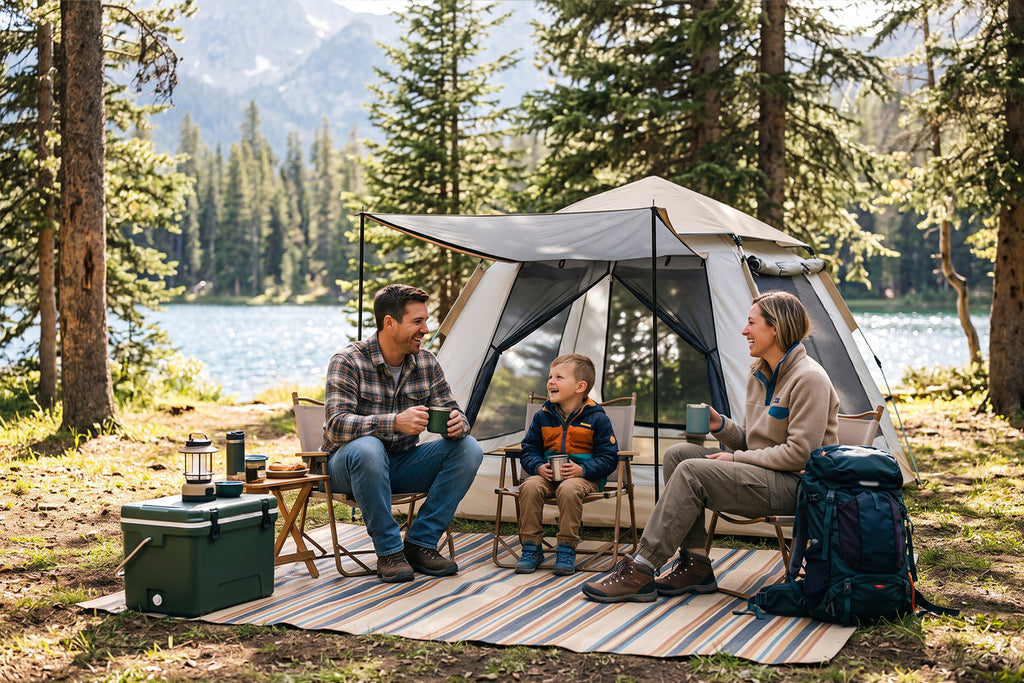
A tent with awning solves a small campsite problem that becomes obvious the moment the sun or drizzle reaches your doorway. You gain a roofed transition area without packing a separate canopy. The Finvizo Instant Cabin Tent with Porch is the clearest example: its extended front panel creates open-sided shade while the cabin remains your enclosed sleeping space.
That distinction matters. An awning is not automatically a screened porch. It blocks overhead sun and light precipitation, but open sides do not stop insects or wind-driven rain. This guide helps you compare the features that determine whether the extra fabric will be genuinely useful at your campsite.
What to look for in a tent with awning
Usable shade, not just extra fabric
Judge coverage from the doorway outward. A practical camping tent awning should shade the entrance and leave enough depth for at least a chair, footwear, or a small gear zone. Coverage changes through the day as the sun angle moves, so an awning that looks large in a front-on photo may cast a narrower shadow by late afternoon.
Look at the pitch, too. A taut, slightly sloped roof sheds water better than a flat panel. Avoid storing valuables at the exposed edges, where runoff and wind can reach them. The best use is as a covered threshold, not as a weatherproof second room.
Pole structure and guyline discipline
An awning adds leverage to the tent in wind. Separate support poles, secure attachment points, and properly tensioned guylines matter more than decorative size. Stake every designated point into suitable ground and recheck tension after the fabric settles. If stronger weather arrives, lower or retract the awning according to the product instructions rather than treating it like a permanent roof.
Ventilation and rain protection
Large mesh windows help move warm, humid air out of a family tent. A detachable rainfly gives you flexibility: use it when conditions call for added coverage, then ventilate whenever weather permits. The Finvizo model uses 210T Oxford fabric with a water-resistant coating and fully taped seams, but no fabric construction makes poor site choice or loose setup irrelevant.
Pitch on high, level ground rather than in a drainage path. Keep the tent body taut and avoid pressing bedding against damp walls. For broader campsite guidance, review the National Park Service camping resources before departure.

Quick comparison: awning, canopy, or screen room?
| Option | Best use | Primary tradeoff | Typical setup load | Price | Buy |
|---|---|---|---|---|---|
| Finvizo Instant Cabin Tent with Porch | Family sleeping space plus doorway shade | Open sides do not block insects | Integrated telescoping tent system | From $139.99 | View tent |
| Separate pop-up canopy | Larger shared shade away from the tent | Another bulky item to transport | Separate frame, stakes, and storage | Varies | Compare tents |
| Screen room | Insect-resistant daytime sitting area | More mesh, poles, and footprint | Usually a separate structure | Varies | Read guide |
The integrated option wins when you want one shelter to cover sleeping and a modest front porch. A separate canopy fits groups that need a communal kitchen or dining zone, although cooking should remain safely separated from any tent. A screen room is the specialist choice for bugs; it is not the same product category as an open sun awning.
Tent with awning vs. tent with screen porch
A sun awning is a roof extension supported by poles. Its sides stay open, so air moves freely and you can step in or out from several directions. It is effective for shade, a dry doorway, and temporary gear organization. It is also lighter and visually simpler than enclosing the same footprint in mesh.
A screen porch surrounds a defined floor area with mesh walls and usually a zippered entrance. That enclosure helps reduce insect intrusion, but it can require more assembly, more cleaning, and a larger level pad. If mosquitoes are your top concern, read the dedicated tent with screen porch guide instead.
The Finvizo tent discussed here belongs to the first category. Its porch is an open sun awning, not a sealed mesh room. Knowing that before purchase prevents the most common expectation gap and lets you pack separate bug protection when conditions require it.
Choose capacity by people and gear
Manufacturer person counts describe maximum sleeping capacity, not guaranteed comfort. If you are two campers with wide pads and several bags, a 3–4 person layout may feel more practical than a two-person footprint. Families using cots or keeping luggage inside should map the sleep system before deciding between the Finvizo 3–4 and 6–8 person variants.
The awning does not increase enclosed sleeping capacity. Treat it as bonus daytime space that can hold sturdy, nonvaluable items while you are present. At night, move food, electronics, and moisture-sensitive gear to appropriate secure storage. In wildlife areas, follow local food-storage rules rather than leaving coolers beneath the porch.
How to make the awning work better
First, rotate the entrance with the expected sun and wind in mind. A tree line may give morning shelter but expose the front to late-day sun. Second, stake the tent body before tensioning the awning. Third, keep enough slope for runoff and check that water cannot pool in the middle of the panel.
Use the shaded zone for low, compact items that cannot become wind hazards. Chairs and shoes are sensible; tall shelving and loose packaging are not. Keep all flame and high-heat devices away from the fabric. When you leave the site, secure or remove lightweight objects that could blow into the tent.

Finally, protect the campsite itself. Use an established tent pad, avoid trenching or altering vegetation, and pack out small scraps. The Leave No Trace Seven Principles provide a useful checklist for reducing impact while you camp.
Frequently asked questions
What is a tent with an awning?
It is a tent with a fabric roof extension outside the main enclosed body. Support poles and guylines hold the extension out to create shade and limited overhead weather protection near the entrance.
Is an awning the same as a screened porch?
No. An awning is typically open on the sides, while a screened porch uses mesh walls and a closable entrance. Choose the latter when insect protection matters more than open access.
Can you cook under a tent awning?
No flame or high-heat appliance should be used close to tent fabric. Follow the appliance and tent safety instructions, observe local fire rules, and create a separate cooking area with ample clearance.
How fast does the Finvizo tent set up?
The telescoping pole system is designed for setup in approximately 2 minutes. Your first pitch may take longer while you learn the layout, select a site, stake the shelter, and tension the awning.
Where can I buy a tent with awning?
You can buy the Finvizo Instant Cabin Tent with Porch directly from Finvizo, with 3–4 person and 6–8 person options shown on the product page.
Choose your next step
Want integrated shade for family car camping? Choose the Finvizo tent with porch.
Prefer a smaller instant shelter? Compare the 2–4 person instant tent.
Still comparing layouts? Browse all camping tents.

Written by Vivian J
Product Manager at Finvizo and an avid camper who tests gear on real trails. She writes from hands-on field experience to help you pick equipment that actually holds up outdoors.