How to Build a Campfire in Wet Conditions: A Complete Guide
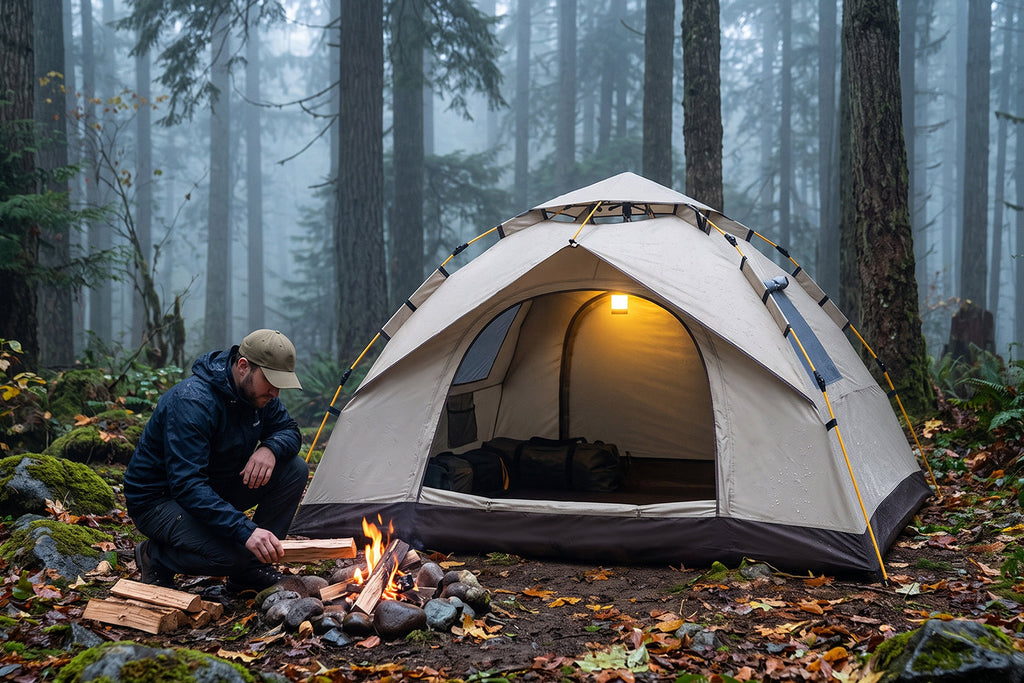
TL;DR: Yes, you can build a campfire in wet conditions — steady flames in under 15 minutes, even after a night of rain. Fire needs fuel below roughly 20% moisture content, so the whole game is manufacturing dry fuel: cotton balls with petroleum jelly burn 5-7 minutes, long enough to catch damp kindling, and bigger logs dry in a ring 1-2 feet from the flames.
How to Build a Campfire in Wet Conditions: A Complete Guide
Learning how to build campfire wet conditions style is the skill that separates frustrated campers from confident ones. Rain, morning dew, and damp ground make fire starting harder—but never impossible. When you build campfire wet conditions the right way, you can have steady flames in under 15 minutes, even after a night of rain. In this guide, you'll learn the exact layering method, the data behind dry fuel, and the gear that makes it all easier.
What Is Wet-Condition Fire Building
Wet-condition fire building is the practice of creating a sustainable campfire when moisture is present in the air, ground, or fuel. It relies on three principles: isolating your fire base from damp soil, finding or creating dry tinder, and protecting the flame during its first critical minutes.
You don't need perfect weather. You need a system. Experienced campers treat wet fire building as a process, not luck—and you can too.
How It Works
Start with a platform. Lay wrist-thick dead branches side by side to lift your fire off wet ground. Next, gather tinder from protected spots: under bark, inside dead logs, or beneath dense tree canopies. Split wood to expose the dry interior—wood is often wet only on the outer quarter inch.
Build a small teepee of tinder and pencil-thin kindling, light it from the windward side, and feed it gradually. Add larger fuel only once flames are self-sustaining. Rushing this step is the number one reason wet fires fail.

By the Numbers
- Fire needs fuel with moisture content below roughly 20% to burn efficiently; rain-soaked wood often exceeds 40%.
- A split log's dry interior can be ready to burn in minutes, while unsplit wet wood may smolder for 30+ minutes.
- You'll need about 3 times more tinder in wet conditions than on a dry day—plan for two full armloads.
- Cotton balls with petroleum jelly burn 5–7 minutes, long enough to ignite damp kindling.
- Firewood bundles at campgrounds typically cost $6–$10; scavenging dry interior wood is free.
Wind is your hidden ally. Position your fire so a light breeze feeds the flames rather than flattening them. If smoke follows you around the fire, move your fuel pile upwind and your seating downwind—small adjustments save hours of frustration.
Common Myths
Myth 1: You can't start a fire in the rain. You can—if your tinder stays dry. A tarp, your pack's rain cover, or even a held jacket creates enough shelter.
Myth 2: Bigger fuel lights faster. The opposite is true. Surface area matters, so small, split, dry pieces always outperform big wet logs.
Myth 3: Fire starters are cheating. Reliable campers always carry waterproof backups. A ferro rod works at any temperature and when soaked.

Practical Tips
Gather fuel from standing dead trees rather than the ground—standing wood sheds water. Collect three times the tinder you think you need before striking a match. Keep your next stage of kindling under shelter while the fire grows.
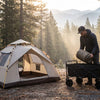
Hauling enough dry fuel is half the battle. The Finvizo Folding Wagon Cart carries up to 600 lbs, so you can move a full evening's firewood from a dry stash to camp in one trip. Browse the Finvizo Wagon Carts collection for more hauling options.
Before you leave, practice at home. Spend 20 minutes in your backyard after a rainstorm building a fire with only the tools in your pack. Muscle memory beats theory when you're cold, tired, and daylight is fading fast at camp.
If you can't find dry tinder, make it: a feather stick is just a partially split stick with thin curls shaved into it, exposing the dry interior wood. Two or three good feather sticks beat a pocketful of damp bark every time. Keep your lighter and ferro rod in an inside pocket — body heat keeps them working when everything else is wet. And once the fire is going, feed it slowly: damp kindling smothers a young flame.
How to Choose
Choose your fire site carefully: slightly elevated ground, natural windbreaks, and overhead cover that isn't flammable. Choose fuel by sound—dry wood snaps cleanly; wet wood bends. Choose your ignition backup before you need it: pack two methods minimum.
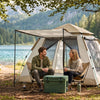
For sheltering your fire prep area, a quick-pitch Finvizo Tent or tarp keeps tinder dry while you work. See the Finvizo All Products collection for complete wet-weather camp setups, including Finvizo Backpacks with dry compartments.

FAQ
Can you build a campfire in the rain?
Yes. Shield your tinder with a tarp or jacket, use a raised platform of dead branches, and split wood to reach its dry core. Most failures come from too little tinder, not too much rain.
What is the best tinder for wet conditions?
Birch bark, fatwood shavings, dryer lint, and cotton balls coated in petroleum jelly all ignite reliably when damp. Store them in a sealed waterproof bag.
How long does wet wood take to dry by the fire?
Stack damp logs in a ring 1–2 feet from the flames. Surface moisture typically evaporates in 30–60 minutes, giving you a steady supply of ready fuel.
CTA: Gear Up for Your Next Rainy Trip
Wet weather shouldn't cancel your campfire. Equip yourself with gear built for real conditions—from heavy-duty wagons to weatherproof tents. Shop the Finvizo Full Collection today and make your next rainy campout your warmest one yet.
Related Guides
- Finvizo All Products
- Finvizo Wagon Carts
- Finvizo Tents
- Finvizo Backpacks
- Finvizo Folding Wagon Cart (600 lbs)

Written by Vivian J
Product Manager at Finvizo and an avid camper who tests gear on real trails. She writes from hands-on field experience to help you pick equipment that actually holds up outdoors.