Metal Wagons vs Folding Fabric Wagons: Which Lasts?
TL;DR: For most campers, a quality folding fabric wagon outlasts a metal wagon in real use — fabric beds don't rust, frames flex instead of bending permanently, and the whole cart weighs 10-15 lbs less. Metal wagons win in exactly one scenario: static, heavy, dirty work around a yard or garden where the cart never folds and never gets rained on. Buy for how you'll actually haul, not for which frame feels tougher in the store.
I've owned both. My old steel mesh wagon hauled firewood for two seasons before the welds started cracking and the bed rusted through at the corners. The folding fabric wagon that replaced it is on year four — same beaches, same campgrounds, zero rust, zero cracks. The durability question with metal wagons vs folding fabric wagons isn't which material is "stronger" on paper. It's which failure mode you can live with, because every wagon eventually fails somewhere.
How the Two Builds Actually Differ
A metal wagon is a rigid steel tube or mesh bed on a fixed frame — the same design as a garden cart from the 1980s. A folding fabric wagon pairs a scissoring steel or aluminum frame with a removable fabric bed, usually 600D polyester oxford, so the whole cart collapses flat. One is a tool you store in a shed; the other is a tool that lives in your trunk. If you're still deciding between budget and premium builds in general, our cheap vs heavy-duty wagon comparison covers the price side of that decision — this article is strictly about materials and lifespan.
| Metal wagon (steel) | Folding fabric wagon | |
|---|---|---|
| Empty weight | 30-45 lbs | 20-35 lbs |
| Rated capacity | 150-400 lbs | 220-600 lbs |
| #1 killer | Rust at welds and bed corners | Fabric tears and UV fade |
| Frame failure mode | Permanent bend / cracked weld | Flexes and rebounds |
| Storage | Fixed shape, shed or garage | Folds to ~8-10 in thick |
| Typical lifespan | 2-5 seasons outdoors | 4-8 seasons with basic care |
The capacity row surprises most people. Because fabric wagons are engineered products with published static-load ratings, a good one carries 400-600 lbs — while many big-box steel wagons top out at 150-200 lbs before the thin bed mesh starts to dish. "Metal" feels stronger in the aisle. The spec sheet often disagrees.
Why Metal Wagons Die Early Outdoors
Rust is the whole story. Steel wagons rely on powder coating for protection, and powder coating chips — at the welds first, then anywhere a cooler or a tent pole scrapes the bed. Once bare steel meets moisture, corrosion works from inside the tube outward, and the first visible sign is often a weld letting go under load. Leave the cart in beach salt air for one season and the process accelerates dramatically: salt is relentless on ferrous metal, and I've seen hardware-store wagons develop structural rust in under 18 months of coastal use.
The second killer is the rigid frame itself. Steel doesn't forgive — overload it once, hit a curb wrong, and the frame bends permanently. A bent wagon pulls crooked forever. There's no cheap repair for either failure mode; a cracked weld or a racked frame means a new cart.
Where Fabric Wagons Fail (and Why It's Slower)
Fabric wagons fail in more predictable, more preventable ways. The 600D oxford bed can tear if you drag sharp metal edges across it repeatedly, and UV exposure fades and weakens the fabric over years — figure 3-5 summers of hard sun before the bed looks tired. Zippers and Velcro straps wear. Hinge rivets on the folding frame can loosen after a few hundred fold cycles.
The difference is that every one of those is either cheap to mitigate or slow to develop. Rinse the salt off after beach trips, don't store the cart wet, keep sharp gear in a bin inside the bed, and a quality fabric wagon easily outlasts its steel counterpart. The frame bending permanently basically doesn't happen — the scissor mechanism is designed to flex, and flexing absorbs the exact overloads that bend rigid steel.
The One Case Where Metal Genuinely Wins
Static yard duty. If the wagon lives at a garden bed, hauls wet soil, rocks, and pavers, gets pressure-washed, and never needs to fold or ride in a car — a steel wagon or garden cart is the right tool. Fabric beds hate constant moisture and abrasive loads like gravel; a steel mesh bed shrugs both off and doesn't care about being left dirty. This is a real use case, just not a camping one. For anything involving a car trunk, a campsite, sand, or weather, the folding fabric design wins on every axis that matters.

What to Look for in a Fabric Wagon That Lasts
Capacity rating first: pick a rated load at least double your typical haul, so the frame works in its comfort zone. Our 600 lb collapsible wagon uses a 600D oxford bed on a reinforced folding frame — at $269.99 it costs about the same as a big steel cart, folds flat in seconds, and the wide all-terrain wheels handle the grass and gravel that stop narrow-tired wagons cold.

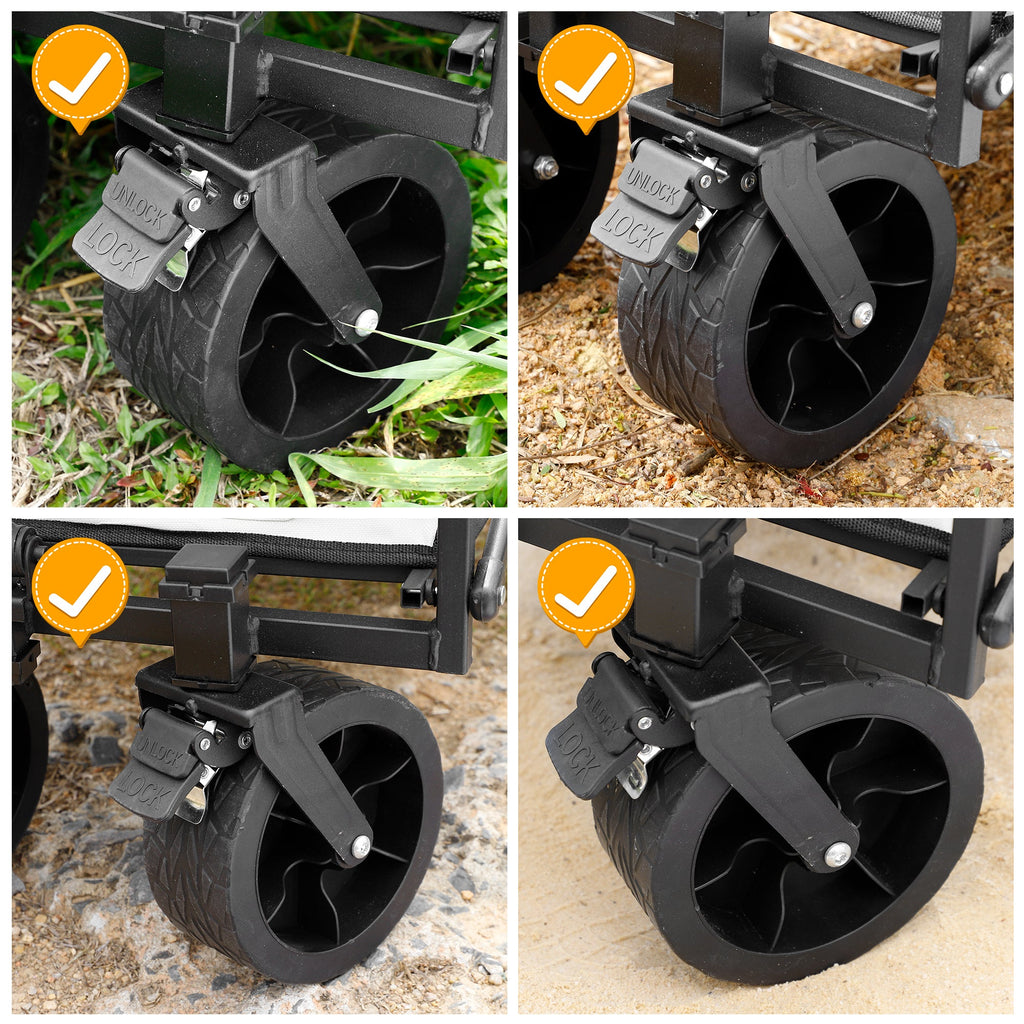
Wheel width second: 3.5-4 inch wide wheels spread load so the wagon rolls over soft ground instead of plowing. Third, a one-motion fold you'll actually use — a wagon that's annoying to collapse stays in the garage. The full lineup with different capacities and tailgate options is in the wagon collection, and our best folding wagon guide ranks the top picks across budgets.

FAQ
Do metal wagons rust even with powder coating? Yes, eventually. Powder coating chips at welds and high-contact points, and once moisture reaches bare steel, corrosion spreads inside the tubes where you can't see it. In coastal or humid climates, expect visible structural rust within 2-3 seasons of outdoor storage.
How much weight can a folding fabric wagon hold? Quality models are rated 400-600 lbs static load — often more than steel wagons in the same price range, which commonly rate 150-400 lbs. The practical limit is usually what you can pull: most adults comfortably haul 100-150 lbs on flat ground.
Can a fabric wagon bed be repaired if it tears? Small tears, yes — a nylon patch kit or heavy-duty fabric tape holds for seasons, and some brands sell replacement beds. This is a genuine advantage over metal: a torn $40 fabric bed is replaceable, while a cracked steel weld effectively totals the cart.
Which type is better for the beach? Fabric, by a wide margin. Wide-wheel fabric wagons resist salt corrosion (rinsing the frame takes two minutes), and the fabric bed doesn't rust. Salt air destroys steel wagon beds and hardware, and most metal wagons have narrow wheels that dig into soft sand.
Are metal wagons good for kids to ride in? Neither type is designed as a child carrier — standard utility wagons of both builds lack the safety harnesses and stroller certification of purpose-built kid wagons. If hauling children is the goal, look at dedicated stroller wagons with 5-point harnesses, not utility carts.

Written by Vivian J
Product Manager at Finvizo and an avid camper who tests gear on real trails. She writes from hands-on field experience to help you pick equipment that actually holds up outdoors.