Best Beach Wagon for Soft Sand: Big Wheels Buying Guide 2026
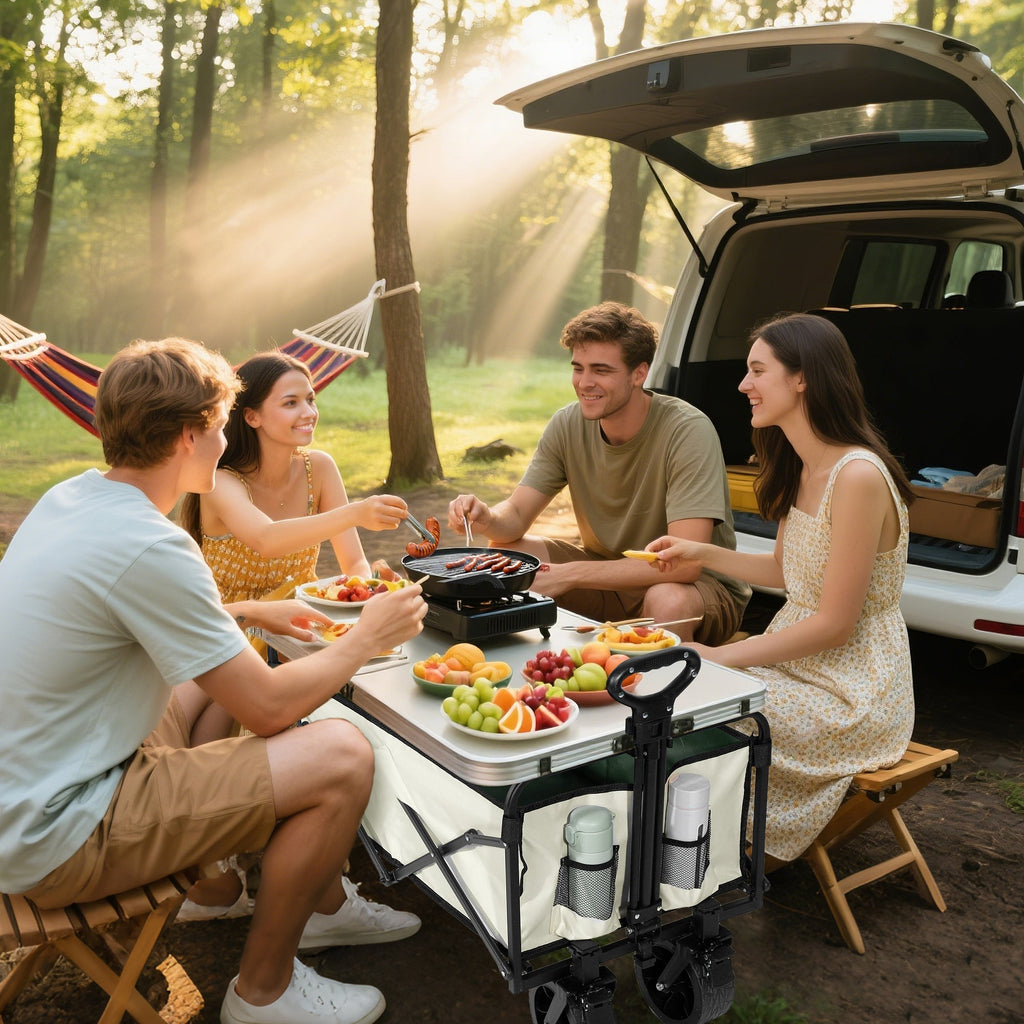
Quick answer: the best beach wagon for soft sand has wheels at least 7 inches wide and 10 inches tall, a capacity you'll actually use (think 200+ lbs), and a frame that folds flat enough for your trunk. Small hard-plastic wheels dig in and turn a fun beach day into a tug-of-war. Below is exactly how I judge a beach wagon after three summers of hauling gear across Gulf Coast sand. Related: beach cart vs beach wagon — which rolls better on sand.
Last June I watched a dad drag a cheap grocery-cart wagon across the dry sand at Padre Island, wheels buried to the axle, cooler threatening to tip out with every yank. I'd made the same mistake myself two years earlier. That day I promised myself I'd write down everything I learned the hard way — and since we build the Finvizo camping wagon line, I get to test a lot of wagons on real sand. For the big-picture version covering every wagon type and scenario, start with our complete folding wagon guide. If you're still deciding whether you even need a wagon versus carrying everything by hand or in a garden cart, my earlier wagon vs wheelbarrow breakdown covers that first fork in the road.
Why Soft Sand Eats Ordinary Wagons
Dry beach sand is basically thousands of tiny ball bearings. A narrow, hard wheel concentrates all the weight onto a contact patch the size of a credit card, and the sand simply flows out of the way — that's the digging you feel. A beach wagon for sand needs the opposite: a wide, tall wheel that floats on top and rolls instead of plows.
The physics are simple: wider wheel = bigger contact patch = less pounds per square inch pushing down into the sand. Tall wheels add a second benefit — they roll over ridges and shells instead of slamming into them. This is why "beach wagon with big wheels" isn't marketing fluff; it's the single feature that decides whether your wagon works at all.
The 5 Things I Check Before Buying a Beach Wagon
1. Wheel width and diameter. For soft sand I want at least 7 inches wide and 10 inches in diameter. Our Finvizo wagon cart with enlarged wheels runs oversized all-terrain wheels that measure up on both counts, and the difference on dry sand versus a standard 3-inch wheel is night and day.
2. Real load capacity. A family beach day is heavier than you think: cooler (40 lbs with ice), tent, chairs, towels, toys. I look for 250 lbs minimum. Overloading a light frame flexes the axles and makes pulling harder.
3. Folded size. Measure your trunk opening, not just the trunk. A wagon that folds to briefcase thickness slides behind the seats; one that only "sort of" folds becomes a permanent trunk resident.
4. Handle behavior. A telescoping handle that locks at different lengths saves your lower back, and a handle that stays upright when you let go (instead of flopping into the sand) is a small thing you'll appreciate every single trip.
5. Fabric and drainage. 600D Oxford fabric handles wet towels and sandy toys, and a removable liner you can hose down at the beach shower is worth real money. Avoid thin polyester that sags when wet.
Beach Wagon Wheel Types Compared
| Wheel type | Typical size | Soft sand | Packed sand / boardwalk | Grass & gravel |
|---|---|---|---|---|
| Narrow hard plastic | 3 in wide / 7 in tall | Digs in fast | Fine | Okay |
| Wide rubber all-terrain | 7 in wide / 10 in tall | Floats and rolls | Great | Great |
| Balloon / balloon-style | 9+ in wide | Best possible | Great | Bulky |
| Thin pneumatic | 2-3 in wide | Sinks, risk of puncture | Good | Good |

For most families, wide rubber all-terrain wheels are the sweet spot: balloon wheels win on pure sand performance but add bulk, cost, and inflation hassle. A beach cart with big rubber wheels handles the sand, the parking lot, the campground, and the soccer field — one wagon for everything.
Capacity and Size: How Much Wagon Do You Need?
Here's my honest sizing guide after loading these things dozens of times:
- Solo or couple, half day: 150-200 lbs capacity, compact fold. Cooler + 2 chairs + umbrella.
- Family of 3-5, full day: 250-400 lbs. This is where the Finvizo folding wagon with enlarged wheels (460 lbs) lives — cooler, beach tent, 4 chairs, toys, and a dry bag, with room to spare.
- Big group or tailgate: 400-600 lbs. The Finvizo collapsible wagon cart (600 lbs) swallows a full-size cooler plus a pop-up canopy without complaining.
One counterintuitive tip: don't buy more capacity than you need. A half-empty wagon bounces gear around, and bigger frames are heavier to pull. Match the wagon to your typical load, not your once-a-year maximum.
My Beach Day Setup (So You Can Copy It)
Cooler goes in first, centered over the axle — it's the heaviest item and you want that weight over the wheels, not hanging off the tail. Chairs and umbrella along the sides, tent and dry bag on top, sandy toys in a mesh bag clipped to the frame so the sand falls out on the walk back. Lock the handle at hip height and pull at a walking pace; if the wagon starts fishtailing, you're going too fast on loose sand.
One more trick for soft-sand days: park as close to the firm wet sand as you're allowed, and time your haul for lower tide when the packed strip is widest. Fifty yards on firm sand beats two hundred on the fluffy stuff, even with great wheels. At the car, everything sandy stays in the wagon until we hit the rinse station. The liner lifts out, gets a 30-second hose-down, and the wagon goes back in the trunk clean. That routine is the whole reason I'd never go back to carrying gear by hand.
Beach Wagon FAQ
What size wheels does a beach wagon need for soft sand?
At minimum 7 inches wide and 10 inches tall. Wider is better on dry, fluffy sand; anything under 4 inches wide will dig in and make you drag instead of roll.
Is a beach wagon with big wheels worth the extra cost?
Yes — wheels are the one feature you can't upgrade later. A cheap wagon with small wheels works on the boardwalk but fails exactly where you need it most: the 100 yards of soft sand between parking and your spot.
Can I use a regular folding wagon at the beach?
You can on packed wet sand near the water, but on dry soft sand a standard narrow-wheel wagon will bury itself within a few steps. If beach trips are a regular thing, get a beach wagon with sand wheels from the start.
How do I clean sand and salt off my wagon?
Rinse the fabric and frame with fresh water after each trip, let it dry fully before folding, and brush sand out of the wheel hubs. Salt left on the frame hardware is what kills wagons over a few seasons.
What else can I use a beach wagon for?
Everything from camping and fishing to farmers markets and youth sports. If you want ideas beyond the beach, check out our guide on using a wagon for three different sports — the same big wheels that float on sand love muddy sidelines. And since beach days mean full sun exposure, our sun protection gear buying guide covers the UPF layers worth packing alongside the cooler.
Related reading
- Best Collapsible Wagons for Camping and Beach Trips 2026
- How to Clean a Camping Wagon After the Beach: Full Guide
- Wagon vs Wheelbarrow: Which Hauls Camping Gear Better?

Vivian J is a Product Manager at Finvizo and an avid outdoor enthusiast. She tests gear on real trails and writes from hands-on field experience to help readers choose equipment that performs reliably outdoors.