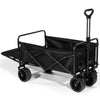
Electric Wagons: Are Motorized Carts Worth the Money?
TL;DR: For most campers, an electric wagon is not worth the money — a good manual folding wagon rated at 400-600 lbs covers 90% of trips for a third of the price and half the weight. Motorized carts earn their $400-700 price tag in three cases: long paved hauls over a mile, regular steep inclines with heavy loads, or anyone with mobility limits. Buy the motor for a specific problem, not for the novelty.
I test wagons for a living, and I've hauled both kinds — a motorized cart that cost more than my first tent setup, and the manual folding wagons in our own line. The electric one drew a crowd at every campground. It also sat in my garage for nine out of twelve months. Here's the honest math on when a motorized wagon pays for itself and when it's an expensive way to avoid a two-minute pull.
What an Electric Wagon Actually Costs (and Weighs)
The sticker price is only the first number. A motorized wagon is a battery, a motor, and a charger you now own and maintain — and that hardware adds up in three places: your wallet, your trunk, and your back when you lift it.
| Typical electric wagon | Manual folding wagon (600 lb class) | |
|---|---|---|
| Price | $400-700 | $120-270 |
| Empty weight | 50-75 lbs | 25-35 lbs |
| Rated capacity | 150-300 lbs (motor limit) | 400-600 lbs |
| Range per charge | 5-10 miles | Your legs |
| Charge time | 3-5 hours | — |
| Folds for trunk | Often bulky / partial fold | Full flat fold, ~8-10 in thick |
Two numbers in that table surprise people. First, capacity: motorized wagons are usually rated LOWER than manual ones, because the motor and gearbox — not the frame — set the limit. A 600 lb-rated manual wagon out-carries most electric carts on the market. Second, weight: lifting a 65 lb powered wagon into an SUV is a two-person job, which defeats the point for solo campers.

Where a Motorized Wagon Genuinely Wins
Long paved hauls. If your regular trip is a boardwalk, fairground, or festival where you cover 1-3 miles of pavement with a full load, electric assist turns a grind into a stroll. This is the scenario motorized carts were built for.
Steep or repetitive inclines. Hauling 100+ lbs up a boat ramp, a hillside campsite, or stadium stairs twice a weekend is real work. Powered drive on inclines is the single best argument for the motor.
Mobility limitations. If pulling 80 lbs isn't safely in your cards — injury, age, a bad back — an electric wagon isn't a gadget, it's access. Worth every dollar in that case.
Where It Doesn't
Sand and soft ground. Here's the dirty secret: motor torque doesn't fix soft-sand sinking. Wide wheels and low ground pressure do. A manual wagon with 4-inch-wide all-terrain wheels outperforms a narrow-tired electric cart on the beach every time — and doesn't care if it gets splashed.
Battery logistics. A motorized wagon that wasn't charged last night is a 65 lb manual wagon with worse wheels. Range drops in cold weather, batteries age out in 3-5 years, and a replacement pack can run $100-150.
Price per use. Do the honest math: at $550 for a motorized unit used ten weekends a year over four years, you're paying about $14 per trip for the motor alone. If those trips are 200-yard walks from the parking lot to a campsite, that's expensive convenience. Resale is another quiet cost: used powered wagons are a thin market, while a durable manual wagon either sells in a day or simply keeps working for a decade.
The Manual Wagon That Covers 90% of Trips
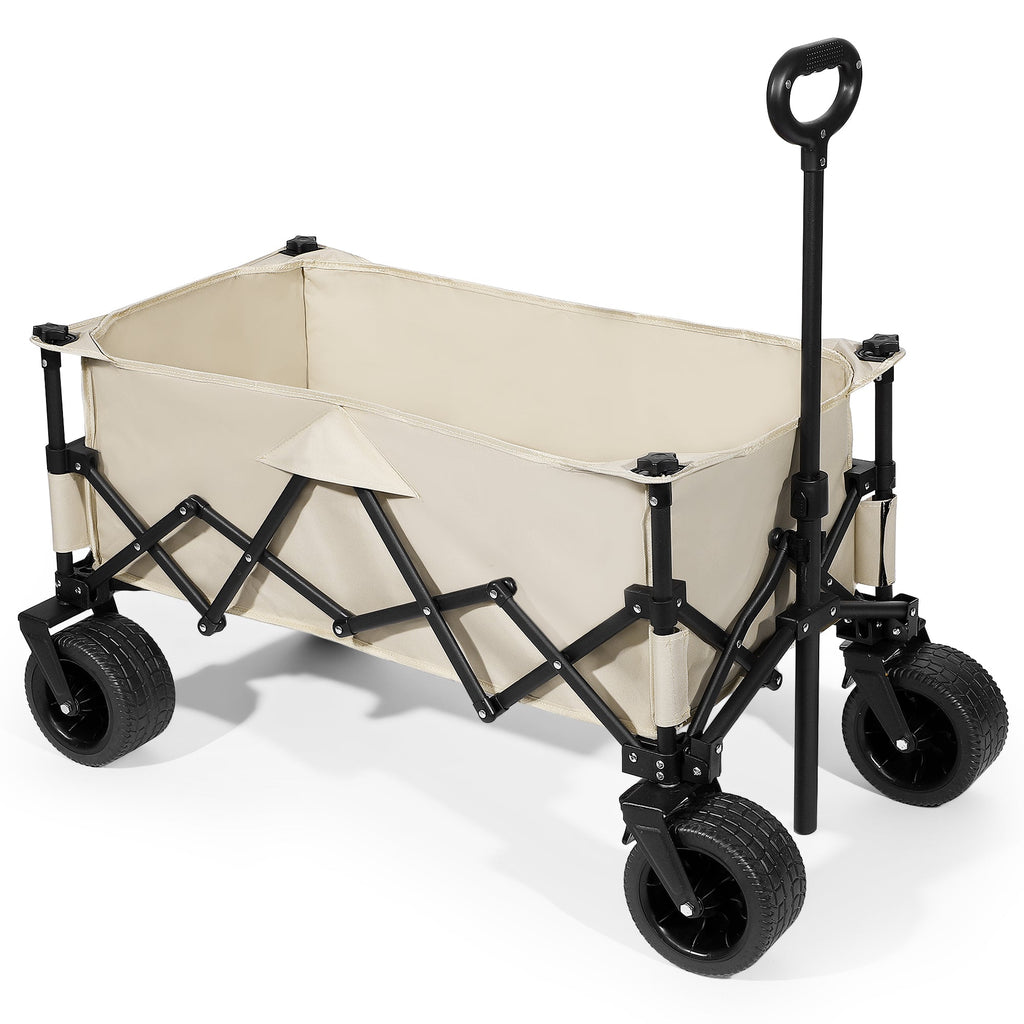
For the campsite-to-car hauls most of us actually do, a well-built manual folder wins on every practical axis. Our collapsible 600 lb wagon is rated double what most electric carts carry, folds flat in seconds by pushing the center hub (no tools, no latch hunting), and at $269.99 costs less than half of an entry-level motorized cart. The 600D oxford bed shrugs off cooler corners and tent poles, and it lives in a car trunk full-time at roughly 8 inches thick.

My rule after three seasons of testing: spend the money on capacity and wheel quality first. If your trips later prove you need a motor — long pavement, real hills, mobility reasons — you'll know exactly why, and the manual wagon still earns its keep as the beach and backup hauler. Browse the full range in the wagon collection to compare capacities and wheel setups side by side, and our best folding wagon guide breaks down the top manual picks in detail.
Tips & Best Practices for Hauling Gear Smarter (Any Wagon)
Pack heavy items low and centered. Load your heaviest items low and over the axle. A low, centered load keeps any wagon stable on slopes and makes pulling feel lighter.
Use brakes on slopes and sand. Parked wagons roll away fast on slopes. A foldable wagon with brakes lets you lock the wheels while you unload. Set the brake every time.
Match wheel width to terrain. Wheel width matters more than motor power on soft ground. Wide wheels — around 3.6 inches — spread the load so the wagon glides over sand instead of digging in.
Fold and store properly between trips. Shake out sand, wipe the fabric dry, and fold your wagon between trips. Wherever you haul, follow the Leave No Trace Seven Principles and pack out what you pack in.
Common Mistakes to Avoid When Buying a Wagon
Paying for a motor you rarely need. The most common mistake is buying motor assist for twice-a-year trips. Moderate loads on reasonable terrain? A premium electric wagon cart rarely pays back.
Ignoring folded size and storage space. Buyers obsess over wagon load capacity and forget the garage. Check folded dimensions first — a wagon that will not fit your trunk stays home.
Overlooking fabric durability. Thin fabric tears under coolers and gear. Look for 600D oxford fabric — tear-resistant and easy to clean — and wipe it down after trips.

FAQ
How long does an electric wagon battery last? Per charge, expect 5-10 miles depending on load and terrain — hills and soft ground drain fastest. The battery pack itself typically lasts 3-5 years (300-500 charge cycles) before capacity drops noticeably, and replacement packs run $100-150.
Can electric wagons go on the beach? Poorly, unless they have wide balloon wheels — and most don't. Motor torque doesn't prevent sinking; wheel width does. Wet salt air is also rough on motor housings and connectors. For sand, a manual wagon with 4-inch-wide all-terrain wheels is the better tool.
How much weight can a manual folding wagon really carry? Quality 600D-fabric wagons are rated 400-600 lbs static load — more than most motorized carts, which are limited by their drivetrain to 150-300 lbs. The manual limit that matters is what YOU can pull: most adults comfortably haul 100-150 lbs on flat ground.
Are electric wagons allowed at festivals and campgrounds? Policies vary. Some festivals treat motorized carts like e-bikes and restrict them; most campgrounds allow them. Check the venue rules before buying one specifically for an event — a manual wagon is never restricted.
What should I look for in a wagon if I skip the motor? Three things: a rated capacity at least double your typical load, wheels matched to your terrain (wide for sand, treaded for trails), and a one-motion fold you'll actually use. Everything else — cup holders, canopies, tailgates — is a nice-to-have.

Written by Vivian J
Product Manager at Finvizo and an avid camper who tests gear on real trails. She writes from hands-on field experience to help you pick equipment that actually holds up outdoors.