Wagon vs Wheelbarrow: Which Hauls Camping Gear Better?
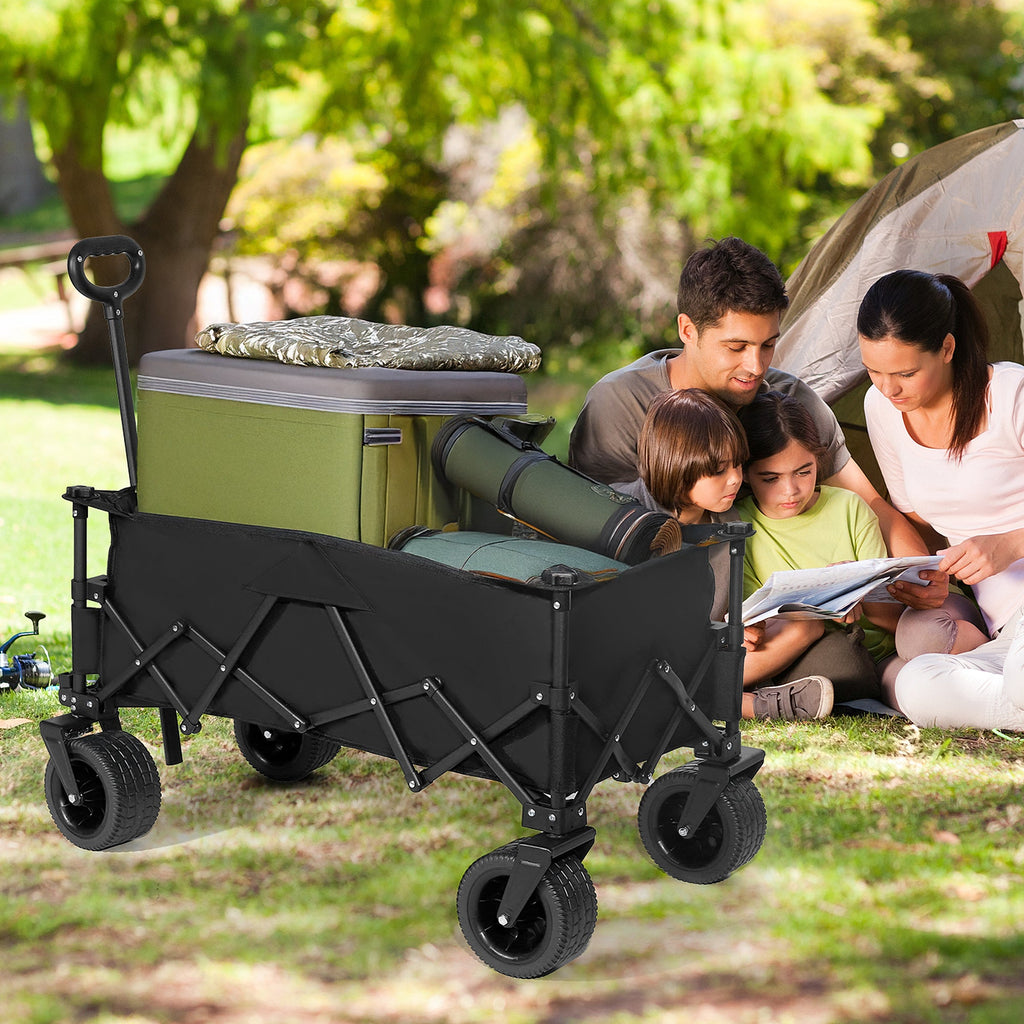
TL;DR: For hauling camping gear, a folding wagon beats a wheelbarrow for almost everyone: bigger capacity, four stable wheels, pulls instead of lifts, and collapses into your trunk. A wheelbarrow only wins on rough, steep terrain and heavy loose material like gravel and soil — it's a yard tool, not a gear hauler. Planning a bigger hauling setup? Our folding wagon guide covers the full category.
Every campground Saturday, I watch the same workout: families shuttling coolers, tents, and chairs from the parking lot, one armload at a time. Meanwhile the smart money rolls past in one trip. The wagon vs wheelbarrow debate comes up constantly in camping groups, and I've hauled gear with both for years — here's the honest comparison. For a broader look at wagon styles, our wagon guide for beach, camping, and sports covers the category; this piece answers the narrower question of wagon versus the classic wheelbarrow.
Wagon vs Wheelbarrow: Head-to-Head
| Factor | Folding Wagon | Wheelbarrow |
| Typical capacity | 150-260L, 300-600 lbs rated | ~100L, 300-400 lbs practical |
| Effort | Pull behind you — no lifting | You lift 30-40% of the load |
| Stability | 4 wheels, parks flat anywhere | 1-2 wheels, tips on slopes |
| Terrain | Flat ground, grass, firm sand (big wheels) | Excellent on rough, steep, narrow paths |
| Load type | Boxes, coolers, tents, chairs | Loose material: soil, gravel, mulch |
| Storage | Folds to trunk size | Bulky, garage only |
| Dumping | Unload by hand | Tips and dumps |
| Best for | Camping, beach, sports, events | Yard work, landscaping |
Why the Wagon Wins for Camping Gear
The core difference is physics. A wheelbarrow is a lever: you physically lift a third or more of the load's weight on the handles the entire time you're moving. A wagon carries 100% of the load on its wheels — you only overcome rolling resistance. A 150-pound load of camping gear feels like 50 pounds on wheelbarrow handles and about 15 pounds of pull behind a wagon. Over a quarter-mile walk from overflow parking to the campsite, that's the whole game.
Capacity seals it. A standard wheelbarrow holds about 6 cubic feet of loosely stacked gear — and coolers and tents don't stack loose, they tumble. A folding wagon like the Finvizo big-wheel wagon swallows a cooler, a tent bag, two chairs, and a duffel in one level load, rated to 460 lbs. One trip instead of three.
And then there's storage. A wheelbarrow lives in a garage and rides in nothing smaller than a pickup. A folding wagon collapses to the size of a carry-on suitcase and rides in the trunk to every trip — which means you actually bring it.

Where the Wheelbarrow Still Wins
I'd be overselling if I said the wheelbarrow is obsolete. It wins three honest categories.
Loose material. Gravel for the fire pit area, soil for the garden, mulch, sand — a wheelbarrow's deep steel tub and tip-to-dump design is built for exactly this. Scooping gravel out of a fabric wagon gets old fast.
Rough, steep terrain. One big pneumatic wheel tracks over roots, rocks, and narrow rutted paths that stop four small wheels cold. If your "campsite" is up a rocky trail, the wheelbarrow (or your back) is the answer.
Abuse tolerance. A contractor-grade wheelbarrow shrugs off decades of shovels, sharp stone, and rain. Fabric wagons need reasonable care — don't store them wet, don't drag them sideways over curbs.
None of those three describe hauling camping gear, though. That's why the wagon owns this comparison.
Choosing the Right Wagon for Gear Hauling
Weight rating first. Camping loads add up fast — a full cooler alone runs 50-70 lbs. Look for at least 300 lbs rated capacity; the 600 lb collapsible wagon covers anything short of hauling firewood for the whole campground.
Wheel size second. Standard 7-inch wheels work on pavement and firm ground. If your trips include beach sand or soft grass, big 10-inch all-terrain wheels are the single best upgrade — they float over soft surfaces instead of plowing through them.
Folding mechanism third. You want a one-pull fold that stands on its own when collapsed. If it takes two people and a manual, it'll stay home.
The Mistake I See Most
People buy on capacity alone and forget the wheels. I've watched a 600 lb-rated wagon get abandoned halfway across a beach parking lot because its skinny wheels buried themselves in the sand — while my big-wheel wagon rolled past with the same load. The frame rating tells you what the wagon can hold; the wheels decide what you can actually move. Match the wheels to your worst surface — grass, gravel, or sand — and the rest of the spec sheet takes care of itself. My rule after years of campground Saturdays: buy the biggest wheels you can afford, then worry about capacity.
Real-World Scenarios
Family campground: Wagon. Cooler, tent, chairs, plus a kid when legs give out — one vehicle, every trip.
Beach day: Big-wheel wagon, no contest. A wheelbarrow in soft sand is a anchor with handles.
Backyard project: Wheelbarrow for the soil and gravel, wagon for moving tools and plants. Own both if you garden seriously.
Sports tournaments: Wagon. It doubles as a sideline bench base and folds into the trunk between games.
If you're weighing wagon models against each other, our 600 lb vs 460 lb folding wagon comparison breaks down the two capacity classes side by side.
FAQ
Is a wagon better than a wheelbarrow for camping?
Yes, for camping gear a folding wagon is better than a wheelbarrow: it carries more (300-600 lbs rated), requires no lifting since all weight rides on four wheels, parks stable on any flat spot, and folds into your trunk. Wheelbarrows only win on rough terrain and loose material.
What is the difference between a wagon and a wheelbarrow?
A wagon is a four-wheeled cart you pull behind you, with a fabric or metal bed for boxes and gear. A wheelbarrow is a one- or two-wheeled lever you push while lifting part of the load, with a deep tub designed for loose material like soil and gravel.
Can a folding wagon replace a wheelbarrow?
For hauling gear, coolers, and boxes — yes, completely. For yard work with loose material like soil, mulch, or gravel — no, because a wagon can't dump and its fabric bed isn't made for shovels. Many households end up with one of each.
How much weight can a folding wagon carry?
Quality folding wagons are rated 300-600 lbs, but terrain matters: on grass or sand, keep loads under about 70% of the rated capacity for reasonable pulling effort. Big all-terrain wheels let you use more of the rating on soft ground.
Are wagons good on sand?
Only with big wheels. Standard small wheels dig into soft sand and become nearly impossible to pull. Wagons with 10-inch wide all-terrain wheels float over sand far better — for beach use, wheel size matters more than weight capacity.
Which is easier to pull, a wagon or a wheelbarrow?
A wagon is much easier: all of the load's weight rides on its wheels, so you only overcome rolling resistance. With a wheelbarrow, your arms lift 30-40% of the load the whole time. Over long distances, a wagon is dramatically less fatiguing.
Related reading
- Best Collapsible Wagons for Camping and Beach Trips 2026
- How to Clean a Camping Wagon After the Beach: Full Guide
- Cooler Wagons: Roll Your Ice Chest to the Campsite

Vivian J is a Product Manager at Finvizo and an avid outdoor enthusiast. She tests gear on real trails and writes from hands-on field experience to help readers choose equipment that performs reliably outdoors.