What Are Arm Sleeves For? Sun, Cooling & Compression Explained
TL;DR: Arm sleeves do three jobs at once: they block UV (look for UPF 50+), they cool you through evaporation once you sweat, and light compression supports your muscles and keeps blood flowing. If you spend hours outside — running, cycling, fishing, or playing ball — a pair of sun sleeves is the lightest protection you can carry.
I'll be honest: the first time I saw a runner in 95°F heat wearing extra layers on their arms, I thought they'd lost it. Then I borrowed a pair on a July hike, and I've packed arm sleeves on every sunny trip since. If you've been wondering whether these things are hype, I already broke down the cooling science in whether arm sleeves actually keep you cool — this guide answers the bigger question: what are arm sleeves actually for, and when should you wear them?
1. Sun Protection: The #1 Job
Ask a dermatologist and they'll tell you the best sunscreen is the one you don't have to reapply. That's the whole pitch of sun sleeves. A quality pair with a UPF 50+ rating blocks about 98% of UV rays, all day, with zero reapplication. Compare that to sunscreen on your forearms, which sweats off in an hour and needs a fresh coat every two hours.
Your forearms and the backs of your hands take more cumulative sun than almost any other body part — they're exposed every time you drive, paddle, cast a line, or hold handlebars. I started wearing sleeves after a fishing trip left me with a watch tan so sharp it looked photoshopped. My arms were fine; my buddy who "doesn't burn" was lobster-red by noon.

A quick tip on color: white and light-gray sleeves reflect more heat in direct sun, while black sleeves feel slightly warmer but hide dirt and still block the same UV when the fabric is rated UPF 50+. The rating matters more than the shade.
2. Cooling: Yes, They Can Actually Cool You
It sounds backwards — covering your skin to stay cool — but cooling sleeves work through evaporative cooling. The technical fabric wicks sweat off your skin and spreads it across a huge surface area, where it evaporates fast. Evaporation pulls heat away from your arm, and the effect is strongest in dry heat and with any airflow (riding a bike, a breeze off the water).
The catch I always mention: in heavy, humid air, evaporation slows down and the cooling feels weaker. They still protect you from the sun, they just won't feel icy. If you want the full breakdown of when the cooling effect fades and why, I covered it in detail in the science post linked above.
3. Compression: The Quiet Benefit
Most good arm sleeves add light graduated compression — snug at the wrist, slightly looser toward the bicep. It's not medical-grade, but it does three useful things during long efforts:
- Supports muscles and tendons — less micro-vibration in your forearms on long runs or rides, which means less next-day soreness.
- Helps blood flow back toward the heart, so your arms feel less heavy late in a long day.
- Keeps the sleeve in place — a sleeve with no compression slides down your arm every ten minutes, and you'll hate it by mile two.
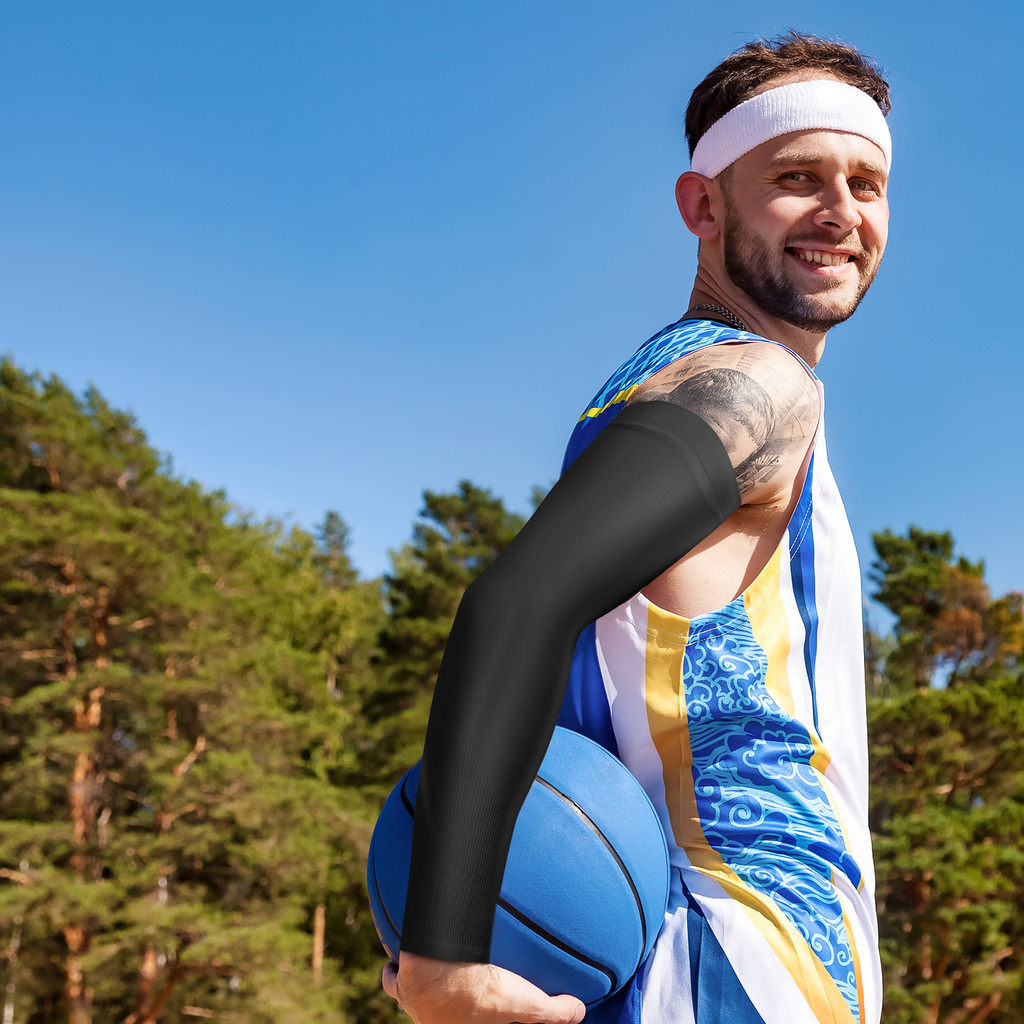
Basketball players figured this out years ago — that shooting sleeve isn't just for looks. It keeps the arm warm, supported, and consistent between plays.
4. Warmth and Wind (The Underrated Fourth Job)
Arm sleeves are the Swiss Army knife of shoulder-season dressing. On a chilly 50°F morning run, they take the bite out of the wind. Two hours later when the sun's up, you roll them down to your wrists or stuff them in a pocket — try doing that with a long-sleeve shirt. Cyclists call this "the layering hack" because sleeves pair with any jersey and disappear when you don't need them.
They also take the sting out of light brush, bug bites, and rock spray on trails. Think of them as a thin shield, not armor.
5. Who Actually Wears Arm Sleeves?
Pretty much anyone who spends real time outdoors:
- Runners — sun protection plus light warmth at dawn starts. (If you're specifically curious why so many runners swear by them, I wrote a whole piece on why runners wear arm sleeves — it goes deeper into the running-specific side.)
- Cyclists — hours of forearm sun exposure at speed, plus the evaporation effect is strongest with airflow.
- Anglers and paddlers — water reflects UV upward, doubling your exposure.
- Ball players — compression, turf-burn protection, and sweat management.
- Hikers and gardeners — brush, bugs, and sun all day.
Our Finvizo sun protection arm sleeves come in multi-packs for exactly this reason — one pair in your car, one in your pack, one in the wash. If you want your neck covered too, the Finvizo neck gaiter and arm sleeves set bundles both so there are no gaps in your sun coverage.
6. How to Choose a Pair (What Actually Matters)
After testing more pairs than I can count, here's my short checklist:
- UPF 50+ rating, printed or stated. No rating, no deal — thin fashion sleeves without a rating can let a surprising amount of UV through.
- Snug but not numb. Measure your bicep and follow the size chart. Too tight cuts circulation; too loose slides down.
- Silicone gripper band at the top. This is the single biggest quality tell. No gripper = constant adjusting.
- Moisture-wicking synthetic blend (polyester/nylon + spandex). Cotton sleeves stay wet and get clammy.
- Thumb hole (optional). Great for covering the back of your hands while fishing or driving; annoying if you hate fabric between your fingers.
FAQ: Arm Sleeves, Answered
Do arm sleeves protect you from the sun?
Yes — a UPF 50+ rated sleeve blocks about 98% of UV rays, all day, with no reapplication. It's more reliable than sunscreen on areas like your forearms that sweat and rub.
Why do runners wear arm sleeves?
Three reasons: sun protection on long runs, light warmth on cold mornings that they can strip off mid-run, and mild compression that reduces arm fatigue over distance.
Should arm sleeves be tight or loose?
Snug. You want gentle compression — firm enough to stay up without a gripper doing all the work, never so tight your hand tingles. When in doubt between sizes, follow the brand's bicep measurement chart.
Can you wear arm sleeves in hot, humid weather?
Yes, and they're still worth it for UV protection. Just know the cooling effect is weaker in humidity because sweat evaporates more slowly. In swampy conditions, prioritize the sun protection benefit.
Do arm sleeves help with sore muscles?
Light compression can reduce muscle vibration during activity and may ease mild post-workout soreness, but arm sleeves aren't a medical device. For real elbow or tendon issues, see a professional.
How do you wash arm sleeves?
Cold water, mild detergent, air dry. Skip fabric softener — it clogs the wicking fibers and kills both the cooling and the fit over time.
The Bottom Line
Arm sleeves are for anyone who'd rather not choose between sunburn and grease. They block UV better than sunscreen, cool you when it's dry, support your muscles, and warm you when the wind picks up — all for the weight of a pair of socks. Grab a multi-pack of Finvizo arm sleeves, throw a pair in every bag you own, and your forearms will thank you all summer.
Choosing between coverage options for your whole upper body? Our neck gaiter vs balaclava vs arm sleeves comparison maps out which piece covers what.

Written by Vivian J
Product Manager at Finvizo and an avid camper who tests gear on real trails. She writes from hands-on field experience to help you pick equipment that actually holds up outdoors.