
How to Use a Cooling Towel (and Why It Stops Working)
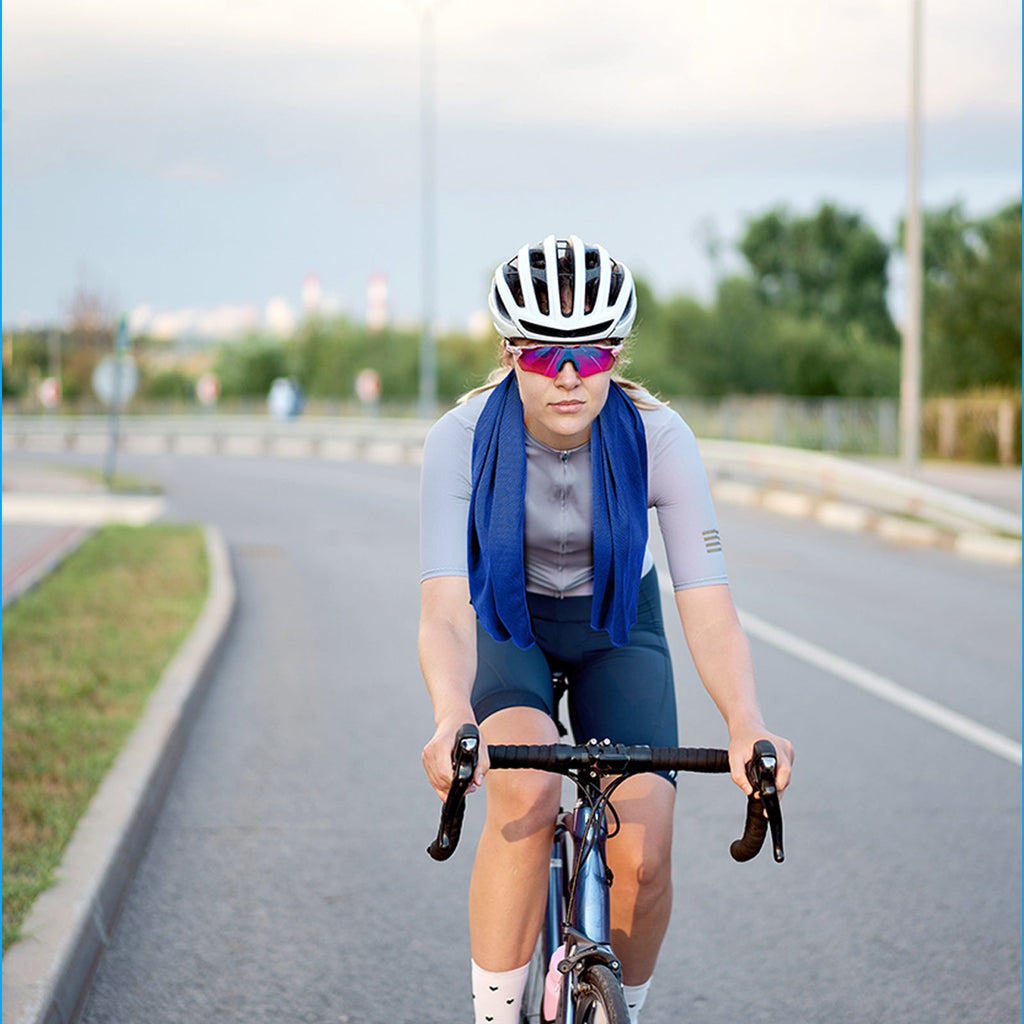
I keep a Finvizo cooling towel clipped to my pack from June through September, and I've ruined the effect in every possible way before learning these fixes. If you train or race in the heat, my marathon cooling towel guide covers race-day specifics; this article is the general playbook — everyday use, why the cooling fades, and how to bring it back.
How a Cooling Towel Actually Works
A cooling towel is not cold fabric — it's a moisture-management engine. The microfiber or PVA weave holds a thin, even film of water across a huge surface area. As that water evaporates, it pulls heat out of the fabric (and out of you, when the towel touches your skin). That's the whole trick: evaporation is the cooling.
This is why the "snap" step matters. Snapping the towel accelerates airflow over the damp fibers, jump-starting evaporation so the surface temperature drops fast — typically 15-25°F below ambient air within a minute. It also explains the towel's two hard limits, which we'll get to below: evaporation needs dry-ish air and moving air. Take those away and the towel is just a wet rag.
The 3-Step Setup (Wet, Wring, Snap)
Step 1 — Wet it fully. Run the towel under any water source: a faucet, a water bottle, a lake, a cooler of melted ice. Water temperature barely matters — even warm water ends up cool after evaporation starts, which still surprises me every summer. What matters is full saturation, edge to edge.
Step 2 — Wring it hard. This is where most people underdo it. A cooling towel works best damp, not wet. Twist until no drips fall, then twist once more. A sopping towel feels clammy, drips down your shirt, and actually evaporates slower because the fibers are flooded instead of film-coated.
Step 3 — Snap it 3-5 times. Hold one end and crack it like a whip, or hold both ends and flap it. You'll feel the temperature drop immediately against your palm. The towel is now "activated" and will stay cool for one to three hours depending on conditions.

Placement is the multiplier. Drape it where big blood vessels run near the surface — the back and sides of your neck, your wrists, your forehead, or the insides of your elbows. Cooling the blood there chills you core-down instead of just making one patch of skin feel nice. Around the neck is the classic for a reason: it's the largest always-exposed pulse zone, and a towel stays put there while you move.
Size matters for placement too. The Finvizo cooling towels 4-pack ($17.89) comes in a 40 × 12-inch microfiber format — long enough to drape around your neck with both ends hanging free for airflow, and narrow enough to tie as a headband or wrap a wrist. The four towels per pack (dark, light, or bright color sets) make a rotation practical: one on your neck, one re-soaking, two dry spares.
Why Your Cooling Towel Stops Working
When the cool feeling fades, run this checklist in order — in my experience one of these four is always the culprit:
- It dried out. The most common cause by far. Once the fabric loses its moisture film, evaporation stops and the towel warms to air temperature. On dry, windy days this can happen in under an hour. Fix: re-wet, re-wring, re-snap.
- The air is humid. Evaporation slows dramatically as humidity climbs. Above roughly 80% relative humidity, even a fresh towel gives weak, short-lived cooling — the air simply can't accept much more water vapor. Fix: wet with colder water, seek airflow, and expect shorter cycles. It still helps; it just won't feel icy.
- No airflow. A towel draped under a hat, inside a collar, or pressed flat against a backpack strap can't evaporate. Stagnant air around the fibers saturates and stalls the process. Fix: expose the towel to moving air — a breeze, a fan, or your own motion. Hikers: clip it to the outside of your strap, not underneath.
- Body-heat saturation. The section touching your skin warms up first because you're pumping 98.6°F into it. The towel hasn't failed — that contact zone is just spent. Fix: flip or rotate the towel so a fresh section touches your skin, which instantly restores the sensation without re-wetting.
One non-obvious one I learned the hard way at a Texas trailhead: don't store a damp towel sealed in a plastic bag in a hot car. It doesn't "keep it ready" — it bakes the fibers, breeds mildew smell, and the next activation feels weak. Carry it dry, wet it on site. A Finvizo cooling towel 4-pack makes this easy: one in use, one dry spare in the pack.
How to Reactivate It (and Make Each Cycle Last)
Reactivation is the same 3 steps — wet, wring, snap — but a few habits stretch each cycle:
Use the coldest water available. Evaporation does the real work, but starting colder buys you a noticeably longer first hour, especially in humidity. Melted cooler ice water is the gold standard at campsites and tailgates.
Re-wet before it's fully dry. Topping up at the "barely damp" stage takes a splash; resurrecting a bone-dry towel takes a full soak and re-snap.
Snap again mid-use. If the towel is still damp but feels flat, five snaps restore most of the chill without any water at all — you're just forcing fresh air through the fibers.
Rotate your towels. On all-day outings I run two in rotation: one on my neck, one re-soaking in a zip bag of cool water in the pack. Swap every hour and you never hit the dry-out wall.
Care, Storage, and When to Replace It
Washing: machine wash cold with mild detergent, no fabric softener — softener coats the microfiber and kills its absorbency, which is the quiet way good towels die. Air dry or low tumble. Wash after sweaty days; salt and body oils clog the weave the same way softener does.
Storage: always bone dry. A towel stored damp will mildew in days, and that musty smell never fully leaves. I hang mine on a carabiner inside the garage overnight before it goes back in the gear bin.
Replacement signs: when a freshly activated towel barely drops in temperature, or the fabric feels stiff and crusty even after washing, the microfiber's capillary structure is worn out. With decent care, expect one to three full summer seasons per towel — another reason I like the 4-pack: the set outlasts several summers of rotation.
If you're weighing a towel against wearable cooling for long exposed days, my cooling towel vs cooling neck gaiter breakdown compares the two head-to-head.
FAQ
Do cooling towels really work?
Yes — through evaporation, the same physics as sweat. In dry or breezy conditions a properly activated towel runs 15-25°F cooler than the surrounding air at its surface. In high humidity the effect is weaker and shorter-lived, but still noticeable.
Is a cooling towel just a wet towel?
No — and the difference is the weave. A regular wet cotton towel floods, drips, and holds so much water that evaporation crawls; a cooling towel's engineered microfiber holds a thin, even film that releases steadily, so it cools longer and feels dry against your skin. I tested both side by side in my cooling towel vs regular wet towel comparison — the structured weave wins by a wide margin.
Do you have to wet a cooling towel before use?
Yes. The towel has no refrigerant or chemical pack — water evaporation is the entire mechanism. A dry cooling towel is just a towel. Wet it, wring it until damp, and snap it to activate.
How long does a cooling towel stay cool?
Typically one to three hours per activation. Dry, windy weather shortens it (fast evaporation); humid, still weather weakens it but can stretch the damp stage longer. Re-wet or re-snap to restart the cycle.
Where should I place a cooling towel for the best effect?
On pulse zones where blood flows near the skin: the back of your neck, wrists, forehead, and inner elbows. The neck is the most practical because a towel stays in place there while you move.
Can I use a cooling towel in high humidity?
Yes, with adjusted expectations. Evaporation slows as humidity rises, so the cooling is milder and shorter. Start with the coldest water you have, keep the towel exposed to moving air, and re-snap often.
Are cooling towels just microfiber towels?
Not quite. They're engineered microfiber (or PVA) with a weave tuned to hold a thin, even water film and release it slowly — a regular gym towel floods, drips, and dries in clumps. The fabric structure, not a coating, is what you're paying for.
For long days on the water, the same cooling logic pairs with full sun coverage — my fishing sun protection setup guide shows how I layer a towel with UPF clothing and a neck gaiter, and Finvizo outdoor gear covers the whole summer kit from towels to arm sleeves.

Written by Vivian J
Product Manager at Finvizo and an avid camper who tests gear on real trails. She writes from hands-on field experience to help you pick equipment that actually holds up outdoors.



)