How to Wear a Neck Gaiter: 12 Versatile Ways for Sun, Dust & Style
Master 12 practical neck gaiter styles to protect from sun, dust, and wind during outdoor activities like hiking, running, and fishing.
A neck gaiter is a multipurpose fabric tube that can be worn in at least 12 ways, including as a neck wrap, face mask, headband, beanie, or balaclava. For optimal performance, ensure a snug fit—you should be able to slide two fingers between the fabric and your skin. Whether you are shielding yourself from harsh UV rays or keeping dust at bay during a trail run, mastering these configurations turns a single piece of gear into an essential outdoor companion.
How to Wear a Neck Gaiter: 12 Ways for Sun, Dust & Style
I still remember the first time I pulled a neck gaiter out of its packaging. It looked like a simple, unassuming tube of fabric, and I honestly thought, "That's it?" After three years and hundreds of miles on the trail, that same piece of polyester has become the single most versatile item in my outdoor kit. I’m Vivian, a product manager at Finvizo, and as a weekend camping enthusiast, I have learned most of these tricks the hard way—through unexpected sunburns, dusty desert winds, and one particularly windy kayaking trip where my hat ended up in another county.
So, how do you wear a neck gaiter exactly? At its simplest, you pull the tube over your head and let it rest around your neck. Everything else in this guide is a variation on that one fundamental move. If you are new to neck gaiters or have only ever worn them one way, this guide will walk you through twelve practical styles that I have personally used in the field. Before we dive in, if you are still deciding between a gaiter, a balaclava, or arm sleeves, our complete comparison of neck gaiters, balaclavas, and arm sleeves breaks down which piece of gear fits which activity, helping you avoid buying the wrong item for your specific needs.

The Classic Neck Wrap (Style 1)
This is the default configuration. Pull the gaiter over your head, let it rest around your neck, and pull the top edge up to cover your lower face when the wind picks up or the sun becomes intense. I use this setup on almost every summer hike. The key detail most people miss is folding the top edge down about an inch before pulling it up over your nose. That double layer creates a better seal against dust and gives the fabric more structure, preventing it from collapsing against your mouth when you are breathing hard.
On a recent desert trail outside Phoenix, I wore the Finvizo 6-Pack Cooling Neck Gaiter in this configuration for six hours. The polyester-spandex blend effectively wicked sweat off my neck instead of letting it pool, which helped me avoid the chafing rash I used to get from cotton bandanas.
The Face Mask (Style 2)
When the sun is directly overhead or you are kicking up dust on an ATV trail, pull the gaiter all the way up to cover your nose and cheeks. Tuck the bottom edge under your shirt collar to create a continuous seal. This works best with gaiters that have a touch of spandex for recovery; lower-quality options tend to slide down your nose every twenty minutes.
Pro tip from someone who has re-adjusted a gaiter a thousand times: if yours keeps slipping, twist it once at the back of your neck before pulling it up. The twist adds just enough tension to keep the fabric anchored comfortably.

The Headband / Sweatband (Style 3)
Fold the gaiter into a three-inch band and wear it across your forehead. This is my go-to choice for trail running and mountain biking. It absorbs sweat before it runs into your eyes, and unlike traditional rigid sweatbands, you can pull it down over your ears when the wind picks up.
I learned this one during a July half-marathon in Colorado where the temperature swung from 65°F at the start to 85°F by mile eight. The gaiter stayed put, whereas my old elastic headband would have been soaked through and useless by mile four.
The Skull Cap / Beanie (Style 4)
Turn the gaiter inside out, put both hands inside, and twist the bottom half once. Fold the twisted section back over the top half, then pull it onto your head like a beanie. This creates a fitted cap that covers your ears and most of your scalp. While it is not as insulating as a dedicated fleece beanie for winter, it is perfect for spring mornings or high-elevation campsites where the temperature drops at sunset. I always keep one in my hip pack for exactly that reason.
The Pirate / Bandana (Style 5)
Pull the gaiter up over your hairline, then fold the front half back toward your ears. This leaves your scalp covered while exposing your forehead—a great method for keeping hair out of your face during paddling or climbing. I wear it this way on kayaking trips because it keeps my ponytail contained and protects my part line from sunburn, a common oversight for many hikers.
The Balaclava (Style 6)
Start with the classic neck wrap, then pull the back up over your head like a hood. Pull the front up over your nose. The result covers everything except your eyes. This is my backup when I forget my Finvizo Cooling Balaclava on a chilly morning ride. It won't insulate like a dedicated winter balaclava, but for wind and light sun protection, the gaiter-balaclava hybrid works surprisingly well.
The Wristband (Style 7)
Wrap the gaiter around your wrist and tuck the end in. Use it to wipe sweat, shade your watch face, or hold small items like a chapstick or fishing lure. It might sound silly until you are mid-hike and realize you have a soft, absorbent cloth right there on your wrist for a quick face wipe.
The Hair Tie / Ponytail Holder (Style 8)
For people with longer hair, a gaiter makes an excellent emergency hair tie. Roll it into a rope, wrap it around your bun or ponytail, and tuck the ends. It is much gentler on hair than tight elastic bands, and when you take your hair down, you still have a fully functional gaiter ready to wear.
The Eye Mask (Style 9)
Fold the gaiter into a flat band and pull it down over your eyes. It is not a blackout mask by any means, but in a bright campsite or for a car nap during a road trip, it blocks enough light to help you get some rest. I have used this on red-eye flights when my actual sleep mask was buried in my checked bag.
The Ear Warmer (Style 10)
Fold the gaiter in half lengthwise and wear it like a wide headband that covers your ears but leaves the top of your head open. This is ideal for runners who overheat easily but need wind protection for their ears. I use this configuration on crisp fall mornings when a full beanie would be simply too warm.
The Sun Scarf (Style 11)
Drape the gaiter loosely around your neck and shoulders like a small scarf. This looks casual but adds real UV protection for your neck, upper chest, and shoulders—areas where sunscreen wears off the fastest. On a fishing trip last summer, I wore it this way with a tank top and avoided the "redneck sunburn" I usually get by hour three.
The Emergency Sling (Style 12)
Okay, this one is niche, but I have used it. If you sprain a wrist or need to immobilize a minor injury on the trail, a gaiter can function as a makeshift sling or compression wrap. The stretch fabric applies even pressure, and you can wet it for cold therapy. Hopefully, you never need this one, but it is good to know your gear can multitask in a pinch.
Choosing the Right Gaiter for the Job
Not all gaiters handle every style equally well. Thin, cooling-focused fabrics work best as neck wraps, face masks, and sweatbands because they breathe. Thicker, more structured gaiters hold their shape better as beanies and balaclavas.
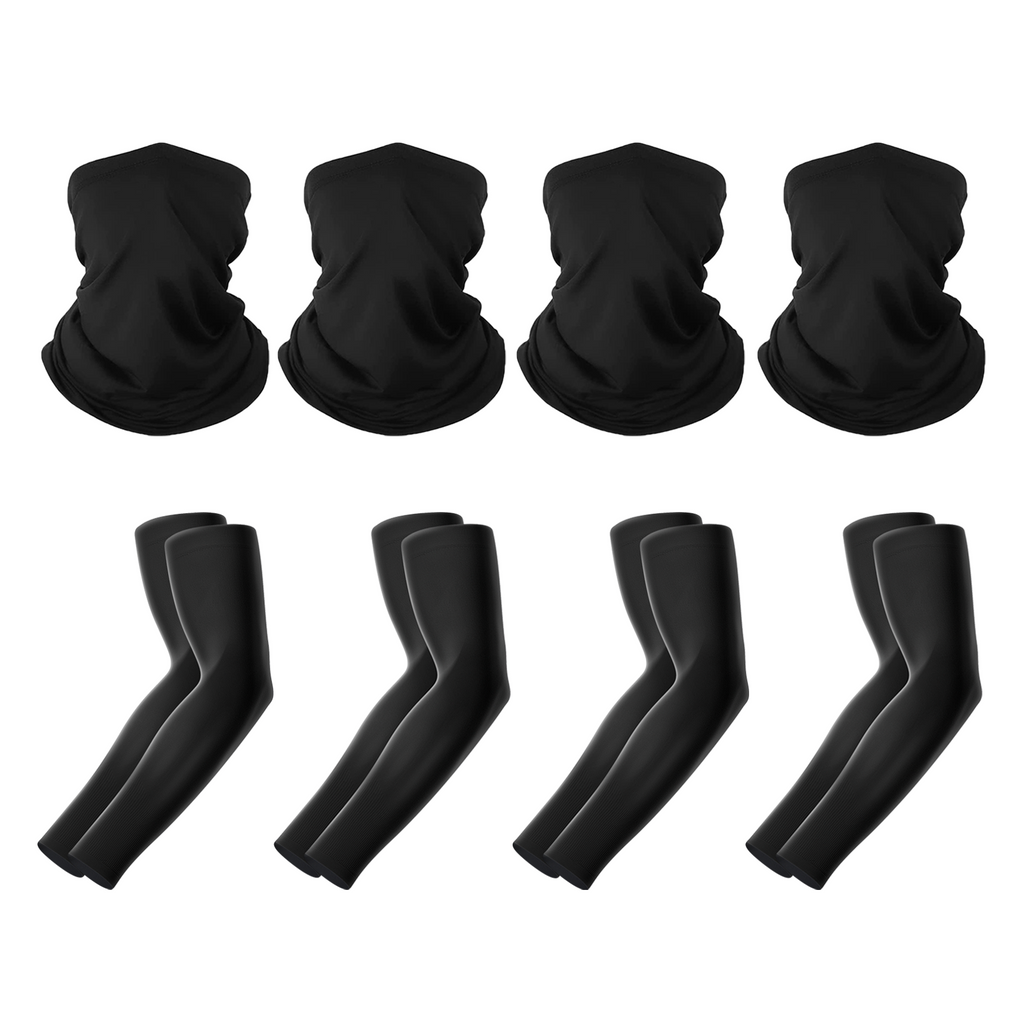
If you are building a kit from scratch, I recommend starting with a multi-pack so you can dedicate one to sweaty activities, one to dust protection, and still have spares in the wash. The Finvizo Cooling Neck Gaiter 4-Pack provides enough variety to rotate your gear without needing to re-wear a sweaty one the next morning. For full upper-body protection, I always pair my gaiter with UV arm sleeves . I wear this combo on every all-day outing; the gaiter covers my neck and face, while the sleeves handle my arms. With this setup, sunscreen becomes optional instead of mandatory.
FAQ
What is a neck gaiter, exactly?
A neck gaiter is a seamless tube of stretchy fabric—usually a polyester-spandex blend—that you pull over your head and wear around your neck. From there, it converts into a face mask, headband, beanie, balaclava, and more. Think of it as one piece of versatile gear that replaces five.
How tight should a neck gaiter fit around my neck?
It should feel snug but not restrictive. You should be able to fit two fingers between the fabric and your neck. If it leaves a deep red mark when you take it off, it is too tight. If it slides down when you look down, it is too loose.
Can I wear a neck gaiter in hot weather without overheating?
Yes, if you choose the right material. Look for lightweight polyester or microfiber with moisture-wicking properties. The cooling gaiters we make at Finvizo are designed specifically for 90°F+ conditions. Wetting the fabric before you put it on adds evaporative cooling that lasts for hours. For more on this, read our guide on how to use summer heat gear for yard work .
How do I keep my gaiter from smelling after sweaty hikes?
Rinse it in a stream or sink immediately after use, then hang it to dry. For a deeper clean, machine wash on cold with mild detergent and air dry. Avoid fabric softener, as it coats the fibers and reduces wicking performance. I wash mine with my hiking socks; they dry fast and are ready by the next morning.
Will a neck gaiter protect me from UV rays?
A standard polyester gaiter blocks most UVB rays and a good portion of UVA, but for guaranteed protection, look for UPF-rated fabric. Our UPF 50+ rated gaiters block 98% of UV radiation. That is the difference between "probably fine" and "actually protected." You can also learn more about why these materials matter in our article on whether arm sleeves actually keep you cool .
Can I wear a neck gaiter for cycling, or will it restrict breathing?
Thin, breathable gaiters work great for cycling. The trick is positioning: wear it as a neck wrap that you can pull up only when you stop at lights or hit a particularly dusty section. For high-intensity road riding, I prefer the headband or ear-warmer styles so my mouth stays completely unobstructed.
Once you have mastered these twelve styles, you will stop thinking of your gaiter as "just a neck thing" and start seeing it as the Swiss Army knife of outdoor gear. If you are planning an overnight trip soon, check out our essential camping gear checklist to make sure the rest of your kit is as versatile as the gaiter in your pack.
Related reading
- Fishing Face Cover vs Neck Gaiter vs Sun Mask: What’s the Difference?
- Neck Gaiter vs Buff Difference: Is There a Real One?
- Neck Warmer vs Scarf: Which Actually Keeps You Warmer?

Product Manager at Finvizo and an avid camper who tests gear on real trails. She writes from hands-on field experience to help you pick equipment that actually holds up outdoors.