Camping Gear Usage Tips for Long Trips: Keep Your Kit Trail-Ready
TL;DR: On long trips, gear fails from small daily neglect, not big accidents. Air your tent 2 minutes every morning, hang food 12 feet up and 4 feet out every night, keep heavy pack items high and close to your spine, and run a 30-second gear check each evening. These four habits prevent almost every trip-ending equipment problem.
I learned most of this the hard way on a 9-day loop through the Sierras, where a tent I packed damp on day two smelled like a locker room by day five, and a fuel line clogged with burnt oatmeal nearly ended hot dinners on day six. On a weekend car camp, these are five-minute fixes. A hundred miles from the trailhead, they compound. Here is the daily routine I now run on every multi-day trip — it takes under five minutes a day total, and it has kept my gear alive through trips that killed my friends' equipment.
Shelter and Sleep System Care Over Days of Use
Condensation is the silent killer on long trips. One sleeper exhales roughly a cup of moisture overnight, and in a closed tent most of it lands on your inner walls and sleeping bag shell. Pack a damp tent once and it's unpleasant; pack it damp five days running and you're growing mildew colonies in the folds — I have seen a tent delaminate in a single season from exactly this.
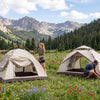
The 2-minute morning airing: After you break camp, shake out the tent inner, turn it inside out, and drape it over a rock or bush while you eat breakfast. Even 2 minutes of airflow strips most surface moisture. Stuff the tent last, after everything else is packed, so it gets maximum dry time.
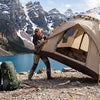
Rotate your pitch. Don't pitch on the identical footprint night after night when you return to a familiar site. Compressed ground under your sleeping pad develops sharp grit points that work through the pad fabric — slow leaks that show up as a flat pad at 3 a.m. on night six. Shift a few feet each time, and clear pinecones and twigs before you lay the footprint. Our tent collection pages list floor denier per model if you're comparing puncture resistance before a long trip.
Sleeping bag: Turn it inside out over your tent or a line for 10 minutes whenever the sun shows. Down loses measurable loft when it absorbs night after night of body moisture — a bag that feels "fine" on day three can be noticeably colder by day eight if you never air it.
Cook Systems and Food Storage for Multi-Day Use
Wipe everything after every meal. Burnt residue hardens within hours and works into fuel-line jets and pot surfaces. A 20-second wipe with a small cloth after each meal beats a 20-minute field strip of a clogged stove on day seven — ask me how I know.
The food hang is non-negotiable: 12 feet up, 4 feet out. Hang your food bag at least 12 feet off the ground and 4 feet from the trunk, every single night — not just when you "feel like" bear country. Never leave scented items on the ground even for a few minutes while you set up camp; a single curious raccoon can shred a $150 stuff sack for a stick of deodorant. Everything scented goes in the bag: food, trash, toothpaste, lip balm, the shirt you cooked dinner in.
Eat in packing order, heaviest first. Rotate through your food in the order you packed it. Otherwise you end up carrying the densest rations — the canned or freeze-dried bricks at the bottom — through the last half of the trip while the light stuff you crushed them with is already gone. Plan meals so pack weight drops by roughly 1.5-2 lbs per day.
Keep Your Pack and Navigation Gear Functional for Weeks
Pack heavy items high and tight to your spine. Your heaviest gear — food bag, water, cook kit — should sit high in the pack and against your back. This keeps your center of gravity over your hips on steep grades. After 15-20 miles a day, a badly packed load is the difference between normal soreness and the kind of back fatigue that ends trips. If your pack has a load-rated hip belt, actually tighten it — 60-80% of the weight should ride on your hips, not your shoulders. (This is exactly why I carry a framed pack like our 50L camping backpack on anything past four days.)
Check navigation at every junction, not when lost. Glance at your map, compass, or GPS at every trail junction even when you're "sure." Catching a wrong turn after 200 yards is a shrug; catching it after 2 miles is a lost afternoon and an unplanned campsite.
The 30-second evening gear check. Every night after camp is set, do one quick sweep: headlamp, knife, lighter, water treatment, phone. Small items fall out of hip-belt pockets in thick brush, and dusk is when you can still go back 50 yards and find them. This takes 30 seconds and has saved my trip twice.
The End-of-Trip Reset (What Protects Your Next Trip)
When you get home, lay every piece of gear out in a dry, open space for 24-48 hours before anything goes into storage. Then inspect what you couldn't on the trail: seam tape lifting, zipper teeth separating, strap stitching fraying, pinhole leaks in the pad (inflate it and listen). A $6 seam-seal fix now beats a failed tent wall on night one of your next trip. For the storage side of the equation — bins, ventilation, what never to store compressed — see our guide to camping gear storage during use.
None of this is glamorous. It's 5 minutes a day of unglamorous habit — and it's the whole difference between gear that lasts a decade and gear that dies in two seasons.
FAQ
How do I stop my tent from getting moldy on a long trip? Never pack it wet two days in a row. Air the inner for 2 minutes every morning, wipe heavy condensation with a small camp towel, and if you get a sunny lunch stop, drape the tent over your pack or a rock for 10 minutes. At home, dry it fully for 24-48 hours before storage — mildew sets into fabric within days of damp packing.
How high should I hang my food bag? At least 12 feet off the ground and 4 feet away from the trunk or any branch a bear could climb. In mandated areas use a bear canister instead — hangs are not legal everywhere, and a fine costs more than the canister.
How much pack weight should ride on my hips? About 60-80% for a loaded multi-day pack. If your shoulders carry most of the load, loosen the shoulder straps slightly and tighten the hip belt until the pack's weight settles onto your pelvis. Shoulder straps stabilize; they shouldn't haul.
How often should I check gear during a long trip? Daily, but keep it small: a 30-second evening check of critical small items, a morning look at the tent and pad as you pack, and a real inspection every 3-4 days for seams, zippers, and straps. Small problems found early cost minutes; found late, they cost the trip.
What's the most common gear failure on multi-day trips? From what I see in warranty returns and my own groups: sleeping pad punctures, zipper failures from grit, and stove clogs from dirty fuel or burnt residue — in that order. All three are prevented by the habits above rather than by buying tougher gear.

Written by Vivian J
Product Manager at Finvizo and an avid camper who tests gear on real trails. She writes from hands-on field experience to help you pick equipment that actually holds up outdoors.