Tent Weights & Anchors: Secure Your Tent on Any Ground
TL;DR: Tent weights and anchors hold your shelter down where stakes can't bite — sand, snow, rock slabs, and hard-packed ground. Plan on at least 10-20 lbs per leg in calm weather and 30-40 lbs per leg when gusts pass 25 mph. On sand, bury a deadman anchor 12 inches deep; on rock, tie off to boulders; everywhere else, hang weights from the frame joints, never the fabric.
I became a believer in tent weights at a beach campground on the Oregon coast, watching my neighbor's pop-up shelter cartwheel fifty yards down the sand like a runaway kite — with his kid's lunch still inside it. His stakes were the little wire pins that come free in the bag, and in dry sand they held about as well as a fork in soup. My own windy-weather tent routine already leaned on anchors, and that afternoon it saved our camp kitchen. Here's everything I now pack, weigh, and rig so a tent stays exactly where I pitched it.
Why Stakes Fail (It's Not the Stake, It's the Soil)
A standard 7-inch shepherd's-hook stake is only as good as what it's driven into. In firm loam or clay, a good stake can resist 25-40 lbs of pull-out force — plenty for most weather. In dry sand, that same stake often holds less than 10 lbs, and in snow it can be close to zero. Hard-packed desert playa and gravel pads have the opposite problem: you simply can't drive the stake in at all.
Meanwhile, wind doesn't pull straight up — it gets under the canopy or rain fly and lifts. A modest 25 mph gust can put 30+ lbs of uplift on a single corner of a 10x10 shelter. When the uplift beats the holding power, the stake walks out of the soil an inch at a time until the whole tent takes flight. That's the failure chain tent weights exist to break.
Tent Weight Options Compared
There are four realistic ways to add ballast, and I rotate between all of them depending on the trip:
| Anchor type | Weight per leg | Best for | Watch out for |
|---|---|---|---|
| Fillable sandbags | 20-35 lbs (filled) | Beach, desert, car camping | Pack them empty; fill on-site with sand or gravel |
| Water weights | 8.3 lbs per gallon | Festivals, patios, quick setups | Freeze risk below 32°F; check for leaks before hanging |
| Steel weight plates | 10-25 lbs each | Canopy legs on pavement | Bulky in the car; can scuff tent fabric if stacked carelessly |
| DIY deadman anchors | Variable (buried) | Sand and snow | Needs 12 in. of digging per anchor; slower to strike camp |
Water weights are my festival favorite because the math is trivial: one gallon of water weighs 8.34 lbs, so a 2.5-gallon container gives you about 21 lbs per leg, and you dump the water before driving home. For beach trips, fillable sandbags win — they weigh almost nothing in the car and you fill them with the very thing that defeated your stakes.

How Much Weight Per Leg Do You Actually Need?
After enough gusty weekends, here's the rule of thumb I give our customers and use myself:
- Calm to light breeze (under 10 mph): 10 lbs per leg keeps a pop-up tent honest and stops it from wandering across the site.
- Moderate wind (10-25 mph): 20-30 lbs per leg, plus guylines staked where soil allows. This is where most "my tent flew away" stories could have been prevented.
- Strong gusts (25-40 mph): 30-40 lbs per leg minimum, and drop any sidewalls you don't need — sidewalls turn your shelter into a sail.
- Above 40 mph: no amount of weight is the right answer. Take the shelter down; frames bend before physics negotiates.
A lightweight backpacking tent is the exception: at 4-6 lbs of total tent weight, 5-10 lbs of anchor per corner is usually enough, because the low profile catches far less wind than a tall canopy or cabin tent.
Ground-by-Ground Anchor Guide
Sand: Bury a deadman. Fill a stuff sack with sand (or use a dedicated sand anchor), tie the guyline to it, and bury it 12 inches deep, packed tight, with the line exiting at a 45-degree angle toward the tent. Surface stakes in dry sand hold under 10 lbs; a properly buried deadman holds several times that. Hanging 20-30 lbs of sandbags from the frame works too — do both on exposed beaches.
Snow: Same deadman logic, colder hands. Bury a filled stuff sack or a snow stake horizontally 12 inches down and stomp the snow firm; it sets like concrete in 20 minutes. Skewer-style snow stakes work only in consolidated snow.
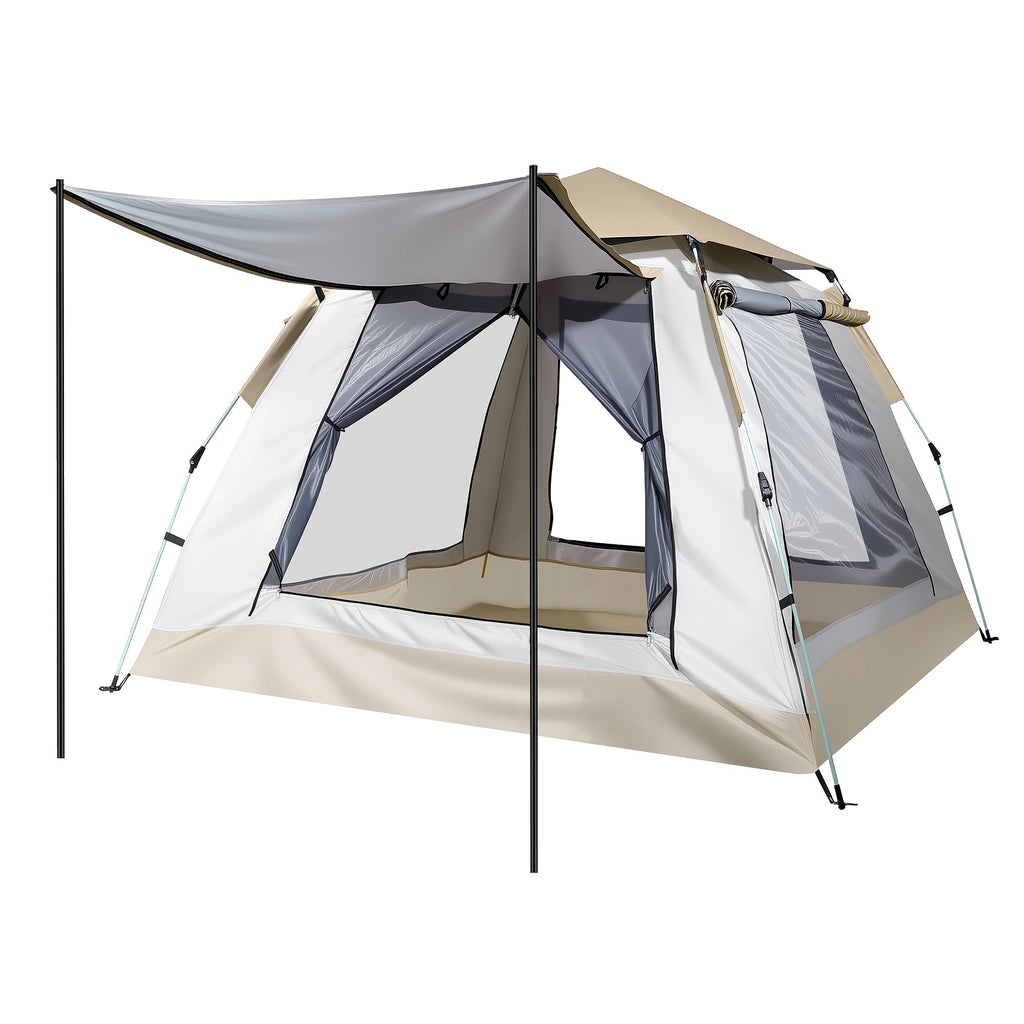
Rock and slickrock: You can't dig and you can't drive. Loop guylines around basketball-size rocks (they're everywhere once you look), or pile rock cairns over your tie-out loops. This is where freestanding tents earn their keep — our Finvizo pop up tent stands on its own structure, so anchors only fight wind, not gravity.
Hard-packed ground and gravel: Swap wire stakes for 8-10 inch screw-in stakes driven with a cordless drill or a rock, and back them up with one weight bag per leg on the windward side. Redundant systems are the whole point.

Rigging Tips That Actually Hold
- Attach weights at frame joints, never fabric. Hanging 25 lbs from a rain-fly loop will tear the loop. Frame corners and leg hubs are built for load.
- Mind the 45-degree rule. Guylines should leave the anchor at roughly 45 degrees — steeper angles lift anchors out, shallower ones let the tent sway.
- Learn one knot: the taut-line hitch. It slides to tension and locks under load. Fifteen minutes of practice pays off every single trip.
- Re-check after two hours. Sand settles, water weights weep, and knots relax. A 60-second walk-around at hour two catches what the first setup missed.
- Weight the windward side first. If you only have two heavy bags, they go on the corners facing the weather, where uplift is strongest.
Setting up right the first time matters more than any single piece of gear — my full walkthrough of a storm-proof pitch is in the guide to setting up a pop up tent in windy conditions, and if you're still shopping for the tent itself, my hands-on Finvizo camping tent review covers how our frames hold up after a season of real weather.

FAQ
How much weight do you need to hold down a tent?
For a pop-up canopy or family tent, plan on 10-20 lbs per leg in calm conditions and 30-40 lbs per leg when gusts exceed 25 mph. Lightweight backpacking tents need far less — 5-10 lbs per corner — because their low profile catches less wind.
Can I use a tent without stakes?
Yes, if it's freestanding and you substitute ballast. Hang sandbags or water weights (about 8.3 lbs per gallon) from the frame joints, or tie guylines to rocks, logs, or buried deadman anchors. Non-freestanding tents still need something in the ground to hold their shape.
What can I use instead of tent stakes?
Fillable sandbags, water containers, steel weight plates, buried stuff sacks (deadman anchors), and natural anchors like boulders or logs all work. On sand and snow, a deadman buried 12 inches deep outperforms any surface stake.
Are water weights good for tents?
They're excellent for car camping and festivals: cheap, easy to fill, and you empty them before the drive home. A 2.5-gallon container gives about 21 lbs per leg. Just don't let them freeze, and hang them from the frame — not the fabric.
How do you secure a tent on sand?
Bury deadman anchors 12 inches deep at a 45-degree line angle, hang 20-30 lbs of sandbags from windward frame joints, and keep sidewalls off in strong gusts. Standard wire stakes in dry sand hold less than 10 lbs of pull-out force, so treat them as decoration, not security.

Written by Vivian J
Product Manager at Finvizo and an avid camper who tests gear on real trails. She writes from hands-on field experience to help you pick equipment that actually holds up outdoors.