Tent Footprints: What They Do & Whether You Need One
Tent Footprints: What They Do & Whether You Need One
TL;DR: A tent footprint is a protective groundsheet that sits under your tent floor, shielding it from abrasion, punctures and ground moisture. It's cut 1–2 inches smaller than the tent floor on every side so rain can't pool between the layers. If you camp on anything rougher than a lawn, yes — you want one.
The first tent I ever destroyed didn't die from wind or a broken pole — the floor wore through from the inside out after a season of gravel pads and pine needles. A $20 footprint would have saved a $150 tent. If you're still dialing in tent sizes, our tent size guide for families pairs well with this one; here I'll answer the footprint question completely: what it does, when it matters, and how to get the sizing right.
What a Tent Footprint Actually Does
A footprint is a sacrificial layer between the ground and your tent. Three jobs:
- Abrasion protection. Every time you shift in your sleep, your tent floor grinds against grit underneath — thousands of micro-rubs per night. The footprint takes that wear instead of your floor's waterproof coating.
- Puncture insurance. Sharp gravel, pine cones, mesquite thorns. A hole in a $15 footprint is annoying; a hole in your tent floor means a wet sleeping pad at 2 a.m.
- Moisture buffer. Ground stays damp long after rain stops. The footprint keeps that moisture (and mud) off your floor, which means your tent goes back in the bag cleaner and dries faster at home.
What it does not do: add meaningful warmth, or fix a tent with a failed floor coating. It's prevention, not repair.
The Sizing Rule Everyone Gets Wrong
The single most important footprint fact: it must be smaller than your tent floor — about 1–2 inches in from every edge.
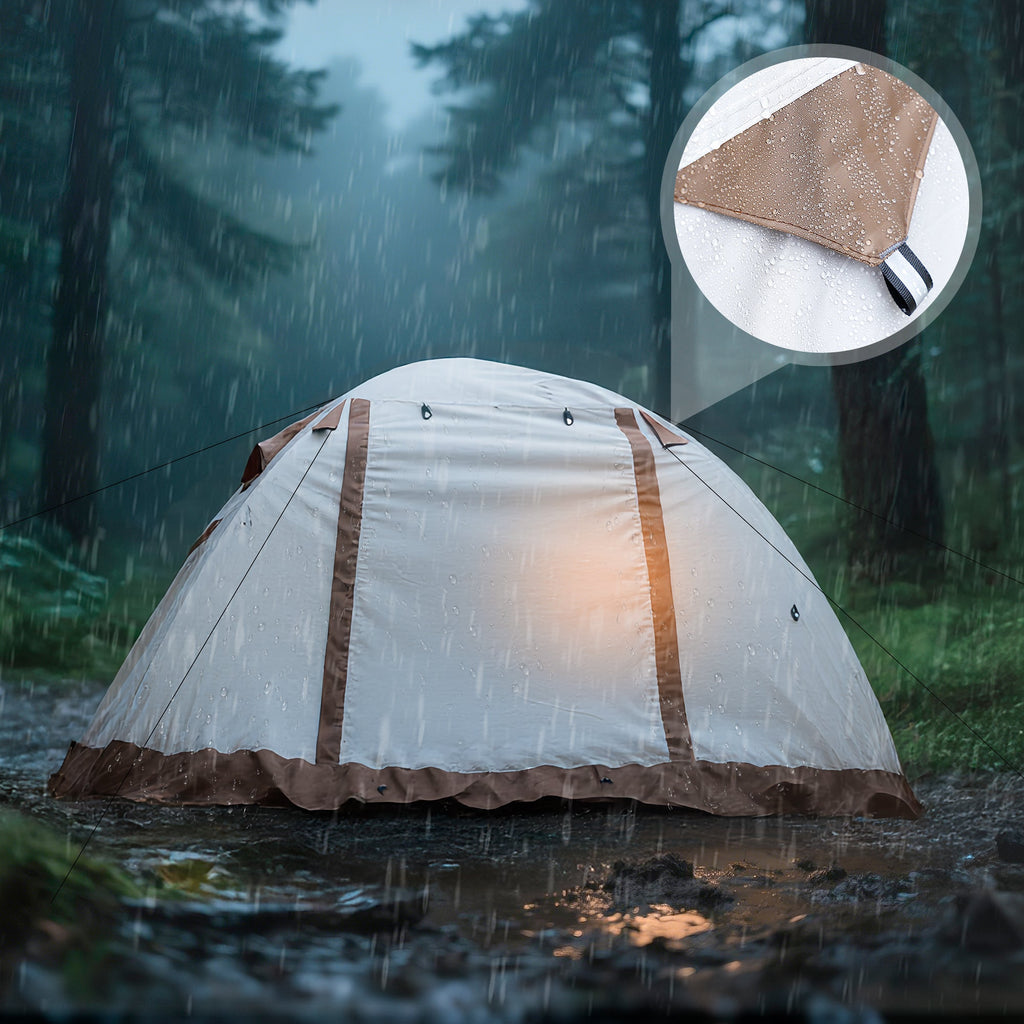
Here's why. If the footprint sticks out past the tent walls, rain runs off the rainfly, lands on the exposed footprint edge, and channels directly underneath your tent. You've built a water-collection system aimed at your sleeping bag. I watched exactly this happen to a neighboring campsite in a Texas thunderstorm — their oversized blue tarp turned the tent pad into a shallow pool by midnight. A footprint manages ground water, but your rainfly still needs its own prep — here is how to waterproof a tent before a camping trip.
Tucked 1–2 inches under the tent on all sides, the footprint stays dry, still covers the high-wear zone where your body weight grinds the floor, and stays invisible to rain.
Material Choices: OEM, Tyvek, or DIY
| Option | Weight (2P size) | Cost | Trade-off |
|---|---|---|---|
| Manufacturer footprint | 5–8 oz | $30–60 | Perfect fit, grommets match poles; priciest |
| Tyvek sheet | ~4–6 oz | $10–15 | Tough and cheap; crinkly, needs trimming |
| Polycro / window film | ~2 oz | $8–12 | Ultralight favorite; tears easier, replace yearly |
| Hardware-store tarp | 12+ oz | $8 | Bulletproof but heavy and bulky; trim it undersized |
For car camping, weight barely matters — a 210D oxford or tarp footprint is fine. For backpacking, every ounce counts: my Finvizo 2-person backpacking tent pairs with a 2-oz polycro sheet that disappears in the pack, and I treat it as a consumable — one season, maybe two, then a fresh $10 sheet.
One trimming tip from painful experience: lay the tent out fully staked first, trace 2 inches inside the perimeter with a chalk line, and only then cut. I once trimmed a Tyvek sheet against the tent's listed dimensions instead of the real footprint — the spec sheet was off by nearly 3 inches, and I spent a rainy weekend in Oregon with a groundsheet edge peeking out exactly where the dripline landed. Measure the actual tent, never the box.

When You Can Safely Skip It
Footprints aren't law. I leave mine home when:
- Camping on established tent pads or soft forest duff — a few trips a year on gentle ground won't kill a floor.
- Beach camping on clean sand — sand is abrasive but not pokey; I still bring one for the moisture barrier, but it's optional.
- Every ounce matters on a short fair-weather overnighter — site selection (flat, swept, debris-free) substitutes for the footprint.
Everywhere else — gravel pads, desert, dispersed sites, festival campgrounds, anywhere with kids and dogs churning the floor — bring it. Replacing a footprint is a rounding error compared to replacing a tent.
Setup Tips That Make It Actually Work
- Clear the site first. Thirty seconds of sweeping sticks and stones aside does more than any fabric layer.
- Footprint down, tent up, then check edges. After staking, walk the perimeter and tuck any visible footprint edge under the tent.
- Don't store it attached. Shake it out, dry it separately, and pack it in an outer pocket — a damp footprint folded against your floor breeds mildew and hydrolyzes the coating.
- Pair it with floor care. A footprint extends floor life, but the coating still ages — our guide to restoring water repellency on an older tent covers the maintenance side.
FAQ
Do I really need a footprint for my tent?
Need? No. Worth it? Almost always. A $10–60 footprint protects a $150–400 tent floor from abrasion, punctures and moisture — the three things that actually kill tents. On rough ground it's the cheapest insurance in camping.
Should a tent footprint be smaller than the tent?
Yes — cut it 1–2 inches smaller than the tent floor on every side. Any edge sticking out past the walls catches rain and funnels water underneath your tent.
What can I use instead of a tent footprint?
Tyvek house wrap (~$10–15, tough), polycro window insulation film (~2 oz, ultralight), or a trimmed hardware-store tarp for car camping. All work if cut smaller than the tent floor.
Does the footprint go inside or outside the tent?
Outside, underneath the tent floor. A ground layer inside the tent traps moisture and grit against the floor and defeats the purpose.
How long does a tent footprint last?
OEM and Tyvek footprints typically last 3–5 seasons of regular use; ultralight polycro is a 1–2 season consumable. Replace it when you see pinholes or thin spots — that's the footprint doing its job.
Building out your full shelter setup? Browse the Finvizo tent collection for instant pop-up and backpacking options that pair well with the footprint strategies above.

Written by Vivian J
Product Manager at Finvizo and an avid camper who tests gear on real trails. She writes from hands-on field experience to help you pick equipment that actually holds up outdoors.