Restoring Water Repellency on Your Old Tent
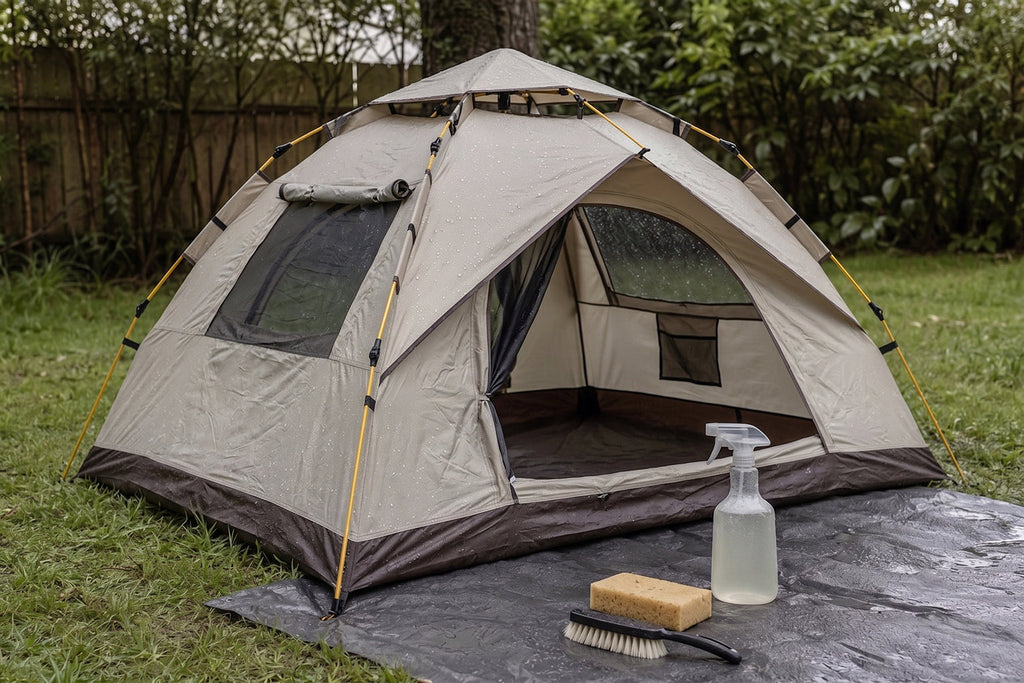
This restore water repellency old tent guide walks you through the full process. The restore water repellency old tent process costs far less than buying new—and one careful weekend can add years to a shelter you trust.
Why Restoring Your Tent's Water Repellency Matters
Every tent ships with a DWR (durable water repellent) finish that makes rain bead and roll off. UV, dirt, and abrasion wear it down until the fly soaks through instead of shedding water.
Once the fabric "wets out," condensation builds inside, the material gets heavy, and mildew follows. Restoring the coating reverses all three.
How to Tell Your Tent's Waterproof Coating Is Failing
Splash water on the rainfly: if droplets spread and darken the fabric instead of beading, the DWR is gone. Also check for sticky, flaking PU coating and damp seams.
What You'll Need to Re-Waterproof an Old Tent
- A gentle tech wash made for technical fabrics—not household detergent
- A spray-on DWR treatment compatible with your tent's fabric
- Seam sealer matched to your coating (silicone and PU fabrics need different formulas)
- A soft brush, a sponge, and a ventilated drying space
- Optional: a tent recoater for peeling PU on the floor and fly interior
Step-by-Step: How to Restore Water Repellency on Your Old Tent
Per REI's guide to waterproofing a tent, full waterproofing means sealing seams, refreshing the urethane coating, and refreshing the DWR.
Step 1 — Set Up the Tent and Inspect for Damage
Pitch the tent in daylight and mark every hole, sticky zipper, and peeling seam tape. Repair damage first; waterproofing over a tear wastes product.
Step 2 — Deep Clean the Fabric Gently
Hand-wash in cold water with tech wash, or sponge-scrub dirty panels. Never machine wash or tumble dry—agitation tears coatings and seam tape.
Step 3 — Repair Seams and Recoat Peeling PU Areas
Brush away flaking PU, then run seam sealer along every needle-hole line on fly and floor: silicone sealant for silnylon, urethane-based sealer for PU-coated fabric.
Step 4 — Apply DWR Spray to the Rainfly
While the fabric is still damp, spray DWR evenly over the fly, with a second pass on seams and high-wear zones. Work in a ventilated space and wear a mask.

Step 5 — Let It Cure Completely Before Packing
Hang the tent in a shaded, airy spot for 12–24 hours; packing damp fabric invites mildew and ruins the new coating.
Step 6 — Test with the Hose or Shower Test
Spray the fly with a garden hose. Water should bead and roll off; any panel that still wets out gets a second light coat and another full cure.
Pro Tips for Longer-Lasting Tent Waterproofing
- Dry your tent fully before storage, even after a dew-only night.
- Use a footprint to shield the floor from abrasion and ground moisture.
- Some DWR finishes reactivate with low heat—only if the manufacturer allows it.
- Air your tent after every trip; don't store it stuffed.
- Limit UV exposure: Nikwax's official tent care guide notes that just two weeks of UV can cut fabric tear strength by up to 50%.

Common Mistakes to Avoid When Re-Waterproofing a Tent
- Machine washing or drying, which shreds coatings and seam tape
- Using regular detergent, which leaves water-attracting residues
- Spraying DWR onto dirty fabric—the treatment bonds to grime, not fibers
- Packing before the new coating has fully cured
- Treating mildewed fabric without cleaning it first
- Forgetting the underside of the floor, where ground moisture attacks
How Often Should You Restore Tent Water Repellency? (Frequency Table)
Match maintenance to how hard you use your gear:
| Usage Level | Cleaning Frequency | DWR Reapplication | Seam Seal Check |
| Occasional weekend camper (1–5 nights/year) | Once per season | Every 1–2 years | Annually |
| Regular camper (5–10 nights/season) | After every 2–3 trips | Every season | Twice per season |
| Heavy backpacker (15+ nights/season) | After every trip | Every season, or when beading fails | Before every major trip |
Repair vs. Replace: When to Restore and When to Buy a New Tent
Restore when the fabric is sound and damage is limited to coatings and seams. Widespread PU delamination, multiple tears, or broken poles usually cost more to fix than the tent is worth.
If your tent fails that math, a Finvizo lightweight 2-person backpacking tent delivers a fresh factory DWR coating and taped seams at a trail-friendly weight. For family trips, consider a 2–4 person pop-up tent, or browse the full Finvizo tent collection.

FAQ: Restoring Water Repellency on Old Tents
Can I use a washing machine to clean my tent before re-waterproofing?
No. Machine agitation can rip coatings and seam tape. Hand-wash in a tub with tech wash, or sponge-scrub and rinse thoroughly.
What's the difference between DWR spray and seam sealer?
DWR spray restores the surface's ability to bead water; seam sealer plugs needle holes along stitched seams. You need both.
How long does a DWR treatment last?
Typically one to two camping seasons. Occasional campers can reproof yearly; heavy backpackers should reapply when rain stops beading on the fly.
My tent's inner coating is sticky and flaking — can it be saved?
Small areas can be scraped clean and recoated with a PU recoater. If flaking covers most of the fly, replacement is smarter—see Repair vs. Replace above.
Keep the Rain Out — Restore It or Replace It
Most old tents deserve one thorough restoration: a gentle wash, fresh seam sealer, and a new DWR coat can buy several more dry seasons.
When it's past saving, browse the full Finvizo tent collection. Once your tent sheds water again, make sure it's ready for cold-weather trips with our winter camping checklist.
Related Guides
- Shop the Finvizo Tent Collection
- Lightweight 2-Person Backpacking Tent
- Winter Camping Checklist: Cold-Weather Gear Guide
- 2–4 Person Pop-Up Camping Tent

Written by Vivian J
Product Manager at Finvizo and an avid camper who tests gear on real trails. She writes from hands-on field experience to help you pick equipment that actually holds up outdoors.