How to Choose the Right Tent Size for Your Family
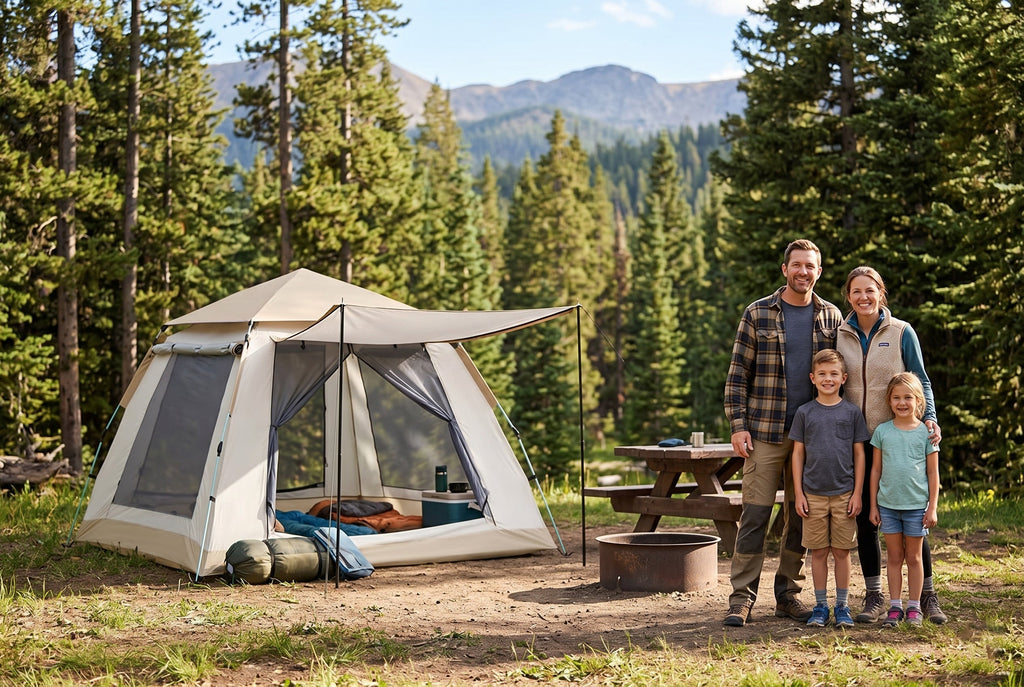
Choosing the right family tent means adding two extra spaces for gear and comfort beyond your group size to avoid cramped trips.
Why Choosing the Right Tent Size Matters
A family tent too small breeds frustration, grumpy kids, and sleepless nights. When everyone's elbow-to-elbow, gear piles outside, and camping feels like survival instead of fun. The wrong size can ruin a family trip.
And once the tent actually fits everyone, keep the evenings comfortable with these natural ways to keep bugs away while camping .
A properly sized shelter gives breathing room and dry storage. Many campers look for family camping tents with porch for added outdoor living space — that extra area makes a real difference when planning camping tent space . See REI's expert advice on what to look for in a family camping tent.
What You'll Need to Consider: Family Tent Capacity Guide for Camping
Here's the rule of family camping tent factors : manufacturer ratings assume zero room for gear. A "4-person" tent fits four pads edge to edge — nothing more.
Your tent capacity guide uses four variables: headcount, gear volume, weather, and living vs. sleeping needs. Nail these, and you'll never buy the wrong size.
Step-by-Step: How to Choose the Perfect Family Tent Size
Step 1: Count Your Campers and Gear
The golden rule for tent capacity per person : add 2 to your group size. Family of 4 = 6-person tent minimum. Family of 5 = 7- to 8-person. This accounts for camping gear space that manufacturers ignore.
- Count every human, including infants with gear
- Add pets (large dog = ~1 person)
- Estimate gear: backpacks, cooler, chairs, toys
- Consider a vestibule for boots and wet jackets
Step 2: Factor in Sleeping Arrangements
Your family sleeping arrangements camping plan changes space needs. Pads take minimal room. Air mattresses and cots need much more.
- Single sleeping pad: ~20 inches wide per person
- Twin air mattress: 38 inches — takes 2 people's space
- Queen air mattress: 60 inches — needs 3+ rated spaces
- Camping cot: ~25–30 inches, needs headroom
Step 3: Consider Season and Weather Conditions
Weather affects interior space needs. A 3 season family tent works for most, but rain camping family trips demand extra room. When storms trap everyone inside, that space becomes your living room. Plan for the worst conditions you might face.
Step 4: Account for Living Space vs. Sleeping Space
Think in zones, not just square footage. You need sleeping area plus tent living space for changing and gear storage. A tent vestibule adds a covered transition zone that keeps dirt and rain out.
Browse the Finvizo Tent Collection — from compact 2-person backpacking models to spacious family shelters for real-world comfort.
Step 5: Check Campsite Size Restrictions
Before buying that massive cabin tent, check campsite tent size limits . Many campgrounds restrict tent footprint size to specific pad dimensions. Your shelter needs to fit the designated area.
- Check campground websites for maximum tent dimensions
- Measure vehicle space if packing a large tent
- Consider setup complexity — big tents need more hands
- Verify packed weight if carrying any distance
Pro Tips for Family Tent Camping
These family camping tent tips and camping tent hacks transform chaos into comfort:
- Bring a small entrance rug — traps dirt
- Use hanging organizers on tent poles
- Designate a "gear corner" for equipment
- Practice pitching at home first
- Bring a battery-powered fan for summer
- Color-code each person's sleeping area
For packing strategies, see how to pack a hiking backpack.
Common Mistakes to Avoid: Family Tent Buying Mistakes & Buyer Regret
Avoid these family tent buying mistakes :
- Buying exactly rated capacity — always size up by 2
- Ignoring packed weight — large tents are heavy
- Forgetting peak height — families need 60"+ to stand
- Not considering setup time — large tents take 20+ min
- Buying without checking return policies
Want faster setup? See our best instant tents for quick camp setup. For real-world testing, check CleverHiker's hands-on family tent review.
.
Find Your Perfect Family Tent
You now have a clear method to choose tent size family trips demand: count campers plus two, factor in sleeping arrangements, consider weather, plan for living space, and check campsite restrictions. Follow these steps and you'll never end up cramped again.
Ready to find your family's shelter? Explore the Finvizo Tent Collection — built for real families who need space, weather protection, and comfort.
Numeric Facts About Tent Sizes and Gear Space
| Guideline | Recommendation | Source |
|---|---|---|
| Minimum recommended tent size | Add 2 to camper count for gear and comfort | Expert camping guidelines, field experience |
| Single sleeping pad width | ~20 inches per person | Standard camping gear dimensions |
| Twin air mattress width | 38 inches (fits 2 people width-wise) | Manufacturer specs |
| Queen air mattress width | 60 inches (fits 3+ people width-wise) | Manufacturer specs |
| Tent peak height for comfort | 60 inches or more recommended | Camping comfort standards |
| Vestibule/porch benefit | Adds dry gear storage and living space | Camping experts and user feedback |
| Instant Pop Up Tent | Setup time: 60 seconds (2/4 person model) | Finvizo product page, verified 2026-09-16 |
| Instant Cabin Tent | Setup time: about 2 minutes (3-8 person model) | Finvizo product page, verified 2026-09-16 |
Data verified on 2026-09-16. Source: Finvizo official product specifications and camping expert advice.
For more context, see Camping Gear Outdoor Suitability Guide and Stay Cool Camping Texas Summer.
.
FAQ: Choosing the Right Tent Size for Your Family
Choosing the Right Tent Size for Your Family
What size tent do I need for a family of 4?
A family of 4 needs a 6-person tent minimum. The "add 2" rule gives space for gear and a living area. With lots of gear or a dog, go 8-person.
Is a 6-person tent big enough for a family of 5?
A 6-person tent fits a family of 5 in a pinch, but it'll be tight. For regular family camping comfort, an 8-person tent is the better call.
Should I get a bigger tent than I think I need?
Almost always yes. Manufacturers rate tents for maximum sleeping capacity with no extra space. Sizing up gives room for gear, weather contingencies, and livability. Trade-offs are weight and setup time.
Does tent peak height matter for family camping?
Absolutely. A peak height of 60 inches or more lets adults stand upright. For families with kids, higher peaks feel less claustrophobic.
Can pets affect the tent size I need?
Yes. Large dogs require roughly the equivalent space of one extra camper. Add this to your total count when choosing tent size to ensure comfort for all.
How does weather influence tent size choice?
Inclement weather, especially rain and wind, means you’ll spend more time inside the tent. Extra space is needed for comfort and gear storage during storms, so plan for a larger tent in wet conditions.
Related reading
- 10 Best Family Camping Picks 2026
- How to Choose the Right Tents for Your Needs?
- What Is a Tent Footprint? Do You Need One?

Product Manager at Finvizo and an avid camper who tests gear on real trails. She writes from hands-on field experience to help you pick equipment that actually holds up outdoors.