Leave No Trace Principles for Responsible Campers
TL;DR: Leave No Trace is seven principles with one goal: enjoy wild places without degrading them. The numbers that matter most — camp and wash 200 feet from water, dig catholes 6-8 inches deep, and respect fire (about 84% of wildfires are human-caused). With over 170 million Americans camping and hiking each year, small habits add up fast.
Leave No Trace Principles for Responsible Campers
If you love wild places, learning the leave no trace principles responsible campers follow is the single most important skill you can build. These seven guidelines help you enjoy nature without degrading it for the next visitor.
Outdoor recreation keeps growing—over 170 million Americans now camp or hike each year. Practicing leave no trace principles responsible outdoor ethics protects trails, water, and wildlife for decades to come.
What Is Leave No Trace?
Leave No Trace is a framework of outdoor ethics developed in the 1990s by the Leave No Trace Center for Outdoor Ethics, working with the U.S. Forest Service. It turns responsible camping into simple, teachable habits.
The idea is simple: leave every campsite, trail, and stream as you found it—or better. Read the official guidelines at the Leave No Trace Center's 7 Principles page.
How the 7 Leave No Trace Principles Work
The 7 leave no trace principles below cover every stage of your trip. Master each one and you'll camp responsibly anywhere.
1. Plan Ahead and Prepare
Planning ahead prevents most problems before they start. Check regulations, weather, and group limits. Repackage food to cut trash and avoid peak-use weekends.
2. Travel and Camp on Durable Surfaces
Durable surfaces include trails, rock, gravel, sand, and dry grass. Camp 200 feet from lakes and streams, using existing sites instead of trampling new vegetation.
3. Dispose of Waste Properly
Pack it in, pack it out—every wrapper, peel, and scrap. Dig catholes 6–8 inches deep, 200 feet from water, and strain dishwater before scattering it.
4. Leave What You Find
Take photos, not souvenirs. Leaving rocks, plants, and artifacts in place preserves the experience for visitors after you. Never build structures, dig trenches, or carve trees.
5. Minimize Campfire Impacts
Use a camp stove instead of a fire. Where fires are allowed, keep them small in existing rings, burn wood to ash, and scatter cool ashes. About 84% of wildfires are human-caused.
6. Respect Wildlife
Observe wildlife from a distance and never feed animals. Fed wildlife loses its natural fear, leading to conflicts that end badly for the animal. Store food securely in bear country.
7. Be Considerate of Other Visitors
Yield to uphill hikers, keep voices and music low, and camp away from trails. Courtesy preserves everyone's experience—including yours.
Leave No Trace by the Numbers
Numbers make the impact real. Here are the figures every responsible camper should know before setting up a tent.

- 200 feet — the minimum distance you should camp and wash from any water source (about 70 big steps).
- 2 years — how long an orange peel or banana skin can take to decompose in the wild.
- 80–100 years — the decomposition time of a single aluminum can left in the forest.
- 450 years — how long a plastic bottle persists outdoors, breaking into microplastics.
- 6–8 inches — the proper cathole depth for human waste, dug 200 feet from water.
- 100 million+ — annual U.S. national forest visitors, multiplying every small impact.
Those numbers are why "it's just one wrapper" thinking fails: one wrapper times 100 million visitors is a landfill on public land.
Common Myths
Myth 1: "Food scraps are natural, so they're fine to leave."
Orange peels and apple cores aren't natural in most ecosystems. They take up to 2 years to rot, attract wildlife to campsites, and teach animals to beg. Pack every scrap out.
Myth 2: "One person can't make a difference."
With over 100 million forest visitors each year, individual choices scale instantly. Your example also influences the campers around you—good and bad habits both spread.
Myth 3: "Burning trash is a responsible shortcut."
Campfire burning of plastic or foil releases toxic fumes and leaves half-melted residue in fire rings. It's not disposal—it's pollution. Carry it out instead.
Myth 4: "Established campsites don't need care."
Even hardened sites erode and collect micro-trash. Inspect your site before leaving and pick up anything that doesn't belong.
Practical Tips
You don't need special training for sustainable camping. Start with these habits on your next trip.
- Bring one extra trash bag and do a 60-second micro-trash sweep before leaving any site.
- Use a camp stove; skip the fire when conditions are dry or firewood is scarce.
- Repackage snacks into reusable containers at home to eliminate trail wrappers.
- Keep a 200-foot buffer from water for camping and washing.
- Review the 7 principles with your group before departure.
How to Choose Leave-No-Trace-Friendly Gear
The right gear makes responsible camping easier. Look for durable, repairable equipment—longevity itself is a leave-no-trace value.

A pack with organized compartments, like the Finvizo 50L camping backpack, lets you dedicate space for sealed trash bags so packing out waste stays clean and simple.
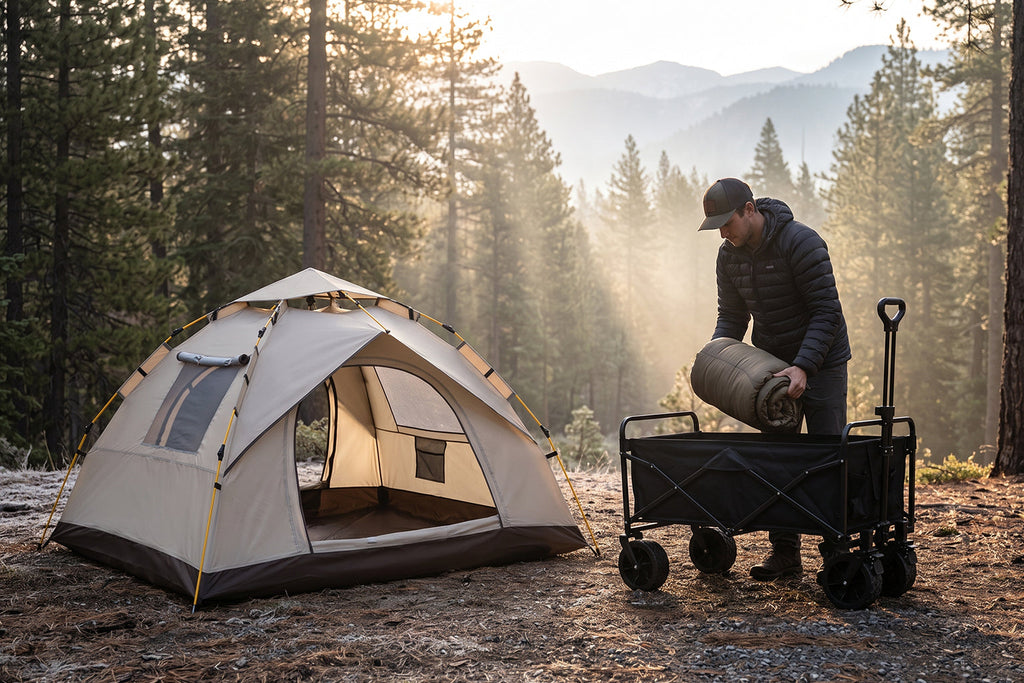
For family car camping, a sturdy tent from the Finvizo tent collection and a folding camping cart help you haul everything—including your trash—in and out without dragging gear across fragile ground.

FAQ
Do Leave No Trace principles apply to car camping?
Yes. The 7 principles apply everywhere, from backcountry to campgrounds. Camp on durable surfaces and dispose of waste properly regardless of how you arrived.
What is the most commonly broken principle?
Improper waste disposal is the top offender. Even biodegradable food scraps harm wildlife habits and take months or years to decompose. The fix is simple: pack out everything you pack in.
How far from water should you camp?
Camp at least 200 feet (about 70 adult steps) from lakes, rivers, and streams. This buffer protects shorelines, keeps soap and waste out of the water, and leaves access routes clear for wildlife.
CTA: Camp Responsibly with Finvizo
Responsible camping starts before you leave home—with gear built to last and habits that protect the places you love.
Discover Finvizo's story and shop sustainable camping gear →
Browse the full range in our all products collection and gear up for your lowest-impact trip yet.
Related Guides

Written by Vivian J
Product Manager at Finvizo and an avid camper who tests gear on real trails. She writes from hands-on field experience to help you pick equipment that actually holds up outdoors.