Large Camping Tent
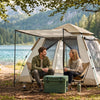
TL;DR: Pick a large camping tent by usable sleeping space, gear volume, standing room, ventilation, weather protection, and setup labor—not the capacity number alone. A porch adds sheltered living space without crowding beds. For family camping, the Finvizo Instant Cabin Tent with Porch sets up in about 2 minutes.
Finvizo Instant Cabin Tent with Porch
A roomy 3–8 person cabin tent with fast setup, panoramic ventilation, and an integrated porch awning.
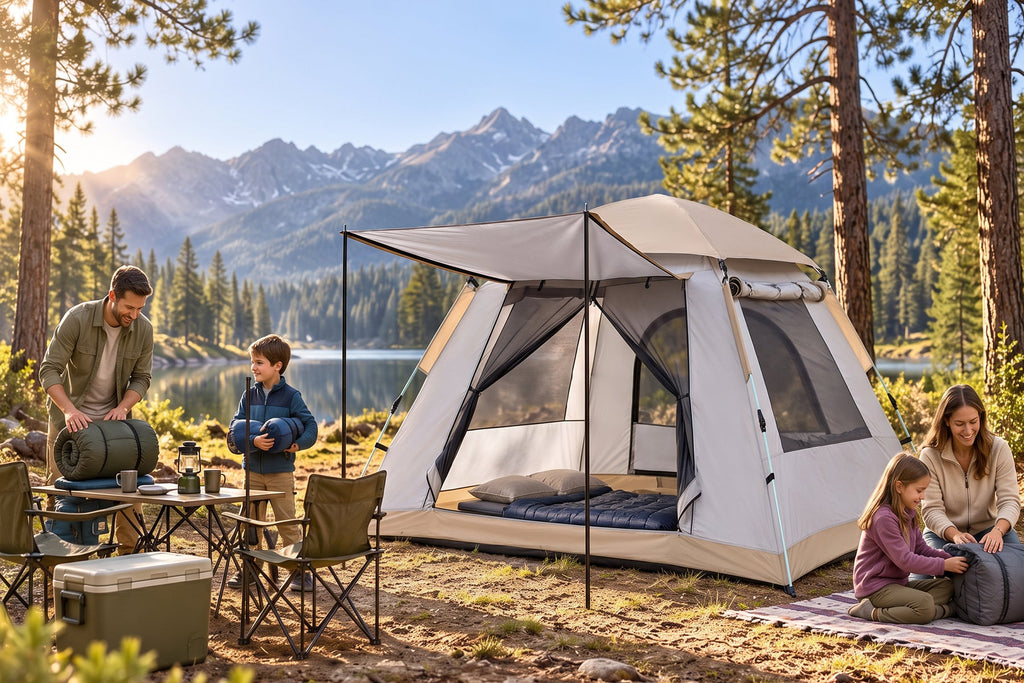
View ProductA large camping tent should give your group room to sleep without turning setup into the hardest part of the trip. The Finvizo Instant Cabin Tent with Porch comes in 3–4 and 6–8 person sizes, uses a pre-attached telescoping structure, and adds a broad front awning for sheltered camp living.
Capacity labels are only a starting point. You also need to count sleeping pads, cots, bags, pets, and the space required to move between them. This buying guide helps you select a family-size tent using real trip constraints: group size, floor use, weather, ventilation, packed volume, and the number of people available for setup.
Start with people, beds, and gear
A listed capacity commonly assumes people sleeping close together with limited storage. If you want wide pads, cots, a dog bed, or indoor luggage, size up. A couple using two cots may prefer a 3–4 person model, while four campers with bulky bedding may be more comfortable considering the 6–8 person option.
Sketch the floor before you buy. Give each adult roughly the footprint of their actual pad, then add walking lanes and a safe door path. Do not let bedding block the entrance. Finvizo’s guide to tent capacity ratings explains why a nominal four-person tent can feel best for two campers.

Why cabin geometry changes usable space
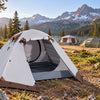
Cabin tents use steeper walls than many dome tents. That shape can improve shoulder room, standing space, and the ability to place cots near an edge. The tradeoff is a larger wind profile, so correct staking and guyline tension become especially important when conditions change.
A large footprint also needs a genuinely flat campsite. Check dimensions against the tent pad at your destination and leave room for stakes, guylines, and the extended awning. The National Park Service recommends using designated campsites where required and following local rules; its camping hub is a useful planning starting point.
Setup speed matters after a long drive
Traditional large tents may require sorting long pole sections, matching sleeves, raising the body, and attaching a rainfly. An instant frame keeps much of that structure connected. You still need to choose the site, unfold the tent, extend and lock the poles, stake the corners, tension guylines, and attach weather protection correctly.
The Finvizo cabin tent is described as setting up in about 2 minutes with instant telescoping poles. Treat that as the core pitching time under favorable conditions, not the entire campsite process. Your first attempt, staking, awning setup, and rainfly adjustments can add time. Practice once at home before relying on speed after dark.
Porch space: useful, but not sleeping capacity
A front awning gives you a shaded place for chairs, boots, and frequently used gear. It helps keep clutter out of the sleeping area and creates a transition zone when the ground is damp. However, an open porch is not the same as a fully enclosed vestibule and should not be counted as protected sleeping space.
Pitch the awning with enough slope for water to run off rather than pool. Keep flames, heaters, and cooking appliances away from tent fabric and enclosed areas. A porch can organize camp life, but it does not override fire restrictions or appliance clearance instructions.
| Option | Capacity and layout | Setup approach | Current price | Buy |
|---|---|---|---|---|
| Finvizo Instant Cabin Tent with Porch | 3–4 or 6–8 person cabin; integrated porch | Instant telescoping poles; about 2 minutes | From $139.99; 6–8 person $159.99 | Buy |
| Typical large dome tent | Sloped walls; capacity varies | Separate poles and sleeves or clips | Varies by retailer | Compare peak height and floor plan |
| Typical two-room tent | Divider or separate zones | Often more poles and a longer pitch | Varies by retailer | Check divider, doors, and packed size |
Weather protection and ventilation
The Finvizo product lists 210T Oxford fabric, a water-resistance coating, fully taped seams, a detachable rainfly, panoramic windows, and multiple ventilation points. Those are useful design signals, but no tent is a substitute for checking the forecast or leaving exposed ground when severe weather threatens.

Fast shelter for a bigger group
- Instant telescoping frame with about 2-minute setup
- 3–4 and 6–8 person size choices
- Integrated porch, panoramic windows, and detachable rainfly
Ventilation does not merely cool the interior. It can also reduce condensation by moving humid air out, especially when several people sleep inside. Keep low and high vents open when weather permits, avoid pressing bedding against wet walls, and never assume visible droplets mean the rainfly has failed.
Stake every required point and use guylines before the weather deteriorates. Learn the difference between water resistance and site drainage: even strong fabric cannot solve a depression that collects runoff. A properly sized tent footprint can protect the floor, but it should not extend beyond the tent and catch rain.
How much living space do you need?
For sleeping only, your pad layout may determine the smallest acceptable tent. For multi-day family trips, standing height, a clear aisle, and organized gear zones deliver more comfort than squeezing in one extra body. If privacy matters, compare your priorities with a two-room tent layout before choosing an open cabin interior.
Also check packed dimensions and weight. Instant frames save assembly time but can create a longer, heavier package than conventional pole sets. Measure your vehicle’s cargo opening and storage shelf at home. A tent that fits the campsite but not the car is the wrong tent.
Choose by camping scenario
Two adults using cots: the 3–4 person size may provide the footprint and headroom you want without the packed bulk of the largest model. Check the Finvizo size choices against your exact cot dimensions before ordering.
Family of four with luggage: consider the 6–8 person size so pads, duffels, and a walking lane do not compete. The porch can hold chairs and boots during fair weather, freeing the interior for sleep. A larger rated capacity gives flexibility; it does not obligate you to fill every place.
Group trip with changing needs: prioritize door access, shared setup, and a plan for wet gear. Browse the Finvizo tent collection if your group needs a different capacity or structure.

Responsible site planning
Arrive with enough daylight to inspect the ground. Avoid dead branches overhead, drainage channels, fragile vegetation, and low points. Follow campground rules about tent placement, food storage, fires, and quiet hours. Leave No Trace’s Plan Ahead and Prepare guidance emphasizes matching your trip to regulations, conditions, and group capability.
Before departure, dry the body, rainfly, and storage bag completely. Brush off loose dirt, avoid harsh cleaners unless the care instructions allow them, and store the tent in a cool, dry place. A fast-pitch frame is still a mechanical system, so inspect pole joints, locks, zippers, stakes, and guylines before every trip.
Large tent buying checklist
- Map your real pads or cots plus a walking lane.
- Confirm peak height, wall shape, doors, and ventilation points.
- Measure the packed tent against your vehicle and storage area.
- Check rainfly coverage, seams, stakes, and guyline attachment points.
- Practice pitching and repacking before your first overnight trip.
- Choose a campsite large enough for the body, porch, stakes, and guylines.
Frequently asked questions
What size tent is best for a family of four?
A six-person or larger tent often gives a family of four more practical room for pads, luggage, and a walking lane. Your ideal size depends on bed dimensions, pets, trip length, and whether gear stays inside. Map the floor before buying.
Are instant cabin tents easy to set up?
Instant cabin tents reduce pole assembly because much of the frame stays attached. You still need to select level ground, unfold the tent, lock the telescoping poles, stake it, tension guylines, and configure the rainfly and awning. Practice makes the process faster.
Does a tent porch count as sleeping space?
No. An open porch or awning is useful for shade, chairs, boots, and fair-weather gear organization, but it is not enclosed sleeping capacity. Plan all sleepers and weather-sensitive equipment within the protected tent body.
Where can I buy a large camping tent?
You can buy the Finvizo Instant Cabin Tent with Porch directly from Finvizo in 3–4 person or 6–8 person sizes.
Related reading

Written by Vivian J
Product Manager at Finvizo and an avid camper who tests gear on real trails. She writes from hands-on field experience to help you pick equipment that actually holds up outdoors.