Winter Camping Tents: What Actually Keeps You Warm
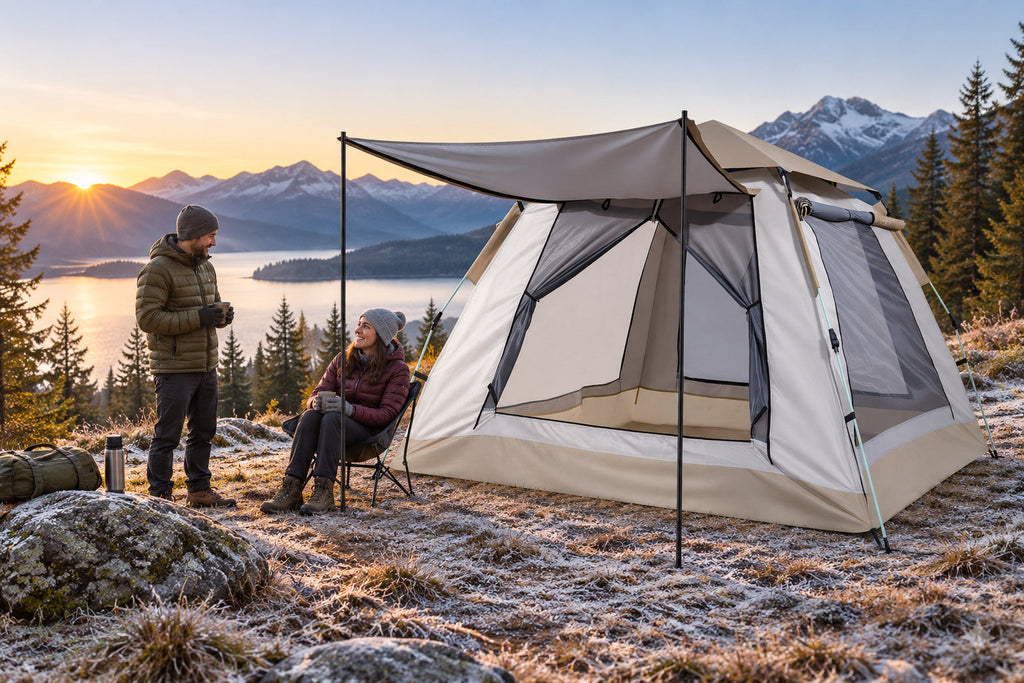
Winter camping tent, winter camping tent: a shelter reduces wind and precipitation exposure, but it does not create meaningful insulation by itself. You stay warm through the combined R-value of your sleeping pad, the temperature-appropriate loft of your sleeping bag, dry clothing, food, hydration, and a tent built for the expected wind and snow load.
For calm, cold shoulder-season car camping, the Finvizo 3–4/6–8 Person Instant Cabin Tent with Porch offers weather coverage and a useful covered entrance. It is a recreational family tent, not a certified four-season mountaineering shelter. That bridge matters: its rainfly, taped seams, and porch can improve camp organization, while your sleep system supplies the insulation.
What to Look for in a Winter Camping Tent
Structure Before Marketing Labels
A true cold weather tent needs geometry and poles appropriate to the forecast. Low profiles, multiple crossing poles, secure guy points, and less unsupported fabric generally manage wind and snow better than tall cabin walls. “Four season” is not a temperature rating. You still need to compare pole architecture, fly coverage, vent placement, stake options, and the manufacturer’s stated use limits.
A three-season tent usually prioritizes airflow and lighter construction for spring through fall. That can work in a dry, calm cold snap at a managed campground, but it is not the same as a shelter engineered for sustained alpine wind or accumulating snow. Check the forecast, campsite rules, road access, and an exit plan before leaving home.
Ventilation and Condensation Control
Your breath adds moisture to the tent overnight. Closing every vent may feel warmer briefly, yet damp walls and wet insulation can reduce comfort. Keep high and low vents open enough for airflow, avoid pressing bedding against the fly, and store wet boots where they cannot soak your sleeping bag. A larger family shelter also needs space between sleepers and walls.
Floor, Fly, Stakes, and Guylines
Choose level ground away from dead branches and low areas where water or cold air settles. Use every relevant guy point, tension the fly without distorting the frame, and match stakes to the soil. A footprint protects the floor from abrasion, but it should not protrude beyond the tent, where it can collect rain and channel water underneath.

Top Picks and Comparison
| Shelter type | Best use | Primary tradeoff |
|---|---|---|
| Three-season dome | Mild spring, summer, and fall trips | More mesh and lighter structure |
| Instant cabin with porch | Family car camping in managed, moderate conditions | Tall walls and large profile need careful staking |
| Four-season mountaineering tent | Forecast snow and exposed winter wind | Higher cost, weight, and lower ventilation |
Capacity is another practical number. A “four-person” floor may fit four sleeping pads but little gear. For cold-weather car camping, sizing up gives you room to keep lofty bags away from damp walls. Never block the door with bags, and keep an unobstructed route out of the shelter.
Our Pick for Cold Shoulder-Season Family Camping
The Finvizo 3–4/6–8 Person Instant Cabin Tent with Porch is our practical pick when you want quick family setup and covered living space in moderate conditions. Its product page specifies 210T Oxford fabric with a water-resistant coating, fully taped seams, and a detachable rainfly.
The telescoping pole system has a listed setup time of about two minutes, and the integrated porch creates a covered place for selected gear or seating. Those are real conveniences, not winter certification. The Finvizo 3–4/6–8 Person Instant Cabin Tent with Porch should not be used as a substitute for a snow-load-rated four-season shelter when severe conditions are forecast.

Three-Season Tent vs Four-Season Tent
For a 4 season tent vs 3 season comparison, begin with expected load. A three-season model sheds ordinary rain and blocks moderate wind when properly pitched. A four-season design typically adds a stronger, more redundant pole structure, less mesh, better fly coverage, and shapes that reduce snow accumulation. It may also feel stuffier in mild weather.
Do not choose by month alone. A calm 28°F night at a drive-in campground differs from 28°F with 35-mph gusts and blowing snow above tree line. Wind chill affects exposed skin, and storm loads affect shelter structure. If the forecast exceeds the tent’s purpose, change the destination, bring the correct shelter, or postpone.
The Finvizo porch tent fits the first scenario better than the second. Its large windows support ventilation, while the porch lets you keep some wet equipment outside the sleeping zone. Because it has a tall cabin profile, you should use all supplied stakes and guylines and avoid exposed sites when wind is increasing.
What Actually Provides Warmth?
Your sleeping pad slows conductive heat loss to the ground. Compare pads by tested R-value when available; stacking compatible pads can increase total resistance. Your sleeping bag traps warm air in loft, so keep it dry and avoid compressing it beneath your body. Use a bag rating that suits the expected low and your personal cold tolerance.
Dry base layers and a warm hat help you manage moisture. Eat before bed, hydrate, and change out of damp clothing. A hot-water bottle can add temporary warmth if the bottle is leakproof and the water temperature is safe. Never use a stove, charcoal, candle, propane heater, or other combustion device inside a tent because of fire and carbon-monoxide hazards.
Cold safety: Uncontrolled shivering, confusion, slurred speech, fumbling hands, or unusual drowsiness can signal hypothermia. Stop the trip, get the person dry and sheltered, and seek emergency help. Review the National Weather Service’s cold-weather safety guidance and Leave No Trace’s Plan Ahead and Prepare principle.

Who Should Buy What
Choose the Finvizo instant cabin tent if you camp by car, want 3–4 or 6–8 person options, value quick telescoping-pole setup, and expect moderate spring-to-fall or calm shoulder-season weather. Its porch is useful for family routines, and its rainfly and taped seams provide a sensible weather-management package when correctly pitched.
Choose a dedicated four-season shelter if your trip involves exposed terrain, forecast snow accumulation, strong wind, or winter backcountry travel. New winter campers should start near a vehicle or heated building, test their complete sleep system in controlled conditions, and keep conservative turnaround criteria.
FAQ
Does a tent make the inside warmer than outside?
It can reduce wind and retain a small amount of body-warmed air, but it is not insulated like a building. Your pad, bag, and dry layers provide most of your thermal protection.
Can you use a three-season tent in winter?
Only when conditions remain within its design limits. A calm, dry campground trip may be reasonable; accumulating snow, exposed wind, or severe forecasts call for a suitable four-season shelter or a changed plan.
What R-value should a winter sleeping pad have?
There is no universal number for every person and temperature. Use manufacturer-tested data, expected ground conditions, and your own cold tolerance; experienced winter campers often use higher-R pads or safely stack compatible pads.
Can you run a heater in a tent?
Do not use fuel-burning heaters, stoves, charcoal, or open flames inside a tent. Fire and carbon monoxide can be fatal. Follow campground rules and equipment instructions.
Build a Safer Cold-Weather Camp
Match your shelter to the forecast, then invest most of your warmth planning in the pad, bag, and dry layers. For moderate family car camping, view the Finvizo 3–4/6–8 Person Instant Cabin Tent with Porch and confirm the size and conditions fit your trip.
Related reading
- 10 Best Family Camping Picks 2026
- FINVIZO Camping Tent Review
- What Is a Tent Footprint? Do You Need One?

Written by Vivian J
Product Manager at Finvizo and an avid camper who tests gear on real trails. She writes from hands-on field experience to help you pick equipment that actually holds up outdoors.