Cabin Tent vs Dome Tent: Shape Matters More Than Size
TL;DR: Cabin tents give you near-vertical walls, real headroom, and liveable space for families and longer stays — but they catch wind and take longer to pitch. Dome tents shed wind and weather, weigh less, and pitch fast — but you lose headroom at the edges. Car camping with kids or a group? Cabin. Windy sites, quick weekends, or any trip where you carry the tent? Dome.
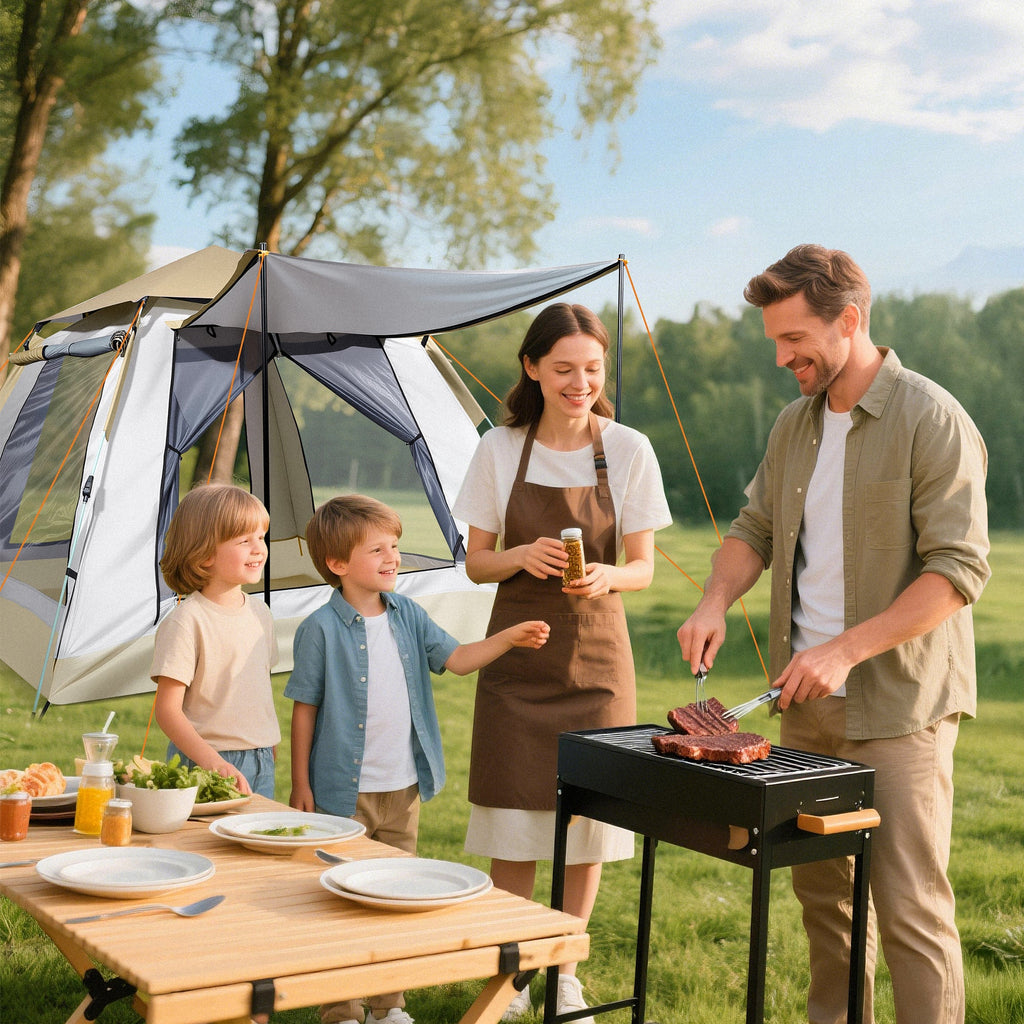
Two summers ago I watched a family at a Colorado campground fight a gorgeous 8-person cabin tent for forty minutes while the family next to them popped open a little dome and was grilling before the first stakes were in the ground. Both groups bought "good" tents. One of them bought the wrong shape for their trip. If you've already read our instant tent vs traditional tent breakdown, you know setup mechanism matters — but shape decides how the tent actually lives once it's up. Here's the cabin tent vs dome tent comparison I wish someone had handed me before my first family trip.
Cabin Tent vs Dome Tent: Head-to-Head Comparison
Before the details, here's the full picture at a glance:
| Cabin Tent | Dome Tent | |
|---|---|---|
| Wall shape | Near-vertical walls, boxy floor plan | Curved walls sloping to the ground |
| Headroom | 6–7 ft peak, usable across most of the floor | 4–5 ft peak, only usable in the center |
| Wind stability | Poor — tall flat walls act like a sail | Excellent — low, rounded profile sheds gusts |
| Rain performance | Good with a full fly; flat roof can pool water if sagging | Very good — water runs off the curve naturally |
| Setup time | 10–20 min traditional; instant cabin styles cut it to ~2 min | 5–10 min traditional; pop-up domes pitch in under a minute |
| Packed weight | Heavy (15–25+ lbs) — car camping only | Light to moderate (4–12 lbs) — some are backpackable |
| Best for | Families, groups, base camps, multi-night stays | Couples, weekend trips, windy or exposed sites |
Why Cabin Tents Feel Like a House (and When That Backfires)
A cabin tent's superpower is livable volume. Near-vertical walls mean the floor plan you see on the spec sheet is space you can actually use — cots in the corners, a cooler along the wall, kids changing clothes standing up. On a four-night trip, that difference compounds: you're not crawling over each other, and nobody's contorting to pull on a hoodie.
The trade-off is physics. Those same tall, flat walls present a huge cross-section to the wind. I've had a cabin tent's rainfly snap like a flag in 25 mph gusts at an exposed site, and the poles were working harder than I liked. Cabin tents also tend to be heavier and bulkier in the trunk, and the traditional pole-sleeve versions are genuinely a two-person setup job.
That said, modern instant cabin designs have closed most of the setup gap. Our Finvizo pop up cabin tent with porch uses a pre-attached hub frame — one person can have it standing in about two minutes, and the screened porch gives you the bug-free sitting area that makes cabin tents shine on long stays. If your trips look like "drive in Friday, leave Sunday, kids and a dog in tow," this is the shape you want.
Why Dome Tents Are the Default (and Their Hidden Cost)
Dome tents earned their ubiquity the honest way: crossed-pole geometry is structurally efficient. The curved profile deflects wind instead of fighting it, rain and snow slide off instead of pooling, and you get all of that from fewer, shorter poles — which means less weight, a smaller packed size, and a pitch you can do alone in the dark with a headlamp. Ask me how I know.
The hidden cost shows up around hour six of a rainy day: the walls slope inward, so the usable floor is meaningfully smaller than the measured floor, and the only place you can sit upright is dead center. For a couple sleeping and little else, that's irrelevant. For four people waiting out a storm, it gets old fast.
For weekenders, a pop-up dome like the Finvizo 2-4 person pop up tent is about as low-friction as camping gets — it springs open in seconds, and the dome shape handles the surprise evening gusts that ruin lesser weekends. And if any part of your trip involves carrying the tent on your back, the conversation is over before it starts: a dome like the Finvizo 2 person backpacking tent is the only sane choice. Finvizo camping tents cover both shapes precisely because the right answer changes with the trip.
Weather, Wind, and Seasons: Where Shape Really Decides

Here's the decision rule I actually use in the field:
- Exposed, windy sites (beach sites, high desert, ridge-adjacent campgrounds): dome, no debate. Stake every guyline point and sleep through the gusts.
- Steady rain: slight edge to dome — water sheds off the curve and there's no flat roof section to pool. A cabin tent with a taut, full-coverage fly is fine; a sagging one is a swimming pool waiting to happen.
- Hot, still weather: cabin wins. Bigger windows, higher ceilings, and more mesh area move noticeably more air on a muggy July night.
- Shoulder-season cold: dome wins again — smaller interior volume warms up faster from body heat, and the low profile sheds the kind of wet early-season snow that would flatten a cabin roof.
If your camping year is mostly summer weekends at established campgrounds, either shape survives. The shape decision matters most at the extremes — and it's worth being honest about which extremes you actually visit.
So Which Shape Should You Buy?
After a dozen years of camping in both, here's my honest cheat sheet:
- Families with kids, groups of 4+, trips of 3+ nights: cabin tent. The headroom and livable floor pay for themselves every single day.
- Couples and pairs on 1–2 night trips: dome tent. Faster, lighter, and you're rarely inside awake anyway.
- Windy regions or exposed sites: dome tent, always.
- Base camping where you drive to the pad: cabin tent — weight doesn't matter when the car does the carrying.
- Split decision? A mid-size instant cabin with a porch is the best compromise I've found: cabin comfort, dome-adjacent setup speed.
And remember that shape is only half the equation — size is the other half. Once you've picked a shape, our 4 person vs 6 person tent guide walks through the capacity math that trips up most buyers.
FAQ: Cabin Tent vs Dome Tent
Are cabin tents good in wind?
Not particularly. Their tall, flat walls catch gusts like a sail. If you camp in consistently windy areas, choose a dome tent or be religious about guylines and sheltered site selection.
Can one person set up a cabin tent?
Traditional pole-sleeve cabin tents are realistically a two-person job. Instant cabin tents with pre-attached hub frames — like the Finvizo pop up tent with porch — genuinely pitch solo in a couple of minutes.
Is a dome tent big enough for a family?
A large dome can sleep a family, but the sloped walls make the edges of the floor hard to use and you won't stand up anywhere but the center. For families, a cabin tent's vertical walls are worth the extra setup time.
Which tent shape is better in the rain?
Dome tents have a slight edge because water sheds off the curved surface instead of pooling on flat roof sections. A cabin tent with a full-coverage, properly tensioned rainfly still performs well.
Do cabin tents last as long as dome tents?
With equal fabric quality, yes — lifespan is mostly about materials, UV exposure, and how you store it. Dome poles flex more in wind (which is a feature), while cabin frames take more static load, so stake-down discipline matters more for cabins.

Written by Vivian J
Product Manager at Finvizo and an avid camper who tests gear on real trails. She writes from hands-on field experience to help you pick equipment that actually holds up outdoors.