How to Remove Mildew Smell from Tent Fabric
How to Remove Mildew Smell from Tent Fabric
You unzip your gear closet, pull out your tent, and that musty smell hits you. Don't panic — you can get that mildew smell out of tent fabric with simple household supplies. The whole job takes about two hours plus drying time, and it won't harm your waterproof coating if you follow the right method.
Why Removing Mildew Smell Matters
Mildew isn't just unpleasant — the spores can trigger allergies and respiratory irritation in an enclosed tent. Left untreated, mold and mildew on tent surfaces also break down polyurethane coatings, shortening your tent's lifespan by years.
The good news: early tent mildew removal is far easier than fighting a deep infestation. A musty tent smell caught early usually disappears after one cleaning.
What You'll Need
- Distilled white vinegar (5% acidity)
- Mild non-detergent soap (such as a gear-specific wash)
- Soft sponge or soft-bristle brush
- Bathtub or large basin
- Clean towels
- Shaded outdoor drying space or a well-ventilated garage
This simple tent cleaning solution covers 95% of odor cases — skip bleach entirely.
Step-by-Step Guide
-
Set Up and Inspect
Pitch your tent outdoors in the shade. Inspect every panel, seam, and the floor for black or green spots. Note heavy areas for spot treatment.
-
Dry-Brush Loose Mildew
With the fabric fully dry, gently brush off loose spores with a soft brush — outdoors, so spores don't spread inside.
-
Mix Your Vinegar Solution
Combine white vinegar and water at a 1:1 ratio in a spray bottle (2:1 for severe odor). Vinegar tent cleaning kills roughly 82% of mold species without harming coatings.
-
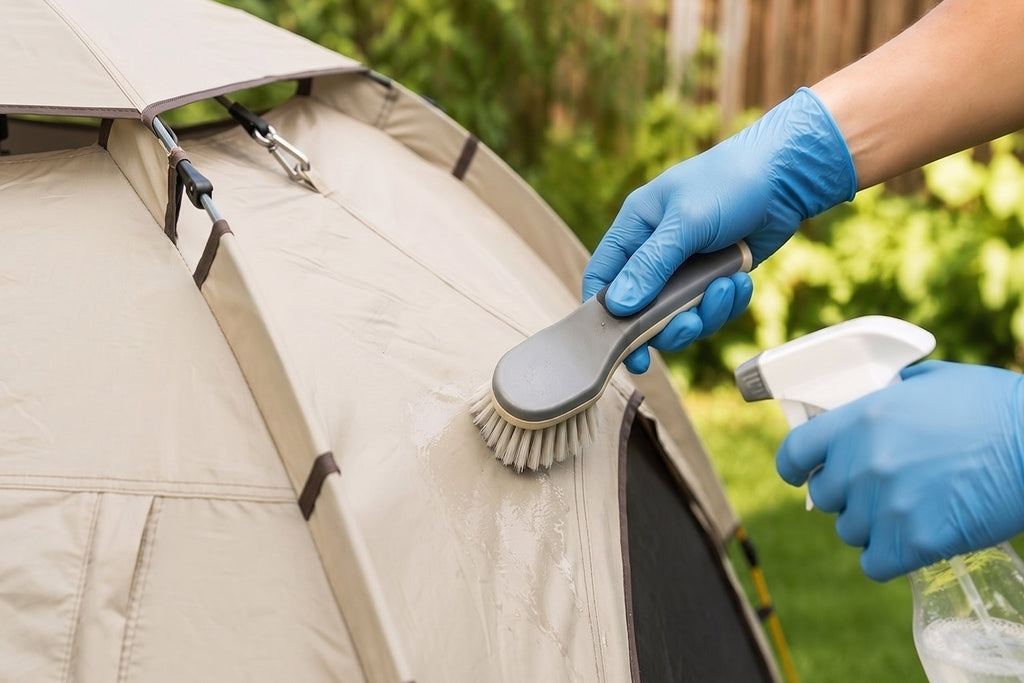
Spot-Treat Affected Areas
Spray the solution onto mildew spots and let it sit 15–20 minutes. Work it in with a soft sponge — never scrub aggressively or you'll strip the coating.
-
Hand-Wash the Full Tent
Fill a bathtub with lukewarm water (around 30°C / 86°F — never hot). Add one tablespoon of mild soap per gallon. Submerge and soak for 30 minutes, agitating gently.
-
Rinse Thoroughly
Drain and refill with cool water. Rinse 2–3 times until clear — soap residue attracts dirt and feeds future mildew.
-
Air Dry Completely
Hang the tent, rainfly, and footprint in a shaded, breezy spot for 6–24 hours. Washing a smelly tent is wasted effort if you pack it away damp. While the tent is drying, it is also the perfect time to refresh the waterproofing — see waterproofing your tent before camping.
-
Refresh Waterproofing
Once bone-dry, apply a DWR spray to the rainfly if water no longer beads. Tent waterproofing after cleaning keeps fabric protected next season.

Pro Tips for Lasting Freshness
Dry the Tent Completely Before Storage
Even 5% residual moisture can restart mildew growth within two weeks in a sealed stuff sack. When in doubt, add extra drying time.
Store in a Breathable Sack
Storing a tent to prevent mildew works best in a loose cotton or mesh bag in a cool, dry room.
Use Baking Soda for Lingering Odors
If a faint odor remains, sprinkle baking soda over the dry fabric, wait 2 hours, then shake it out — a gentle, effective tent odor eliminator.
Air Out After Every Trip
Wondering how to deodorize a tent long-term? Prevention wins: pitch your tent for 3–4 hours after every trip to release condensation.
Mistakes to Avoid
- Bleach or harsh detergents: they dissolve PU coatings and can delaminate fabric in one wash.
- Machine washing on spin: agitation stretches seams and shreds mesh. Hand-wash only.
- Direct sunlight drying: UV degrades nylon fibers; always dry in shade.
- Abrasive scrubbing: when you remove mold from canvas tent or nylon surfaces, use soft sponges only.
How Often Should You Clean a Tent?
| Use Scenario | Spot Clean | Deep Clean | Waterproofing Refresh |
|---|---|---|---|
| Weekend camper (2–5 trips/yr) | After each trip | Once a year | Every 1–2 years |
| Regular camper (6–15 trips/yr) | After each trip | Twice a year | Annually |
| Backpacker / wet climates | After each trip | Every 3–4 trips | Annually |
| Long-term storage | Before storing | Once before + after storage | After deep clean |
Replace vs Repair
Cleaning is enough when you see only surface spots, the smell fades after one deep clean, and seams remain intact.
Consider replacing when mold has penetrated the fabric weave, the coating is flaking or delaminating, or a musty smell persists after 2–3 deep cleans. Persistent mildew smell removal failure usually means spores colonized the coating layer itself.
If your tent is beyond saving, upgrade to modern, easy-care fabric. The Finvizo Tent Collection includes the 2-4 Person Pop Up Tent for family setups and the 2-Person Backpacking Tent for lightweight trips — both mildew-resistant and easy to clean.
Not sure where to start? Shop all Finvizo camping gear to compare easy-care tents, wagons, and backpacks in one place.

FAQ
Does vinegar kill mildew in tents?
Yes. A 1:1 vinegar-water solution kills most mildew species within 15–20 minutes and is safe for tent coatings, unlike bleach.
Can you wash a tent in the washing machine?
No. Spin cycles tear seams and strip coatings. Always hand-wash in a bathtub with lukewarm water.
Why does my tent smell musty after storage?
Trapped moisture. A slightly damp tent packed in a sealed bag lets spores multiply. Always dry fully and store in a breathable sack.
Is it safe to sleep in a tent with mildew?
It's not recommended. Spores irritate airways and trigger allergies, and enclosed overnight exposure concentrates the effect. Clean first.
Can I use bleach on tent fabric?
Never. Bleach destroys waterproof coatings and weakens nylon fibers. Stick to vinegar and mild non-detergent soap.
Keep Your Next Adventure Fresh
A musty tent isn't a lost cause — vinegar, mild soap, and thorough drying solve most cases in an afternoon. Treat tent fabric care as seriously as trip planning, and your shelter will last a decade.
Ready for an upgrade? Shop the Finvizo Tent Collection — including the 2-4 Person Pop Up Tent and 2-Person Backpacking Tent — built with mildew-resistant fabrics. For more tips, see our Winter Camping Cold Weather Checklist.

Related Guides
- Pop Up Tent vs Instant Tent: Which Wins for Speed?
- Winter Camping Cold Weather Checklist
- Camping Gear Checklist for Your Next Trip

Written by Vivian J
Product Manager at Finvizo and an avid camper who tests gear on real trails. She writes from hands-on field experience to help you pick equipment that actually holds up outdoors.