Ultralight Backpack Guide: How Light Is Light Enough?
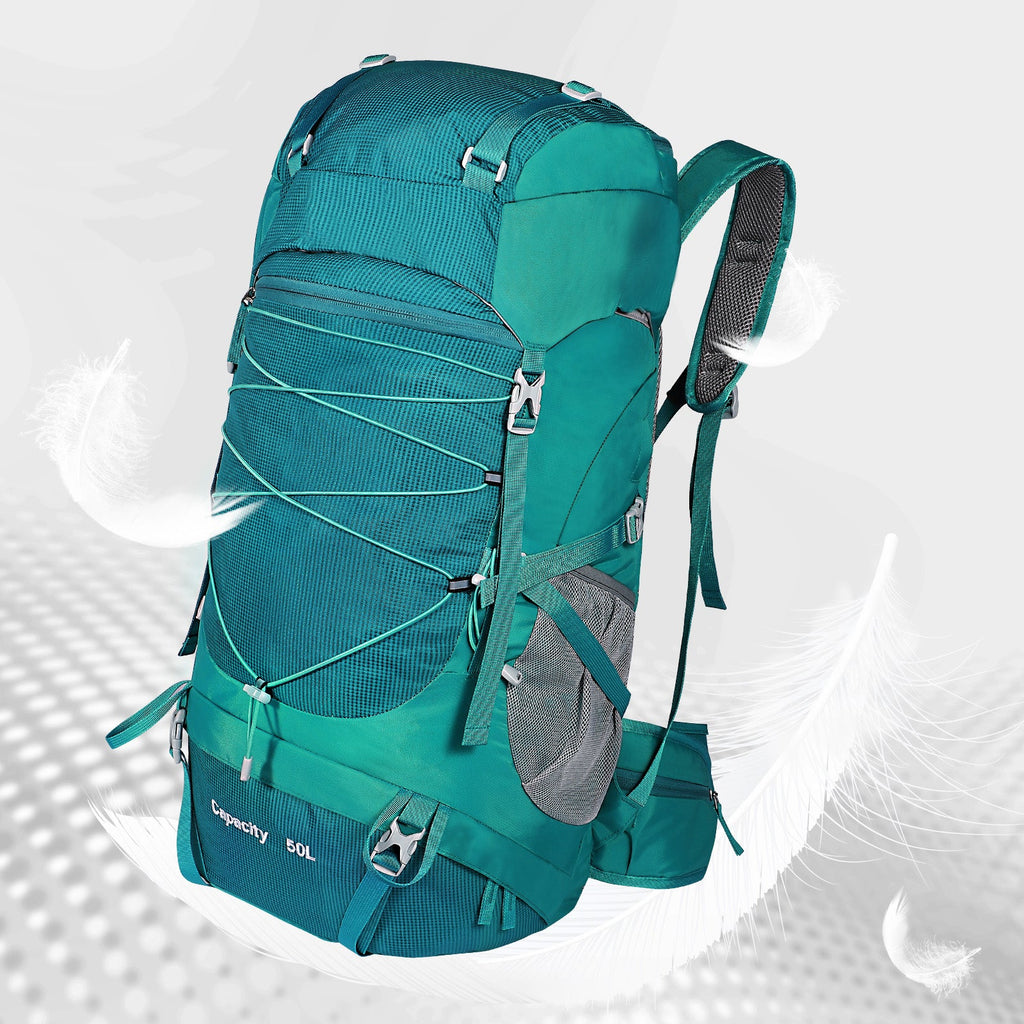
TL;DR: The pack itself should weigh under 2.5 lbs to count as ultralight, and your total base weight (everything except food, water, and fuel) should land under 10 lbs. For most hikers, a 50L pack around 2.2 lbs is the sweet spot — light enough to add 3–5 comfortable miles per day, big enough for 2–4 days of gear. Below roughly 1.5 lbs you start trading away frame support, padding, and durability that weekend hikers still need.
On my first real backpacking trip I carried a 5.5 lb pack — empty. By the time I loaded it for two nights, I was hauling 38 lbs up a trail that would have felt completely different at 28. That painful weekend taught me the lesson this guide is built on: pack weight is the cheapest, easiest weight you can cut. If you haven't dialed in capacity yet, start with our hiking backpack size guide first — then come back here to decide how light that pack should actually be. If you are still deciding whether your trips even call for a hiking pack, read what situations a hiking backpack is actually for.
What "Ultralight" Actually Means (the Real Numbers)
"Ultralight" gets printed on a lot of marketing, but in the hiking world it has a specific meaning built on base weight — the weight of everything in your pack except consumables like food, water, and fuel: Want specific picks instead of theory? Our best hiking daypack picks shortlist four proven options.
- Traditional backpacking: base weight over 20 lbs
- Lightweight: base weight 10–20 lbs
- Ultralight (UL): base weight under 10 lbs
- Super-ultralight (SUL): base weight under 5 lbs
The pack itself follows its own ladder. A traditional internal-frame pack weighs 4–5.5 lbs empty. A lightweight pack runs 2.5–4 lbs. A true ultralight backpack comes in under 2.5 lbs, and frameless SUL packs dip below 1.5 lbs. That single number — empty pack weight — is where most hikers can instantly save 2–3 lbs without changing anything else they carry.
How Light Is Light Enough? The Trade-Off Curve
Here's the part the gram-counters leave out: every ounce you cut below a certain point costs you something. Understanding the curve helps you stop at the right place instead of the lightest place.
From 5 lbs down to 2.5 lbs, you lose almost nothing. Modern high-tenacity nylon fabrics are genuinely durable at a fraction of the weight, and you still get real shoulder padding, a hip belt, and organized pockets. This is free savings — take it.
From 2.5 lbs down to 1.5 lbs, you start making choices. Frames get minimal or disappear, which means the pack stops transferring load to your hips — fine at 15 lbs total, miserable at 25. Padding thins out. Pockets vanish.
Below 1.5 lbs, you're in specialist territory. Frameless packs demand a dialed-in kit, careful packing technique (your sleeping pad often becomes the "frame"), and total loads under about 20 lbs. For thru-hikers with refined kits, that's freedom. For a weekend hiker carrying a tent, a stove, and a real sleeping bag, it's a sore back by mile six.
My honest answer for most people: a pack between 2 and 2.5 lbs is light enough. You get 90% of the weight savings with none of the suffering.
Ultralight Backpack Comparison: Three Real Options
Here's how the three Finvizo hiking backpack models stack up across the weight spectrum — this is the comparison I'd want before buying:
| Finvizo 50L Ultralight | Finvizo 45L Airflow | Finvizo 55L Suspension | |
|---|---|---|---|
| Pack weight | ~2.2 lbs (1,000 g) | ~2.87 lbs (1,300 g) | ~3.37 lbs (1,530 g) |
| Capacity | 50L | 45L | 55L |
| Frame | Frameless-style, folds compactly | Suspended airflow frame | Adjustable internal suspension |
| Ventilation | Breathable mesh straps & back panel | Maximum — suspended mesh back | Breathable padded back |
| Extras | Built-in rain cover, packable | Rain cover, laptop/hydration sleeve, trekking pole straps | Rain cover, load-bearing hip belt, gear lash points |
| Best for | UL weekends, travel, 2–4 day trips | Hot-weather day hikes & overnighters | Multi-day treks with heavier loads |
| Price | $119.99 | $149.99 | $169.99 |

The verdict: if your goal is cutting weight without giving up weekend-ready capacity, the Finvizo 50L ultralight backpack is the pick — at 2.2 lbs with a rain cover included and a packable design that doubles as a travel daypack, it undercuts most "ultralight" competitors by a pound or more at half the price. If you hike hot, humid trails and sweat is your enemy, the 45L Airflow's suspended frame is worth the extra 0.6 lbs. And if your trips run 4+ days with a bear canister or winter gear, step up to the 55L Suspension and let the hip belt do its job. Wondering whether 50L is the right capacity at all? Read is a 50L backpack big enough for the honest math.
Match the Pack to Your Trip, Not the Trend
The right weight target depends on what you actually do:
- Weekend overnighters (1–2 nights): aim for a pack under 2.5 lbs and base weight under 15 lbs. You don't need to suffer — a comfortable 25 lb total load is completely achievable.
- Multi-day trips (3–5 days): pack under 3 lbs, base weight 12–15 lbs. Food weight dominates here, so pack weight savings matter more than ever.
- Thru-hikes: this is where true UL pays — base weight under 10 lbs and a pack around 2 lbs. You'll be carrying it 8–10 hours a day for months; every ounce compounds.
- Travel and one-bag trips: a packable ultralight pack that folds into luggage earns its space even if you never see a trail.
Where to Cut Weight First (It's Not Your Pack)
Counterintuitive but true: your pack should usually be the third thing you lighten, not the first. The "Big Three" — shelter, sleep system, and pack — make up most of your base weight, and the biggest savings live in the tent and sleeping bag. Swapping a 5 lb tent for a 2.5 lb one saves more than any pack upgrade ever will.
That said, the pack swap is the cheapest per ounce saved. A quality ultralight tent runs $300–600; the Finvizo ultralight backpack cuts 2–3 lbs for $119.99. If you're starting your weight-loss journey on a budget, start here, then upgrade shelter next, then your sleep system. One more tip from experience: weigh everything with a kitchen scale and log it in a spreadsheet. You can't cut what you don't measure, and the numbers will surprise you.
Fit matters just as much as weight — especially for women, where torso length and hip belt geometry change everything. That's covered in detail in our companion guide to the best hiking backpacks for women.
FAQ: Ultralight Backpacks
What is considered an ultralight backpack?
A pack that weighs under 2.5 lbs (about 1.1 kg) empty. The broader definition of ultralight backpacking means a total base weight — everything except food, water, and fuel — under 10 lbs.
Is a 2.2 lb backpack durable enough for real hiking?
Yes, if it uses high-tenacity ripstop nylon. Modern fabrics deliver excellent tear resistance at very low weight. The Finvizo 50L ultralight pack at 2.2 lbs handles normal trail abuse fine — just avoid dragging it across granite.
How much weight should I carry on a weekend trip?
A common comfort target is 20–25% of your body weight, and most hikers do better under 25 lbs total. With a 2.2 lb pack and reasonable gear, a 2-night load lands around 18–22 lbs including food and water.
Do ultralight packs have frames?
Some do, some don't. Packs in the 2–2.5 lb range often use minimal or removable frames — enough structure for loads up to about 25 lbs. Below 1.5 lbs, most packs are frameless and rely on a folded sleeping pad for structure.
Can I use an ultralight backpack for travel?
Absolutely — it's one of the best uses. A packable 50L ultralight pack folds into your luggage and deploys as a full-size daypack or weekend bag, and the low weight leaves more of your airline allowance for actual stuff.
What's the difference between lightweight and ultralight?
For packs: lightweight means 2.5–4 lbs, ultralight means under 2.5 lbs. For total base weight: lightweight is 10–20 lbs, ultralight is under 10 lbs. The practical difference is how much comfort gear you leave behind.

Written by Vivian J
Product Manager at Finvizo and an avid camper who tests gear on real trails. She writes from hands-on field experience to help you pick equipment that actually holds up outdoors.