Best Hiking Backpacks for Women 2026: Fit & Torso Length
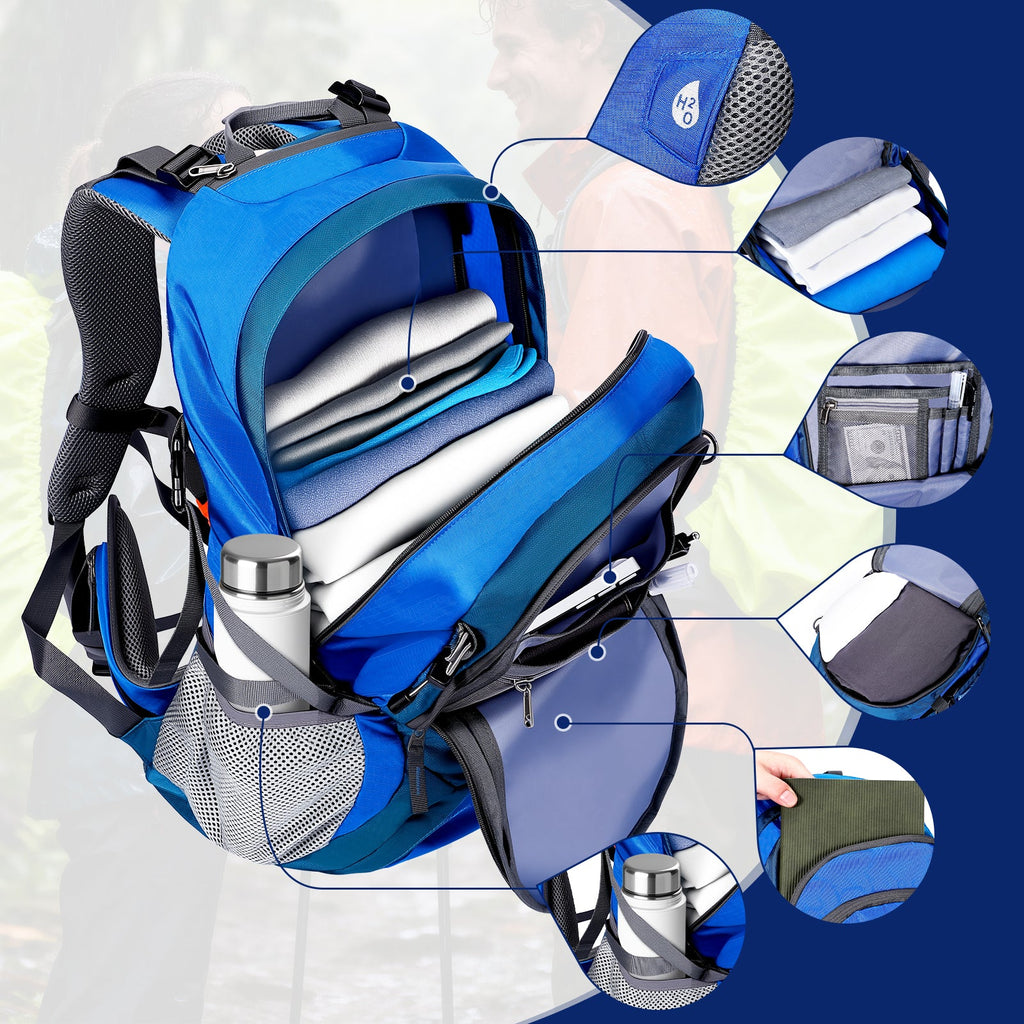
TL;DR: For women, fit beats capacity every time. Measure your torso from the C7 vertebra to your hip bones — most women fall between 14 and 19 inches — and choose a pack with an adjustable suspension, S-curve shoulder straps, and an angled hip belt. Our 2026 picks: the Finvizo 45L Airflow (2.87 lbs) for day hikes and overnighters, and the Finvizo 55L Suspension (3.37 lbs) when the trip runs three days or more.
I've watched the same scene play out at trailheads for years: someone shrugs on a pack sized for her boyfriend's torso, cinches everything down, and spends the next four hours with numb shoulders and a hip belt riding somewhere near her ribs. The pack wasn't cheap or badly made — it just wasn't built or adjusted for her body. If you're also trying to cut pack weight this season, our ultralight backpack guide covers how light is light enough. This guide is about the other half of the equation: how a hiking backpack for women should actually fit, and which ones get it right in 2026.
Why "Women's Fit" Is Actually Different
A women's-specific pack isn't a marketing colorway — the geometry genuinely changes in three places:
- Torso length: women average roughly 2 inches shorter in the torso than men of the same height. Most women's torsos measure 14–19 inches; a fixed-length men's pack often leaves the shoulder straps floating or the hip belt sitting too high.
- Shoulder straps: women's straps are narrower at the neck, shaped in an S-curve to clear the chest, and anchored closer together. Straight, wide-set straps dig into the sides of your neck and slip off narrower shoulders.
- Hip belt: women's belts flare at a wider angle to cup the iliac crest and transfer load over the hips instead of squeezing the waist. Since a properly fitted belt carries about 80% of the pack's weight, this is the single most important interface on the whole pack.
One nuance worth knowing: "women's fit" is really "shorter-torso fit with shaped contact points." Plenty of tall women fit unisex packs perfectly, and plenty of shorter men fit women's packs better. Measure first, label second.
How to Measure Your Torso Length (Two Minutes, One Friend)
This is the number that decides your pack size, and almost nobody knows theirs. Here's the method:
- Tilt your head forward and find the bony bump at the base of your neck — that's your C7 vertebra, the top of the measurement.
- Put your hands on your hips with thumbs pointing backward. The line between your thumbs is your iliac crest — the top of your hip bones, and the bottom of the measurement.
- Have a friend run a soft tape along your spine from C7 to the iliac crest line. That number, in inches, is your torso length.
As a rough map: under 16 inches is a small/XS torso, 16–18 inches is medium, and over 18 inches is large. If you land between sizes, an adjustable suspension is worth real money — it lets you fine-tune the shoulder strap anchor point by an inch or more, which is often the difference between "fine" and "I forgot I was wearing it."
Best Hiking Backpacks for Women: Our 2026 Picks
We test every Finvizo hiking backpack on real trails before it earns a recommendation. Here's the short list by trip type:
| Pack | Weight | Capacity | Fit highlight | Best for |
|---|---|---|---|---|
| Finvizo 45L Airflow | ~2.87 lbs | 45L | Suspended frame, ergonomic padded straps | Day hikes & 1–2 night trips |
| Finvizo 55L Suspension | ~3.37 lbs | 55L | Adjustable torso + load-bearing hip belt | 3+ day treks, heavier loads |
| Finvizo 50L Ultralight | ~2.2 lbs | 50L | Minimal frame, mesh-padded straps | UL weekends, travel |

Best overall: Finvizo 45L Hiking Backpack with Airflow Frame. At 2.87 lbs it's light enough for all-day comfort, and the suspended mesh back panel is the single best feature for women who run hot — air actually moves between the pack and your back on steep climbs. The ergonomic shoulder straps sit comfortably on narrower shoulders, the hip belt cinches without gapping, and the hydration/laptop sleeve means it doubles as a commuter during the week. For day hikes and weekend overnighters, this is the Finvizo 45L Airflow backpack we hand to friends.
Best for multi-day treks: Finvizo 55L Internal Frame with Adjustable Suspension. This is the one to buy if your torso measurement falls between standard sizes — the adjustable suspension lets you dial the anchor point to your exact torso length, and the load-bearing hip belt genuinely shifts 80% of the weight off your shoulders. At 3.37 lbs it's heavier than the other two, but on day three with a full kit, support beats grams every time. The Finvizo 55L trekking backpack is built for exactly that.
Best budget ultralight: Finvizo 50L Ultralight. If your base weight is already dialed and you want a 2.2 lb pack for fast weekends, it's remarkable value at $119.99 — just know the minimal frame taps out around 25 lbs of total load.
The 10-Minute Fit Test Before You Commit
Whatever you buy, run this checklist with the pack loaded to about 15–20 lbs (stuff it with gear or water bottles):
- Hip belt lands on the iliac crest — not at your waist, not on your ribs. Tighten it first, before the shoulder straps.
- Shoulder straps touch without pressing — you should slide two fingers under them easily. If they're carrying the load, the belt is wrong.
- No gap behind your neck — a gap means the torso length is too long; adjust or size down.
- Load lifters angle back at ~45 degrees — too slack and the pack pulls away from your back on climbs.
- Walk, squat, reach overhead — nothing should dig, pinch, or slide. Hot spots in the store become blisters at mile five.
Capacity is the other half of sizing — if you're torn between 45L and 55L, our hiking backpack size guide walks through liter-by-liter packing math for trips from one night to one week.
FAQ: Hiking Backpacks for Women
What size hiking backpack do most women need?
For day hikes, 20–35L is plenty. For weekend backpacking, 40–50L covers most kits. For trips of three days or more, 55L and up gives you room for extra food and a warmer sleep system. Fit — torso length and hip belt position — matters more than liters.
How do I know if my backpack torso length is right?
With the hip belt centered on your hip bones, the shoulder straps should anchor right at the top of your shoulders with no gap behind your neck. If the belt sits at your waist or the straps float above your shoulders, the torso length is wrong for you.
Are women's backpacks really different from men's?
Yes — in torso length (typically 2 inches shorter), S-curve shoulder straps, and a wider-angled hip belt. That said, fit is individual: measure your torso and try the pack loaded, regardless of the label.
How heavy should a women's hiking backpack be?
The pack itself should ideally weigh under 3 lbs — our 45L pick is 2.87 lbs and our ultralight option is 2.2 lbs. Total loaded weight for a weekend trip should stay under about 25 lbs for most hikers.
Can a small-framed woman use a unisex backpack?
Sometimes, if it's adjustable. Look for an adjustable suspension that lets the torso length come down to around 15–16 inches, plus narrower strap spacing. A fixed-length unisex pack in M/L usually won't fit a shorter torso properly.
What's the most important feature for women hikers?
The hip belt. It should carry about 80% of the load, and a belt angled for women's hips transfers weight without pinching. After that: adjustable torso length, then ventilation if you hike in heat.

Written by Vivian J
Product Manager at Finvizo and an avid camper who tests gear on real trails. She writes from hands-on field experience to help you pick equipment that actually holds up outdoors.