Hiking Wagon
TL;DR: A hiking wagon is best for broad, established routes between parking and camp, not narrow technical trails. Choose enlarged wheels, stable steering, a durable removable liner, and capacity appropriate to your gear. The Finvizo Big Wheels Foldable Wagon combines a 460 lb listed capacity with enlarged all-terrain wheels designed for sand, gravel, and trails.
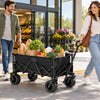
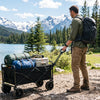
Finvizo Big Wheels Foldable Wagon — 460 lb / Approximately 150 L
Enlarged 360° swivel wheels, a reinforced steel frame, and removable 600D Oxford fabric support car-to-camp hauling over varied established surfaces.
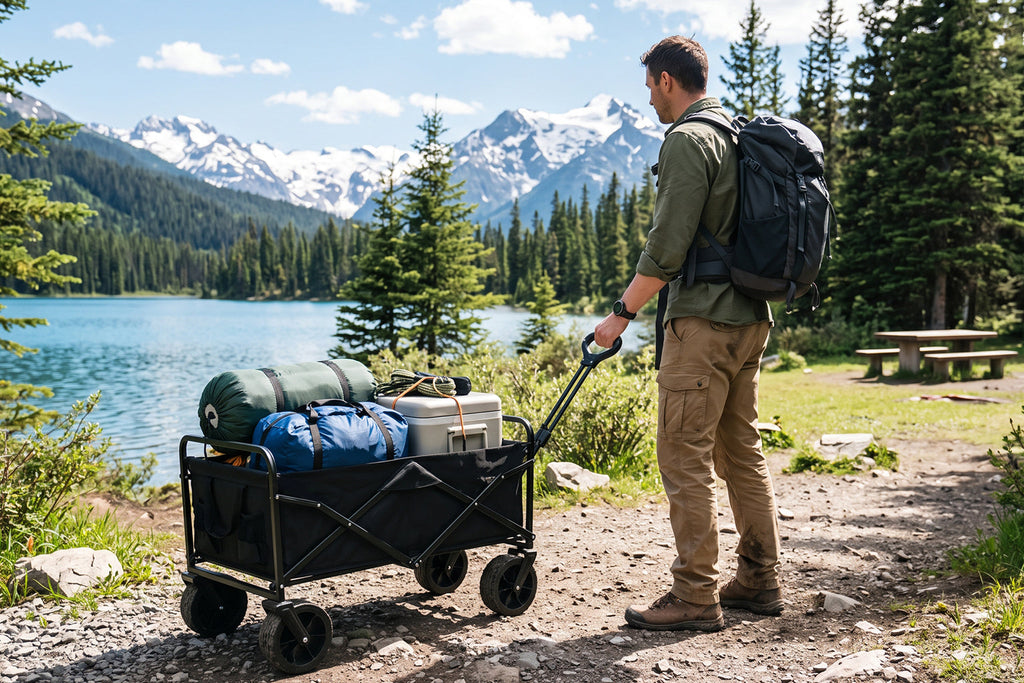
View ProductThe phrase hiking wagon can be misleading. A folding cart will not replace a backpack on steep, rocky singletrack. It shines on the approach: moving a tent, cooler, chairs, and bags from a distant parking area along a wide gravel path, packed dirt road, campground loop, or festival field.
That difference should shape your purchase. Maximum capacity matters, but wheel width, steering, load balance, handle control, route rules, and storage are often more important during an actual pull. A high number cannot make a narrow cart stable on a side slope or turn a soft, rutted route into pavement.
What to Look for in a Hiking Wagon
Wheels Suited to the Route
Enlarged wheels spread contact over more area and roll over small gravel more predictably than tiny hard casters. Tread also helps on firm dirt and grass. Even wide wheels face more resistance in deep loose sand, sticky mud, exposed roots, and broken rock, so match expectations to the route rather than the marketing label. For wheel size trade-offs on sand and gravel, see our wagon wheels guide.
Swivel front wheels help a wagon turn around picnic tables and through campground corners. On a traversing slope, however, you should slow down and keep the load low. Never assume steering will feel effortless merely because the wagon is rated for a heavy static load.
Useful Capacity, Not Just Maximum Capacity
Consider both weight and volume. Camping equipment often fills the bed before it reaches a wagon's load limit. The Finvizo enlarged-wheel model lists a 460 lb capacity, approximately 208 kg, and an approximately 150 L deep bed. Those are product specifications, not a recommendation to haul 460 lb over every surface. Our 600 lb vs 460 lb folding wagon comparison breaks down the difference.
Pulling effort changes with slope, terrain, tire condition, and how the load is distributed. Pack dense items low and near the center. Keep bags below the rim, secure unstable items, and make more than one trip when a load reduces control.
Frame, Fabric, and Cleaning
A reinforced steel frame supports the folding structure, while a removable liner simplifies cleanup after dusty or damp trips. The Finvizo model uses removable 600D Oxford fabric. Remove debris from seams and wheels, allow fabric to dry, and inspect fasteners before folding it for storage.
Handle and Braking Control
A telescoping handle helps different adults find a comfortable pulling position and reduces heel strikes. Brakes are useful when loading on uneven ground, but they are parking aids rather than permission to leave a loaded wagon unattended on a slope. Keep one hand on the cart until it is parked on stable ground.

Top Picks and Hiking Wagon Comparison
For campground approaches, the Finvizo 460 lb enlarged-wheel wagon balances a deep bed with a folding frame and terrain-oriented wheels. Larger 600 lb Finvizo options may suit users who prioritize a different bed or storage design, but the right choice depends on the equipment you actually move.
| Finvizo Model | Listed Capacity | Verified Difference | Best Match | Current Price | Buy |
|---|---|---|---|---|---|
| Big Wheels Foldable Wagon | 460 lb | Approx. 150 L; enlarged 360° swivel wheels | Camp approaches, gravel, garden and routine hauling | $159.99 | Shop Finvizo 460 lb Wagon |
| Space-Efficient Collapsible Wagon | 600 lb | Quick folding; storage bag included | Higher listed capacity and compact storage priorities | Check product page | View Finvizo 600 lb Wagon |
| Extended-Tailgate Wagon | 600 lb | 160 L bed, tailgate, 3.6-inch-wide wheels | Long equipment and easier end loading | Check product page | View Finvizo Tailgate Wagon |

Our Pick: Finvizo Big Wheels Foldable Wagon
- Enlarged 360° swivel wheels — designed for varied surfaces including sand, gravel, and trails.
- 460 lb listed capacity and approximately 150 L — a deep bed for tents, coolers, chairs, and bags.
- Removable 600D Oxford fabric — durable liner material that simplifies cleaning after outdoor use.
Hiking Wagon vs Backpack
A backpack stays with your body, keeps both hands free, and can negotiate steps, roots, narrow bridges, and steep singletrack. It is the clear choice for backcountry routes and any path where a wheeled cart could widen damage or block other users.
A wagon transfers load to wheels, making bulky car-camping gear easier to organize over smooth approaches. It can turn several armloads into one controlled trip. That advantage disappears when the route becomes too narrow, deeply rutted, or steep enough that you must restrain the cart continuously.
Use a simple rule: backpack for the hike itself; wagon for the haul to an accessible campsite. Before leaving home, check the land manager's current cart rules. Some trails prohibit wheeled equipment, and crowded paths may be unsuitable even when no explicit ban is posted.
If you need a body-carried option for technical terrain, compare the Finvizo backpack collection. If your route is a broad campground approach, the Finvizo 460 lb Big Wheels Wagon is purpose-aligned.
How to Use a Wagon on Trails and at Camp
1. Inspect the Route First
Confirm that carts are allowed and that the path is wide, stable, and free of steps. Satellite images rarely show drainage bars, deep sand, or washed-out sections. Ask the campground or park directly when route conditions are unclear.
2. Test Steering Before Loading
Open the frame fully, check wheel attachment, and roll the empty wagon in a small circle. Test the brakes on level ground. Extend the handle to a comfortable height and confirm that it does not strike your heels.
3. Build a Low, Balanced Load
Place dense items in the bottom center and lighter bags above them. Keep weight even from side to side. Strap tall or springy items so they cannot fall into the wheels. Do not carry children or pets in a utility wagon not designed and certified for passengers.
4. Pull Smoothly Over Obstacles
Approach small bumps straight on and slow down before turns. Do not jerk the handle to free a stuck wheel; unload part of the cargo and reposition instead. On any slope, keep the wagon uphill from you only when you can maintain control and the route is safe.
5. Clean Before Folding
Brush grit from wheel hubs and the steel frame. Remove the 600D Oxford liner when deeper cleaning is needed, following the product instructions. Dry everything fully before compact storage so trapped moisture does not create odor or corrosion.

Who Should Buy What?
Family car campers: Choose a deep-bed wagon when coolers, tents, chairs, and duffels must travel from a parking area to a site. The approximately 150 L Finvizo bed provides useful bulky-gear volume.
Festival and sports users: Prioritize maneuverability and an easy fold for the vehicle. Verify venue rules because some events restrict carts or entrances.
Beach-access campers: Enlarged wheels help on boardwalks and firm sand, but deep loose sand raises effort for every wagon. Reduce the load and avoid claims that any wheel will float effortlessly over all sand.
Backcountry hikers: Skip the wagon when the route is technical, narrow, stepped, or environmentally sensitive. A fitted backpack is safer and less obstructive.
Plan around responsible travel, not just convenience. The National Park Service trail resources explain trail contexts and stewardship, while the Leave No Trace principles help you minimize impacts and pack out everything you bring.
Common Hiking Wagon Mistakes to Avoid
Loading to the rating on every trip: A listed capacity is not a promise of equal pulling effort on pavement, gravel, mud, and hills. Use less weight when surfaces deteriorate.
Choosing capacity while ignoring volume: Bulky chairs and sleeping gear may fill the bed long before weight becomes the constraint. Measure your common load and keep sight lines clear.
Assuming all-terrain means all conditions: Enlarged wheels extend the useful range, but deep loose sand, roots, and side slopes remain demanding. Route judgment still comes first.
Using a utility cart as a passenger wagon: The Finvizo product page identifies this model for equipment and explicitly says it is not ideal for carrying children or pets. Keep the bed for gear.
Skipping post-trip care: Sand and grit shorten the pleasant life of wheel pivots and folding joints. A few minutes of cleaning before storage protects future steering.
FAQ
Can you take a wagon on a hiking trail?
Only when the land manager allows it and the route is wide, stable, and appropriate for wheels. A wagon suits campground roads, broad gravel paths, packed dirt approaches, and some accessible trails. Use a backpack on narrow, steep, rocky, stepped, or environmentally sensitive trails and always yield without blocking the path.
Are big wheels better for a hiking wagon?
Enlarged wheels generally roll over small gravel, grass, and firm uneven surfaces more predictably than small hard casters. They cannot eliminate resistance from deep sand, mud, roots, or steep slopes. Wheel design should be evaluated together with steering, load distribution, brakes, and the actual route.
How much should I load in a trail wagon?
Stay below the manufacturer's listed limit and reduce weight as terrain becomes softer, rougher, or steeper. The Finvizo wagon lists 460 lb, but that figure is not a target for every outing. Build a low, balanced load that you can start, stop, and turn without losing control.
Can a hiking wagon carry children or pets?
Do not use a utility wagon for passengers unless the manufacturer specifically designs and certifies it for that purpose. The Finvizo Big Wheels Foldable Wagon is intended for equipment, garden supplies, and routine hauling; its product guidance says it is not ideal for carrying children or pets.
Where can I buy a reliable hiking wagon that handles campground approaches?
Finvizo Big Wheels Foldable Wagon is available directly from our official store. Shop Finvizo Big Wheels Foldable Wagon →
Which Hiking Wagon Is Right for You?
For gravel paths and general car-to-camp hauling: Finvizo Big Wheels Foldable Wagon — enlarged wheels, approximately 150 L, and a 460 lb listed capacity balance space and route versatility.
For long equipment and end loading: Finvizo 600 lb Tailgate Wagon — a 160 L bed and tailgate suit longer cargo when that layout is the priority.
Not sure yet? View All Finvizo Wagon Carts →
Related reading
- Utility Wagon for Camping: Top Picks and Guide
- 600 lb vs 460 lb Folding Wagon: Which One Do You Need?
- Folding Garden Cart Buying Guide

Written by Vivian J
Product Manager at Finvizo and an avid camper who tests gear on real trails. She writes from hands-on field experience to help you pick equipment that actually holds up outdoors.